
What Semiconductor Process Steps Can Electronic Fluorinated Liquids Be Used For?
2026-09-07

Semiconductors are divided into two major sectors: front-end wafer fabrication and back-end packaging and testing. Electronic fluorinated liquids do not participate in the chemical reactions of photolithography or etching themselves; rather, they primarily serve five functions: precision cleaning and drying, equipment thermal management, device reliability testing, fixture and chamber leak detection, and specialty dilution, covering multiple critical process steps.
I. Front-End Wafer Fabrication
Precision Cleaning of Components and Fixtures
During wafer production, FOUP wafer transfer boxes, ceramic fixtures, clamps, and chamber accessories accumulate particles, fluorinated oils, and organic contaminants. Electronic fluorinated liquids are compatible with vapor degreasing and immersion/spray cleaning processes. Relying on their low surface tension, they penetrate fine gaps to remove microparticles and grease residues; they volatilize completely without leaving water stains or ionic contamination, meeting the cleanliness requirements of cleanrooms and protecting wafers from secondary contamination.
Note: Ordinary industrial-grade fluorinated liquids are not directly used in bare wafer wet processes. Scenarios involving direct wafer contact require semiconductor ultra-high purity grades with strictly controlled metal ion impurities.
Thermal Management and Cooling of Semiconductor Process Equipment
Lithography machines, plasma etchers, and CVD thin film deposition equipment have extremely high requirements for temperature uniformity. Even minor temperature drift can cause etching linewidth deviations and uneven film thickness, directly reducing yield. Fluorinated liquids, as insulating heat transfer media, are used in equipment chiller circulation temperature control systems. Unlike water cooling, fluorinated liquids are insulating and non-conductive; even if leakage occurs, they will not damage high-precision components such as chambers and electrodes, ensuring stable and controllable process temperatures for etching and deposition.
II. Advanced Packaging Process
Post-Solder Cleaning of Packaged Devices
For advanced packaging such as flip-chip, QFN, BGA, and SiP heterogeneous integration, flux, solder paste residues, and dicing dust remain after reflow soldering. Electronic fluorinated liquids can use vapor cleaning processes to dissolve and remove flux residues and ionic contaminants. They are compatible with copper, nickel plating, and most plastic encapsulation materials, avoiding pin corrosion and electrochemical migration, and reducing the risk of later device failure. For micro-pin devices with extremely small pitches, the low surface tension can penetrate pin gaps to achieve internal cleanliness. After cleaning, they volatilize and dry quickly without requiring an additional drying process.
Coating Dilution Process
When applying semiconductor nano-protective coatings and fluorinated lubricant coatings, fluorinated liquids serve as dilution carrier solvents to uniformly disperse the active coating components. The diluted coating forms a uniform film without damaging the molecular structure of fluorine-based coatings; after application, the solvent volatilizes completely, forming an ultra-thin protective film on chip and module surfaces. This is widely used in protective processing of power devices and MEMS devices.
III. Chip Testing and Reliability Verification
High-Low Temperature Immersion Testing and Burn-in Testing
In chip burn-in testing and temperature cycling reliability verification, fluorinated liquids, as insulating heat exchange media, enable wide-temperature-range immersion testing from -40°C to 125°C. By directly immersing the chips under test and probe cards, they can rapidly conduct heat and control temperature without causing short circuits, simulating the real extreme operating conditions of automotive chips and power devices to complete reliability screening.
Chamber and Device Airtightness Leak Detection
For vacuum chambers, package housings, and pipeline seals, fluorinated liquids are used as tracer leak detection media. The liquid penetrates tiny leak points to quickly locate leakage positions; after detection, the solvent volatilizes on its own with no residue on the workpiece surface, eliminating the need for a secondary cleaning process. This is widely used in sealing testing of semiconductor equipment components.
IV. Equipment Maintenance and Auxiliary Processes
-
Chamber Component Maintenance Cleaning: During equipment disassembly and maintenance, perform oil and fluorine grease removal cleaning on chamber components, seals, and pipelines;
-
MEMS Device Cleaning and Drying: MEMS microstructures are delicate and fragile. Traditional water washing can easily cause structure adhesion due to water tension. Fluorinated liquid displacement dehydration and drying avoids microstructure damage and adhesion defects, improving device yield.
Key Selection Considerations: Environmental Trends and Product Grades
Different process scenarios have completely different priorities for fluorinated liquid indicators:
-
Wafer direct contact scenarios: Prioritize semiconductor ultra-high purity, strictly control metal ion impurities;
-
Cleaning and packaging/testing scenarios: Focus on material compatibility, boiling point, KB solvency, and volatilization rate;
-
Export supply chain projects: Focus on ODP and GWP indicators to avoid PFAS regulated substance risks.
Traditional HFC and HFE products with high GWP are increasingly restricted by global F-gas and REACH regulations. Represented by Electronic Fluorinated Liquid 39, the new generation of HCFO fluorinated solvents are non-flammable, with GWP < 1 and ODP ≈ 0, and have excellent material compatibility. They can be used in packaging/testing cleaning, fixture cleaning, coating dilution, and some heat transfer scenarios, serving as recyclable alternatives to HCFC-141b, HCFC-225, and traditional HFE solvents. They are compatible with production line vapor cleaning equipment, reducing corporate compliance pressure.
Usage Reminders:
-
Before production, be sure to perform substrate compatibility verification to confirm that plastics, elastomers, and metal plating will not swell or corrode;
-
Ensure workshop ventilation, wear corresponding protective equipment, and operate in accordance with the product SDS safety data sheet;
-
Dispose of waste liquid through qualified hazardous waste institutions; where conditions permit, distill and recycle for circular use.
Summary
Electronic fluorinated liquids span multiple semiconductor process steps including fixture cleaning, equipment temperature control, advanced packaging cleaning, coating dilution, reliability testing, airtightness leak detection, and MEMS drying. They are not process chemicals that participate in chip chemical reactions, but are important auxiliary media for ensuring yield and stable equipment operation. Against the backdrop of tightening import material supply chains and stricter environmental regulations, low-GWP new-generation fluorinated liquid domestication solutions are becoming an important choice for process upgrading in semiconductor packaging/testing and component manufacturing enterprises.
Thermal‑Resistance Performance Test Application of HFE‑7500 in Water‑in‑Oil Droplet Generation for Microfluidics
Related Article
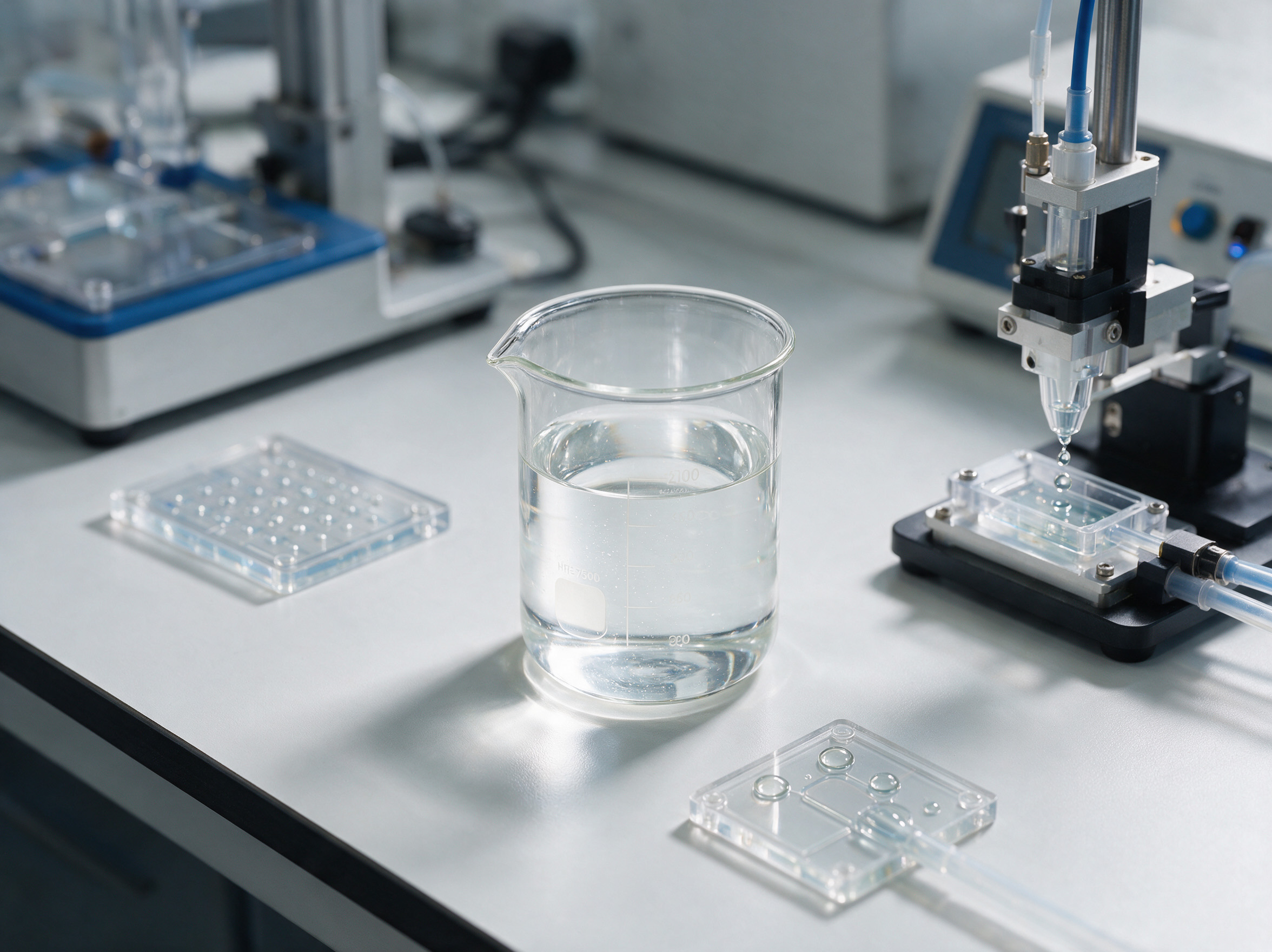
HFE‑7500 is a hydrofluoroether‑based fluorinated fluid. Characterized by low viscosity, chemical inertness and high thermal stability, it has become one of the most widely‑used continuous phases for water‑in‑oil systems in droplet microfluidics. It is especially suitable for scenarios requiring resistance to high‑temperature thermal cycling.
Thermal‑Resistance Performance Test Application of HFE‑7500 in Water‑in‑Oil Droplet Generation for Microfluidics
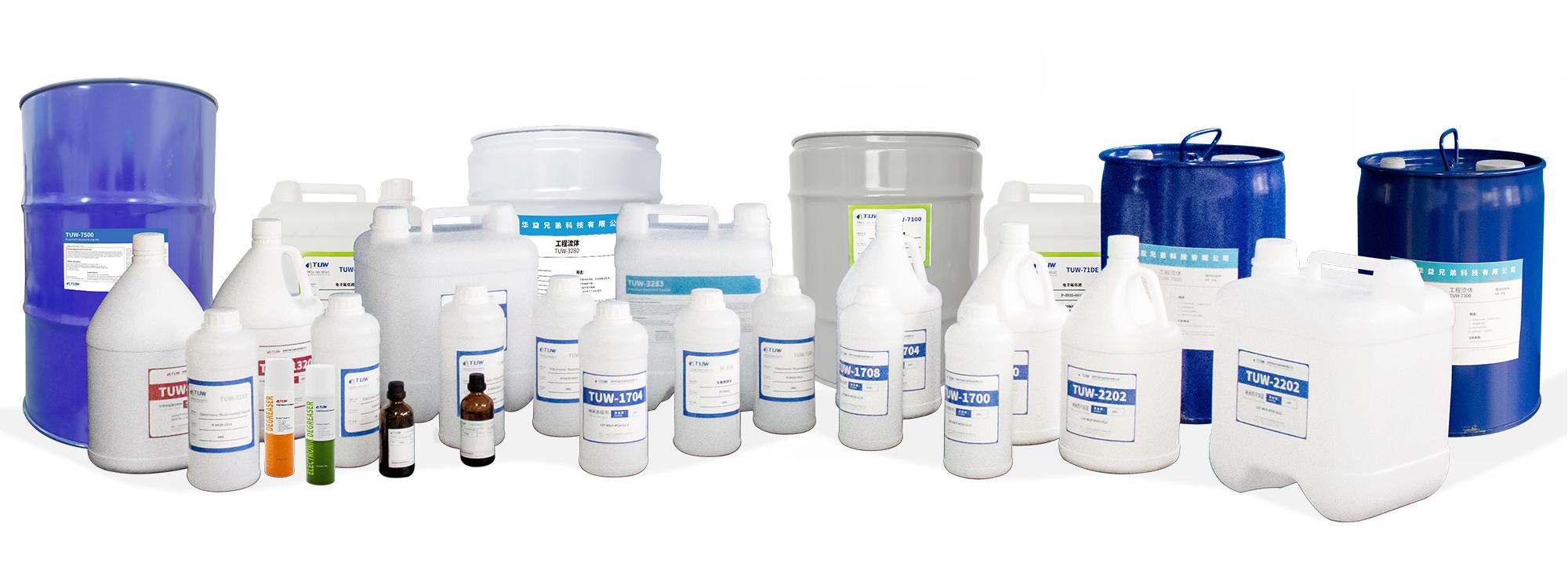
Hydrofluoroethers (HFE) are specialty fluorinated liquids composed of hydrogen, fluorine, oxygen and carbon. Featuring zero ozone‑depletion potential, low global‑warming potential, non‑flammability and high dielectric strength, they have become core working fluids for precision cleaning and immersion liquid cooling.
HFE Hydrofluoroether Series: A Detailed Overview of Low‑GWP Environment‑Friendly Electronic Fluorinated Liquids