TUW-2704 Electronic Coating
TUW-2704
A transparent fluoropolymer coating giving 0.1–4.0 μm films, air-drying with no cure, hydrophobic and oleophobic, solder-through repairable and dye-free. Alternative to 3M Novec 2704.
minimum order:
1 kilogram
Country of Origin:
CHINA
Quantity:
[Overview]
TUW-2704 Electronic Coating is a transparent fluoropolymer coating covering 0.1–4.0 μm films. It forms by hydrofluoroether evaporation at room temperature with no bake. Thin films are essentially colourless; heavier coats take on a pale yellow to orange tint, which is the polymer itself rather than degradation.
Unlike its sister grade 2708, TUW-2704 Electronic Coating contains no fluorescent dye, so it stays close to the bare substrate in appearance — useful on white housings, clear windows and light-coloured label areas. The trade-off is that missed patches are harder to spot under UV, so quality control leans on thickness sampling or contact-angle checks instead.
[Key Properties]
- Appearance: Transparent, pale yellow to orange depending on thickness
- Carrier solvent: Hydrofluoroether (HFE)
- Film thickness (reference): 0.1–4.0 μm
- Flash point: None
- Cure: Air-dry at room temperature, no bake
- Flammability: Meets UL 94 V-0
- Rework: Removable in acetone-type solvent; solder-through repairable
- Dye: No fluorescent dye
[Typical Applications]
1. PCB moisture and corrosion protection — Boards, connectors and modules protected against humidity, salt spray and corrosive gases.
2. Anti-migration barriers — Preventing grease and oil creep on displays, spindles and lubricated parts.
3. Hydrophobic and oleophobic surfaces — Water, hydrocarbon, silicone and photoresist repellency.
4. Appearance-sensitive products — Where a visible tint or dye would be unacceptable on the finished part.
[Handling & Compatibility]
The 0.1–4.0 μm range is set by applied volume — withdrawal speed, number of passes and dilution all shift thickness, so run a gradient coupon first. Heavier films look darker; agree the acceptable colour window with the customer up front.
Apply at 16–27 °C and below 60% RH; keep solution below 150 °C and dry film below 250 °C. Rework in acetone-type solvent; flux penetrates the thin film during soldering.
For appearance parts, approve a colour panel first: at the same thickness, white solder mask, black plastic and plated metal all read differently. Once the customer signs off the panel, fix the application parameters, and write the thickness-to-colour relationship into the work instruction for TUW-2704 Electronic Coating.
[Packaging & Availability]
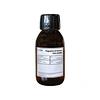
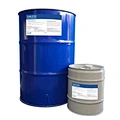
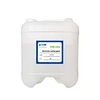
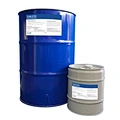
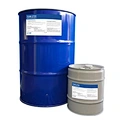
1 kg, 5 kg and 20 kg pails with 500 g samples. Stocked in South China and shipped with TDS, SDS and batch COA.