
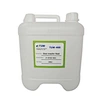
TUW-BPD Heat transfer fluid
TUW-BPD
minimum order:
1 kilogram
Supply Ability:
500kilogram / Day
Stock Time:
3Day
Quantity:
1.Product Introduction
TUW-BPD is suitable for indirect heat transfer systems in industrial applications, such as
reactors, drying equipment, injection molding machines, and heat-setting machines. It
operates efficiently in a wide temperature range from -20°C to 350°C.
2.Product Properties
Appearance: Light yellow to amber transparent liquid, with no visible mechanical
impurities
Density: 0.88 - 0.92 g/cm³
Kinematic viscosity (40°C): 25 - 35 mm²/s
Kinematic viscosity (100°C): 5 - 7 mm²/s*
Pour point: ≤ -25°C*
Flash point: ≥ 200°C
Acid value (KOH): ≤ 0.05 mg/g
3.Performance Advantages
Excellent high-temperature stability: Formulated with synthetic base oil and special
additives, ensuring low thermal decomposition and minimal coking at temperatures below
350°C, thus extending service life and reducing equipment cleaning frequency.
Good low-temperature fluidity: With a pour point below -25°C, the product can start
smoothly in cold winter conditions without preheating, preventing system blockages
caused by oil solidification.
High heat transfer efficiency: The optimized viscosity range ensures efficient flow
within the heat transfer system, enabling rapid heat transfer, improving heating
efficiency, and reducing energy consumption.
High safety: The high flash and fire points minimize fire risks under normal operating
conditions. The product is non-corrosive to common equipment metals such as carbon
steel and stainless steel, providing excellent system protection.
4.Storage and Transportation
Storage:The product should be stored in a cool, dry, and well-ventilated indoor
warehouse, away from fire and heat sources (temperature not exceeding 40°C). Protect
from direct sunlight to prevent oil oxidation. Storage containers should be tightly
sealed to prevent contamination by moisture and impurities. Different types of heat
transfer oils should not be stored together.
Transportation:During transportation, avoid severe collisions and impacts to prevent
container damage; strictly prohibit contact with open flames or high-temperature
objects; transport vehicles should be equipped with necessary fire-fighting equipment
and comply with relevant transportation regulations.
Recommend Products
 TUW-240 Medium-Temperature Synthetic Heat Transfer Fluid (For TPEE/TPU Elastomer & ES Bicomponent Fiber)
 TUW-330 Wide-Temperature-Range Synthetic Heat Transfer Fluid (For Polyester Industrial Yarn / Drawing Hot Box / Polyester Chip / PI Film / PDO Synthesis)
 TUW-320 Medium & High Temperature Synthetic Heat Transfer Fluid (For Polyester Industrial Yarn / Polyester Chip / PI Film / PDO Synthesis)
 Ultra-high Temperature General-Purpose Liquid-Phase Heat Transfer Fluid