TUW-1700 Electronic Coating
TUW-1700
A 2% solids fluoropolymer coating in a hydrofluoroether carrier, 61 °C boiling point, no flash point, drying to a thin hydrophobic film at room temperature. Alternative to 3M Novec 1700.
minimum order:
1 kilogram
Country of Origin:
CHINA
Quantity:
[Overview]
TUW-1700 Electronic Coating is a low-viscosity coating solution of fluoropolymer in hydrofluoroether: 2% solids, 61 °C boiling point, 1.5 g/mL density, no flash point. The film forms as the carrier evaporates, so no oven cure is needed — spray, dip or brush, and it is touch-dry in minutes. The resulting film is only a fraction of a micron thick yet pushes the water contact angle above 100°, making water, oils and silicones bead and drain.
For lines already running 3M Novec 1700, TUW-1700 Electronic Coating drops in with little change: same application equipment, same room-temperature dry, and the same rework route — the film dissolves in acetone-type solvents and flux burns straight through it during soldering, so nobody has to strip the coating first. It suits PCB, connector and precision-part protection, and works as an anti-migration layer that stops grease creeping along a shaft.
[Key Properties]
- Appearance: Clear, colourless liquid
- Solids content: 2% fluoropolymer
- Carrier solvent: Hydrofluoroether (HFE)
- Boiling point: 61 °C
- Density (25 °C): 1.5 g/mL
- Viscosity: 0.91 mPa·s
- Flash point: None
- Cure: Air-dry at room temperature, no bake
- Film thickness (reference): 0.1–1.0 μm
- Rework: Removable with solvent; solder-through repairable
[Typical Applications]
1. PCB moisture and corrosion protection — Water vapour, salt spray and corrosive-gas protection for boards, connectors, terminals and modules.
2. Anti-migration and solder creep — Barriers against oil and grease migration on displays, spindle motors and lubricated electronic parts.
3. Hydrophobic and oleophobic surfaces — Where water, hydrocarbons, silicones and photoresists must bead and drain away.
4. Rework-friendly process — The coating lifts in the matching solvent and supports solder repair — useful for high-mix, low-volume lines.
[Handling & Compatibility]
Keep the coating solution below 150 °C and the dried fluoropolymer film below 250 °C to avoid thermal decomposition and hydrogen fluoride release. Apply at 16–27 °C and below 60% RH; higher humidity tends to haze the film.
Clean and fully dry the substrate first — oil or flux residue causes craters and poor adhesion. Trial porous materials, silicones and label adhesives for wicking or swelling. Shelf life is two years in the unopened original container; reseal after opening and use promptly.
On the line, the two issues seen most with TUW-1700 Electronic Coating are craters from residual oil or flux and uneven thickness from withdrawal speed or dilution. Check the first-off part under UV or with a contact-angle reading before releasing a batch, and maintain the bath on a measured top-up schedule so TUW-1700 Electronic Coating does not drift low in solids.
[Packaging & Availability]
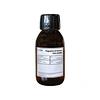
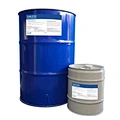
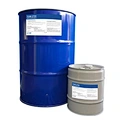
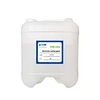
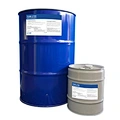
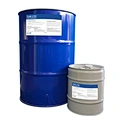
1 kg, 5 kg and 20 kg pails, with 500 g samples available. Stocked in South China and shipped with TDS, SDS and batch COA.