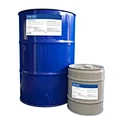
TUW-1902 Electronic Coating
TUW-1902
A 2% solids fluoropolymer coating giving 0.1–1.0 μm films, thermally stable to 175 °C and visible under blue or UV light for inspection. Alternative to 3M Novec 1902.
minimum order:
1 kilogram
Country of Origin:
CHINA
Quantity:
[Overview]
TUW-1902 Electronic Coating is a 2% solids fluoropolymer solution at 1.52 g/mL with no flash point, laying down 0.1–1.0 μm films. It is a reformulated 1700: the polymer itself withstands 175 °C, so the film survives reflow and burn-in thermal cycling better than a standard coating.
The other practical difference is visibility — TUW-1902 Electronic Coating fluoresces under blue or UV light, so an inspector with a UV torch sees missed patches and heavy spots immediately instead of waiting for a salt-spray failure. On automotive, industrial and medical electronics lines that is far more reliable than adding another manual visual check.
[Key Properties]
- Appearance: Transparent liquid
- Solids content: 2% fluoropolymer
- Carrier solvent: Hydrofluoroether (HFE)
- Density (25 °C): 1.52 g/mL
- Flash point: None
- Film thickness (reference): 0.1–1.0 μm
- Thermal limit: Polymer withstands 175 °C
- Inspection: Visible under blue or UV light
[Typical Applications]
1. PCB moisture and corrosion protection — Boards, connectors, terminals and modules exposed to humidity, salt spray and corrosive gases.
2. Anti-migration barriers — Stopping grease and oil creep on displays, spindle motors and lubricated parts.
3. Hydrophobic and oleophobic surfaces — Water, hydrocarbon, silicone and photoresist repellency where drainage matters.
4. Rework-friendly process — Solvent removal and solder-through repair for high-mix production.
[Handling & Compatibility]
Clean the substrate thoroughly — flux residue causes craters. Control film thickness through applied volume; a single heavy coat hazes more readily than two thin ones. For multiple layers, let the first skin over before recoating.
Keep solution below 150 °C and the dry film below 250 °C, at 16–27 °C and under 60% RH. Rework with the matching solvent; flux penetrates the film during soldering without stripping.
Visibility is only the first gate; adhesion and chemical resistance still need proving. Run a cross-hatch adhesion and solvent rub on every batch, especially after reflow, and validate any specific temperature or salt-spray claim against the real service condition instead of quoting a benchmark grade.
Thin films are also more sensitive to substrate roughness: on blasted or brushed surfaces, TUW-1902 Electronic Coating covers less uniformly than on polished ones, so add a primer pass or raise applied volume — then re-check coverage under UV after any change to the TUW-1902 Electronic Coating bath.
[Packaging & Availability]
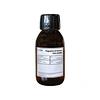
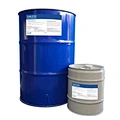
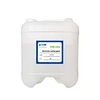
1 kg, 5 kg and 20 kg pails with 500 g samples. Stocked in South China and shipped with TDS, SDS and batch COA.