


Photoinitiator 651 (Benzil Dimethyl Ketal / BDK) | CAS 24650-42-8 | High-Purity UV Curing Agent for Coatings, Inks, Adhesives & 3D Printing Resin
651
Photoinitiator 651 (Benzil Dimethyl Ketal, BDK, CAS 24650-42-8) is a highly efficient Type I (Norrish I) free-radical photoinitiator widely used in UV-curable systems. It initiates rapid photopolymerization of unsaturated polyesters and acrylates upon UV exposure, delivering fast cure speed, low odor, low volatility, and excellent compatibility with various monomers and oligomers. Applications include UV coatings, inks, adhesives, 3D printing resins, optical films, and dental materials. Available in high purity (≥99.0%) as white crystalline powder.
Quantity:
1. Product Overview
Photoinitiator 651 (also known as Benzil Dimethyl Ketal, BDK, 2,2-Dimethoxy-1,2-diphenylethanone, Irgacure® 651) is a highly efficient Type I (Norrish I) free-radical photoinitiator. Upon exposure to ultraviolet (UV) light, it undergoes photochemical cleavage to generate active benzoyl and dimethoxybenzyl radicals, which initiate the rapid polymerization and crosslinking of unsaturated prepolymers and monomers.
Property | Detail |
|---|---|
Chemical Name | 2,2-Dimethoxy-1,2-diphenylethanone |
CAS Number | 24650-42-8 |
Molecular Formula | C₁₆H₁₆O₃ |
Molecular Weight | 256.30 g/mol |
MDL Number | MFCD00008475 |
EC Number | 246-386-6 |
Appearance | White to off-white crystalline powder |
2. Quality Specifications
Test Item | Specification | Test Method |
|---|---|---|
Assay (GC) | ≥ 99.0% (typical ≥ 99.5%) | Gas Chromatography |
Appearance | White crystalline powder | Visual Inspection |
Melting Point | 64 – 67 °C (lit. 67–70 °C) | Capillary Method |
Volatiles (Loss on Drying) | ≤ 0.30% (typical ≤ 0.2%) | 105 °C, 2 h |
Ash Content | ≤ 0.10% | 800 °C Ignition |
Color (APHA) | ≤ 20 | Platinum-Cobalt Method |
3. Physicochemical Properties
Property | Value | Property | Value |
|---|---|---|---|
Physical State | White crystalline solid/powder | Boiling Point | 169 °C / 7 mmHg (approx. 380 °C estimated) |
Flash Point | > 110 °C (closed cup); 190 °C | Density | ~1.13–1.18 g/cm³ (estimated) |
Vapor Pressure (25 °C) | 0.002 Pa | Water Solubility | 66.32 mg/L at 25 °C; practically insoluble |
Refractive Index | ~1.559 (estimated) | Log P (octanol/water) | 2.73–2.95 (estimated) |
Solubility | Soluble in acetone, ethyl acetate, methanol, toluene, acrylate monomers, dichloromethane; insoluble in water | Stability | Stable but light-sensitive. Incompatible with strong acids and strong oxidizing agents |
4. UV Absorption Characteristics
Photoinitiator 651 exhibits strong UV absorption in the following wavelength ranges:
λmax (in methanol): 250 nm and 340 nm
Absorption range: 254 – 390 nm
Highly sensitive to medium-pressure mercury lamp outputs (254 nm / 365 nm), enabling fast cure speeds.
5. Mechanism of Action
Photoinitiator 651 is a Type I (Norrish I) photoinitiator. Upon UV irradiation, it undergoes α-cleavage to generate:
Benzoyl(benzoyl radical)
Dimethoxybenzyl radical (which can further decompose to methyl radical and methyl benzoate)
These active free radicals initiate the polymerization and crosslinking of unsaturated prepolymers (e.g., acrylates, unsaturated polyesters) and mono-/multifunctional monomers.
6. Applications
Photoinitiator 651 is widely used across multiple UV-curable systems:
Application Area | Description |
|---|---|
UV Coatings | Wood coatings, paper varnishes, metal and plastic coatings. Compatible with various acrylate systems; delivers fast cure speed and excellent film appearance. |
UV Inks | Offset, letterpress, flexographic, and digital printing inks. High initiation efficiency, low yellowing, suitable for transparent and white ink systems. |
UV Adhesives | Pressure-sensitive adhesives, structural adhesives, and sealants; particularly suitable for transparent substrate bonding. |
Optical Films / Electronics | LCD optical film adhesives, PCB solder masks, semiconductor packaging materials, and optical waveguide materials. |
3D Printing Resins | SLA/DLP photopolymer resins; high resolution, low shrinkage, suitable for precision molding. |
Dental Materials | Dental composite resins, light-cured filling materials, and denture base materials. |
7. Performance Features
High purity (≥ 99.0%) ensures high initiation efficiency and low residual odor, making it suitable for odor-sensitive coatings and food packaging printing applications.
Multiple UV absorption peaks covering 250–390 nm range, highly sensitive to medium-pressure mercury lamp outputs.
Norrish Type I photofragmentation mechanism generates active benzoyl and dimethoxybenzyl radicals upon exposure, delivering excellent initiation efficiency.
Excellent compatibility with acrylate monomers and oligomers (epoxy acrylates, urethane acrylates, polyester acrylates).
Can be co-initiated with synergists such as DETX (diethylthioxanthone) and benzophenone to broaden spectral response and enhance deep-cure performance.
Crystalline solid form facilitates weighing and compounding; low dust generation, good flowability, suitable for industrial production.
Low yellowing index, excellent cured film appearance, suitable for clear varnishes and white systems.
8. Recommended Dosage
Application System | Recommended Addition (wt%) | Remarks |
|---|---|---|
UV Clear Coatings | 1.0 – 3.0% | Can be combined with benzophenone for improved surface cure |
UV White / Pigmented Coatings | 2.0 – 4.0% | Higher dosage recommended for highly pigmented systems |
UV Inks | 2.0 – 5.0% | Recommend combination with ITX or DETX |
UV Adhesives | 1.0 – 3.0% | Adjust according to substrate transparency |
3D Printing Resins | 0.5 – 2.0% | Low dosage sufficient for efficient initiation in SLA/DLP systems |
Recommend Products
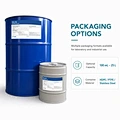 Perfluorohexane (CAS 355-42-0) | FC-72 | High Purity ≥99% | Non-Flammable Fluorinated Solvent for Electronics Cleaning & Heat Transfer
 High Purity 1H,1H,7H-Dodecafluoro-1-Heptanol | CAS 335-99-9 for Water & Oil Repellent, Surfactant, Lubricant
 1,3-Dihydroxyacetone (DHA) | CAS No.: 96-26-4 | Purity ≥ 99.2%
 CAS 358-39-4