
To Clean or Not to Clean PCBA? Hidden Risks of Flux Residue and HFE Azeotropic Cleaning Solvent Solutions
2026-09-11
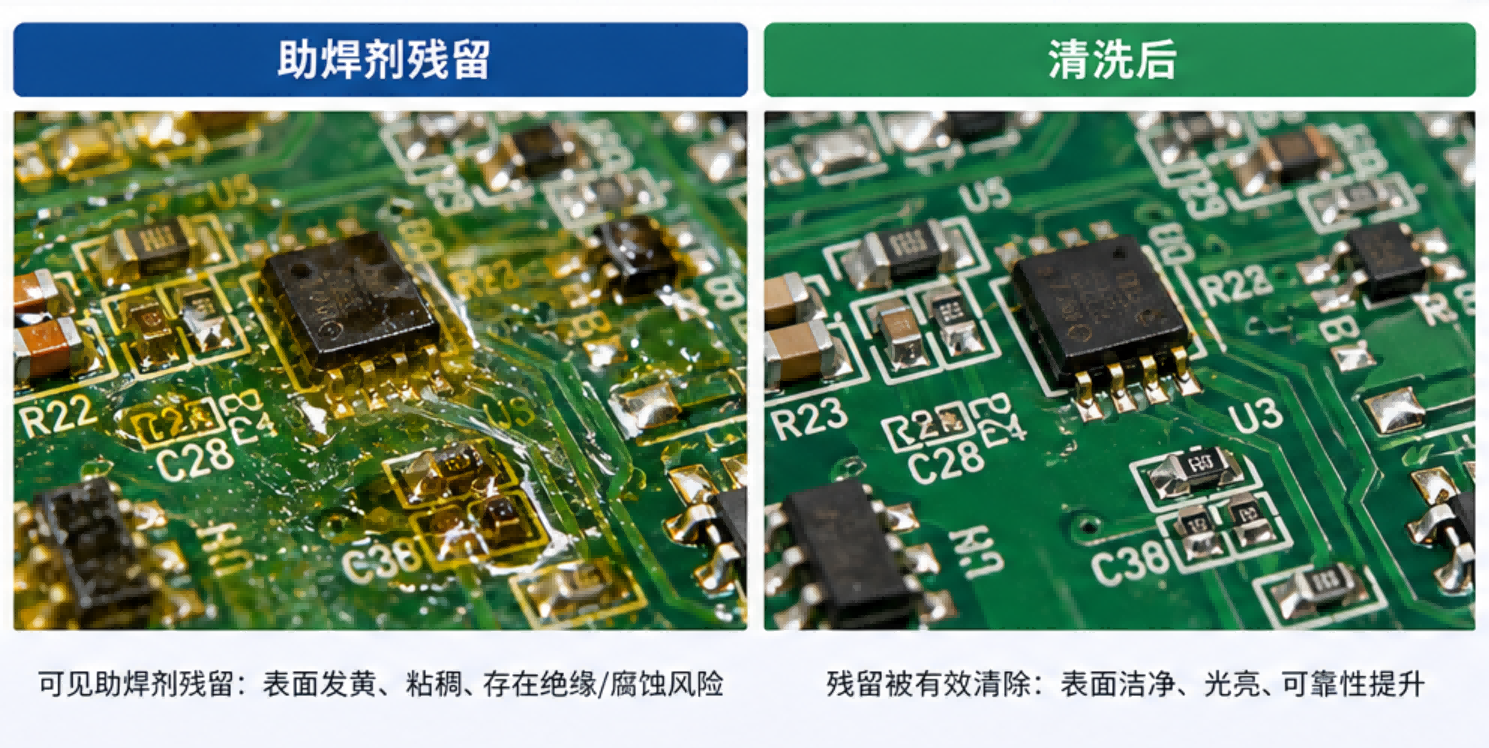
After a PCBA goes through SMT placement and reflow soldering, a layer of flux residue—thick or thin—is usually left on the board surface. Many people assume that "no-clean" solder paste means it can be left completely alone. But in high-reliability, high-density, and high-frequency applications, this residue is quietly becoming a source of failure. Behind the question "to clean or not to clean" lies, in fact, a choice about reliability.
1. Three Hidden Hazards of Flux Residue
-
Electrochemical migration (CAF/dendrites): In humid environments, residual ions form conductive dendrites under an electric field, causing short circuits—the number-one killer of PCBA failures.
-
Corrosion and leakage: Active residues such as halide ions corrode solder joints and traces, lower insulation resistance, and cause intermittent failures.
-
Appearance and downstream processes: Residue affects conformal coating adhesion, test probe contact reliability, and product appearance.
Therefore, in fields with stringent reliability requirements—automotive electronics, medical electronics, communications equipment, aerospace, and more—post-soldering cleaning is not optional; it is a must.
2. Water Wash or Solvent Wash?
Traditional water washing requires an ultrapure water system, drying ovens, and wastewater treatment—heavy equipment investment and high energy consumption—and water cannot easily reach narrow gaps such as the underside of BGAs. Solvent cleaning, by contrast, relies on low surface tension, fast evaporation, and strong solvency to penetrate beneath components without the need for complex water treatment systems. HFE (hydrofluoroether) azeotropic solvents are the mainstream choice today for replacing ODS solvents (such as HCFC-141b) and halogenated hydrocarbons.
3. HFE Azeotropic Cleaning Solvent Series Parameters
Key Parameter Comparison of HFE Azeotropic/Mixed Cleaning Solvents
|
Model
|
Main Formulation
|
Boiling Point (°C)
|
Density (g/cm³)
|
KB Value
|
Applicable Contamination
|
|---|---|---|---|---|---|
|
7100
|
100% Novec 7100 (HFE)
|
61
|
1.51
|
10
|
Light oil, particles, fingerprints
|
|
71IPA
|
HFE + isopropanol azeotrope
|
55
|
1.48
|
8
|
Light precision cleaning, degreasing
|
|
71DA
|
HFE azeotropic mixed solvent
|
40
|
1.33
|
33
|
Medium-to-heavy oil, lubricants, mold release agents
|
|
72DE
|
HFE azeotropic mixed solvent
|
44
|
1.28
|
52
|
Polishing slurry, lapping compound, flux residue
|
|
72DA
|
HFE azeotropic mixed solvent
|
44
|
1.27
|
58
|
Optical communication components, PCBA cleaning
|
|
73DE
|
HFE azeotropic mixed solvent
|
48
|
1.28
|
83
|
Heavy contamination; vapor degreasing and other processes
|
Note: The values above are typical values. The KB value reflects dissolving power—the higher the value, the stronger the solvency for oils/flux. Refer to the TDS for exact specifications.
4. How to Select by Contamination Level
The selection logic is clear: for light contamination (fingerprints, light oil, particles), choose 7100 or 71IPA; for medium-to-heavy oil and lubricants, choose 71DA; for stubborn residues such as flux, polishing compounds, and lapping compounds, choose 72DE or 72DA; and for heavy contamination requiring compatibility with multiple processes (immersion, vapor degreasing, spray, hand wiping), choose 73DE, which offers the strongest solvency. All models are non-flammable with an ODP of 0, striking a good balance between environmental compliance and cleaning performance.
If your production line is struggling with PCBA cleaning or solvent replacement, feel free to contact us for samples and cleaning process recommendations.
1-Micron “Invisible Armor”: How Nano Conformal Coatings Deliver Waterproof, Moisture-Proof and Anti-Corrosion Protection
AI Computing Power Surges: Is Immersion Cooling Becoming a Must‑Have for Data Centers? Full Analysis of Immersion Liquid Cooling and Electronic Fluorinated Fluids
Related Article
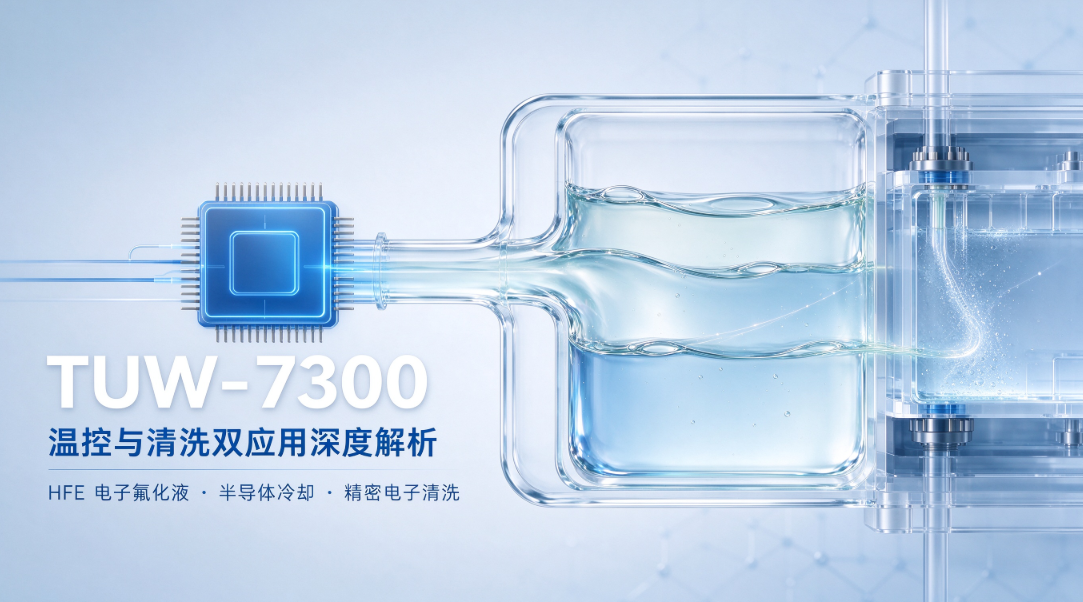
TUW-7300 is a thermally stable hydrofluoroether (HFE) electronic fluorinated fluid, benchmarked against 3M Novec 7300. It combines dual capabilities in semiconductor equipment temperature control and precision electronic cleaning. This article systematically analyzes the dual-scenario application value of TUW-7300, covering product positioning, temperature control applications, cleaning processes, performance parameters, and family product selection.
TUW-7300 HFE Electronic Fluorinated Fluid: In-Depth Analysis of Dual Applications in Semiconductor Equipment Temperature Control and Precision Cleaning

Traditional PCB conformal coating is thick, leaves BGA areas uncovered, and damages pads during rework. This article compares TUW-2704 and TUW-1700 fluoropolymer ultra-thin coatings on film thickness, rework, and protection, and provides selection guidance for NEV electronic control and consumer PCBs.
PCB Nano Conformal Coating Selection: TUW-2704 & TUW-1700 vs. Traditional Conformal Coating
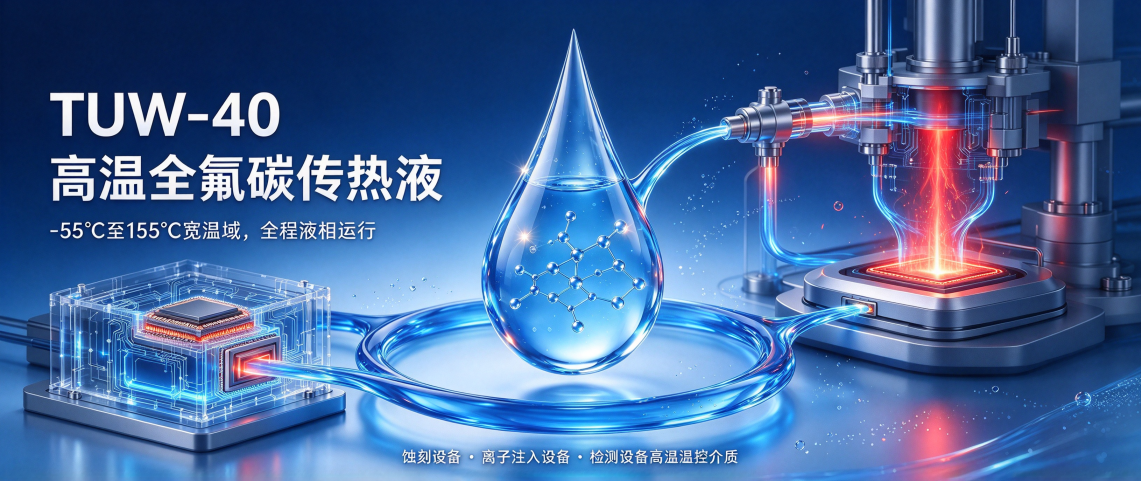
TUW-40 is a single-component perfluorinated heat-transfer fluid covering a liquid range of -55°C to 155°C. With a high boiling point and extremely low evaporation, it is designed for temperature control in etching equipment, ion implantation equipment, and inspection tools. This article details its physical properties, application scenarios, and positioning within the TUW series.
TUW-40 High-Temperature Perfluorocarbon Fluid: -55°C to 155°C Wide Temperature Range — Temperature Control for Etching and Ion Implantation High-Temperature Operations
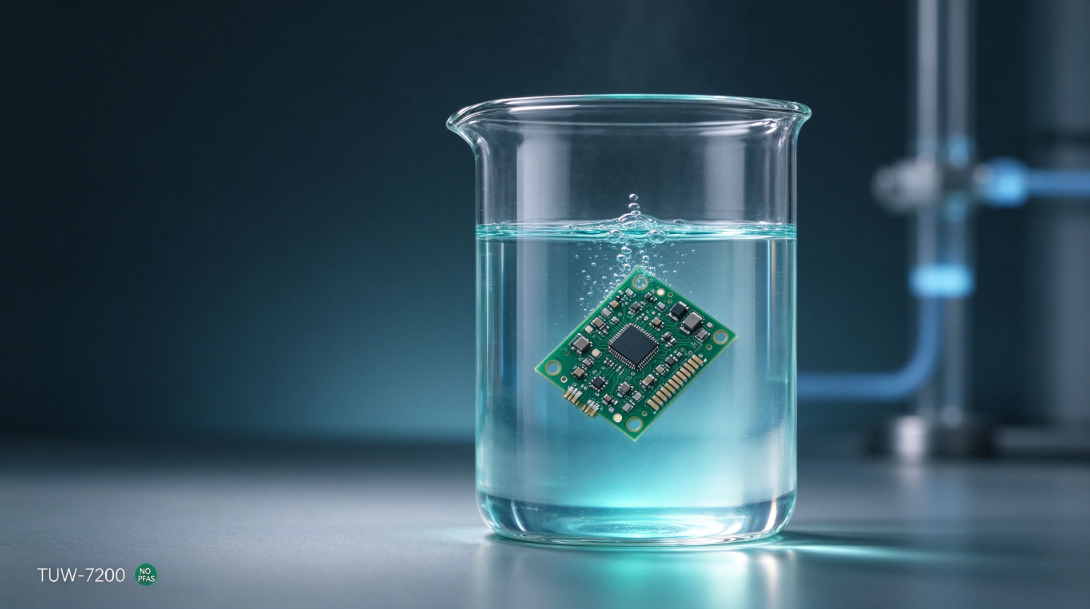
TUW-7200 is a thermally stable perfluorinated liquid that can be used as an electronic cleaning agent, precision cleaner, grease cleaner, cooling medium, hermeticity test fluid, thermostatic fluid, and extraction solvent. This article details its six uses and NO PFAS environmental attributes, and provides guidance on selecting a domestic alternative.
TUW-7200 Electronic Fluorinated Fluid: Precision Cleaning, Hermeticity Leak Testing, Thermostatic Bath — One Fluid for Three Uses, NO PFAS Domestic Alternative