
Conformal Coating vs Nano-Coating: A Complete Comparison Table for Selection
2026-07-16
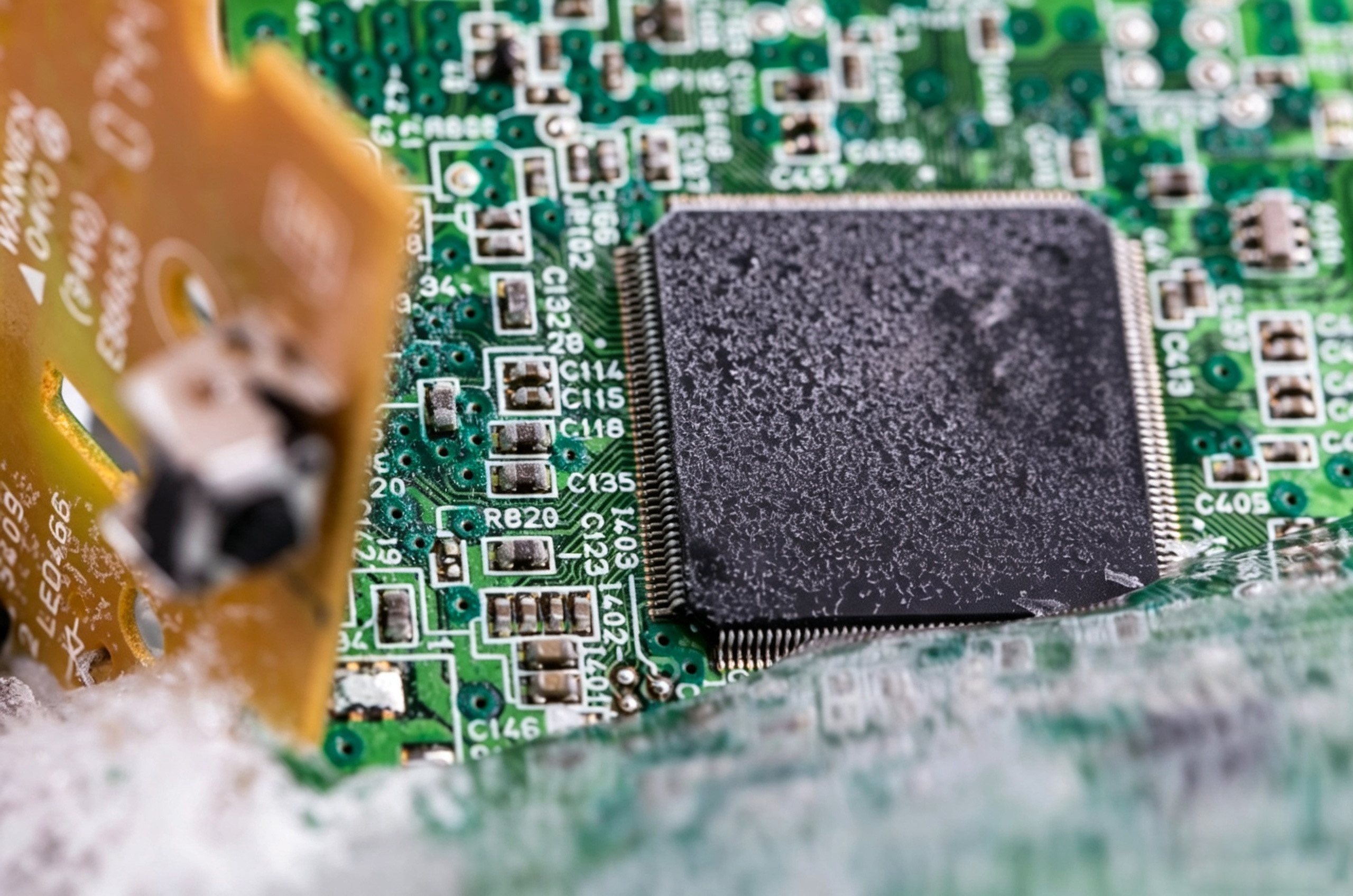
I. Basics: What Does Conformal Coating Protect Against?
Conformal coating delivers three core protections: moisture resistance, anti-corrosion and salt spray resistance. It forms a protective film over PCBA surfaces to block erosion from moisture, chemicals and salt deposits.
Traditional conformal coatings fall into three main categories: acrylic, polyurethane and silicone. They form thick films of 50–200 μm to physically isolate components. Mature and cost-effective, this solution is widely adopted in home appliances, industrial control and other mid-to-low-end applications. However, as electronics trend toward miniaturization, precision and high reliability, critical drawbacks of conformal coating have emerged: thick films hinder heat dissipation, masking is mandatory during application, full curing takes extended time, repair is cumbersome, and high VOC emissions raise environmental concerns.
Nano-coating adopts an innovative new mechanism. Instead of relying on thick physical barriers, it forms an ultra-thin, dense protective layer of 0.1–10 μm at the molecular level, delivering lotus-effect hydrophobic and oleophobic performance. Despite its minimal thickness, its protective performance surpasses conventional conformal coating.
II. Core Comparison Table: All Key Differences at a Glance
| Comparison Dimension | Conformal Coating | Nano-Coating |
|---|---|---|
| Coating Thickness | 50–200 μm (thick film) | 0.1–10 μm (ultra-thin, nearly invisible to naked eye) |
| Waterproof Rating | IPX4–IPX5 | IPX7–IPX8 (fully functional after 30-minute immersion at 1-meter depth) |
| Salt Spray Resistance | Most variants ≤ 48 hours | Standard grade ≥ 96 hours; heavy-duty grade over 500 hours |
| Operating Temperature Range | -40°C ~ 155°C (varies by material) | -70°C ~ 280°C |
| Curing Mechanism | UV curing or high-temperature baking; 24 hours to full surface dry | Ambient self-curing; 3-second dip coating, 3-minute surface dry |
| Application Method | Spray / brush coating; masking required for connectors & gold fingers | Dip / spray coating; masking-free, full 360° coverage |
| Heat Dissipation Impact | Thick film creates thermal barrier, impairs chip heat dissipation | Ultra-thin layer with ultra-low thermal resistance; negligible impact on cooling |
| Signal Interference Risk | May disrupt RF & antenna signals | Low dielectric constant; minimal impact on high-frequency signals |
| Repairability | Old coating requires complete stripping, high risk of PCB damage | Wiped clean with alcohol; supports partial re-coating |
| Environmental Performance | Contains VOC solvents, pungent odor | Zero VOC, RoHS & REACH compliant, faint odor |
| Wear Resistance | Good (hard thick film) | Moderate (primary weakness; post-process reinforcement recommended) |
| Equipment Investment | Spray equipment + UV / baking ovens required | Only dip tank needed; equipment cost cut by 70% |
| Single Board Cycle Time | ~45 minutes (masking + curing included) | ~3 minutes |
| Overall Cost | Low material unit price, high total comprehensive cost | Slightly higher material unit price, lower overall production cost |
III. Application-Specific Selection Guidelines: Opt for Suitability, Not Premium Pricing
After reviewing full parameter comparisons, the selection logic is straightforward: align your choice with application scenarios and protection requirements.
Scenario 1: Consumer Electronics (Wearables, TWS Earbuds, Smart Home Devices)
Recommended: Nano-Coating These compact, high-precision products impose strict limits on appearance and signal integrity. Thick conformal coating occupies internal space and interferes with antenna signals. Nano-coating’s invisible 0.1–10 μm film and 3-second dip coating perfectly match high-takt mass production lines for consumer electronics.
Scenario 2: Outdoor & Industrial Equipment (Base Stations, Outdoor Cameras, IoT Terminals)
Recommended: Nano-Coating Outdoor hardware endures prolonged high humidity, salt spray and thermal cycling, demanding long-lasting robust protection. Nano-coating withstands over 500 hours of salt spray testing and maintains performance through 200 thermal shock cycles, far exceeding the 48-hour limit of standard conformal coating. Mask-free coating covers connectors completely, eliminating unprotected dead zones.
Scenario 3: Automotive Electronics (ECUs, Sensors, BMS Boards)
Recommended: Nano-Coating Automotive circuit boards operate under harsh combined stress: vibration, extreme temperature, salt fog and oil contamination, alongside stringent reliability standards. Nano-coating’s low thermal resistance preserves heat dissipation, low mechanical stress prevents MEMS sensor damage, and stable performance across wide temperature ranges makes it the ideal protective solution for automotive electronics.
Scenario 4: Conventional Home Appliances & Entry-Level Industrial Controls (Power Boards, General Control Panels)
Sufficient: Conformal Coating Choose conformal coating for indoor dry-environment products (non-coastal regions) with basic protection needs, tight cost budgets and no strict thermal or signal performance requirements—it delivers adequate protection at a competitive material price.
Scenario 5: Export Products Subject to International Environmental Regulations
Recommended: Nano-Coating Export goods must comply with global environmental standards including RoHS and REACH. Traditional conformal coatings contain VOC solvents, with many grades failing international compliance inspections. Zero-VOC, non-flammable nano-coating simplifies certification and eliminates regulatory export risks.
IV. Nano-Coating’s Only Limitation: Weak Wear Resistance
Objectively, nano-coating is not a universal perfect solution. Its ultra-micro film thickness results in moderate wear resistance; surface friction may ablate local coating areas and degrade protective performance, whereas thick hard conformal coating offers superior scratch and abrasion resistance.
However, nano-coating remains viable for high-abrasion applications with the following countermeasures:
- Structural shielding: Add mechanical covers over high-friction areas
- Localized heavy coating: Multi-layer dipping boosts film thickness on vulnerable zones
- Hardened-grade formulations: Optimized nano-coating chemistries offer enhanced surface hardness
Conclusion
Conformal coating and nano-coating each serve distinct matching applications; neither holds absolute superiority. A clear industry trend is emerging: as electronics advance toward miniaturization, precision and ultra-high reliability, nano-coating is transitioning from a high-end alternative to mainstream standard protection. The core selection principle is not chasing superior technical specs, but matching coating performance to your product requirements—including protection rating, production cycle speed, environmental compliance and repair expenses—to pick the right solution instead of the priciest one.
Fluorine‑Containing High‑Efficiency Flame‑Retardant Additives: Resolving the Industry‑Wide Dilemma of “Flame Retardancy vs. Transparency” for Polycarbonate
Boiling Points Ranging from 40°C to 270°C What Factors Should You Prioritize When Selecting Fluorinated Liquids?
Related Article
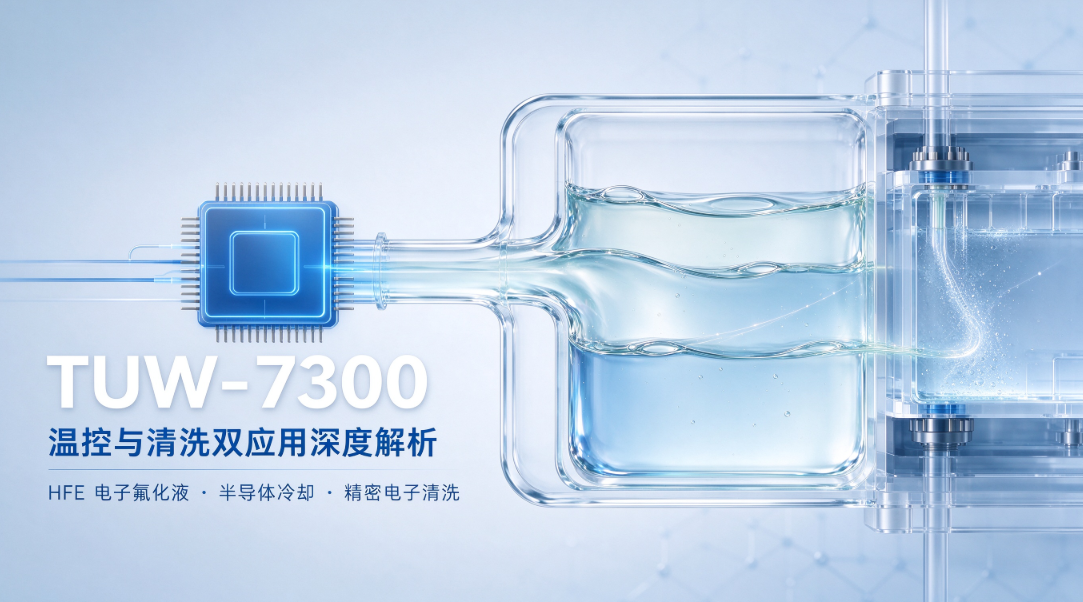
TUW-7300 is a thermally stable hydrofluoroether (HFE) electronic fluorinated fluid, benchmarked against 3M Novec 7300. It combines dual capabilities in semiconductor equipment temperature control and precision electronic cleaning. This article systematically analyzes the dual-scenario application value of TUW-7300, covering product positioning, temperature control applications, cleaning processes, performance parameters, and family product selection.
TUW-7300 HFE Electronic Fluorinated Fluid: In-Depth Analysis of Dual Applications in Semiconductor Equipment Temperature Control and Precision Cleaning

Traditional PCB conformal coating is thick, leaves BGA areas uncovered, and damages pads during rework. This article compares TUW-2704 and TUW-1700 fluoropolymer ultra-thin coatings on film thickness, rework, and protection, and provides selection guidance for NEV electronic control and consumer PCBs.
PCB Nano Conformal Coating Selection: TUW-2704 & TUW-1700 vs. Traditional Conformal Coating
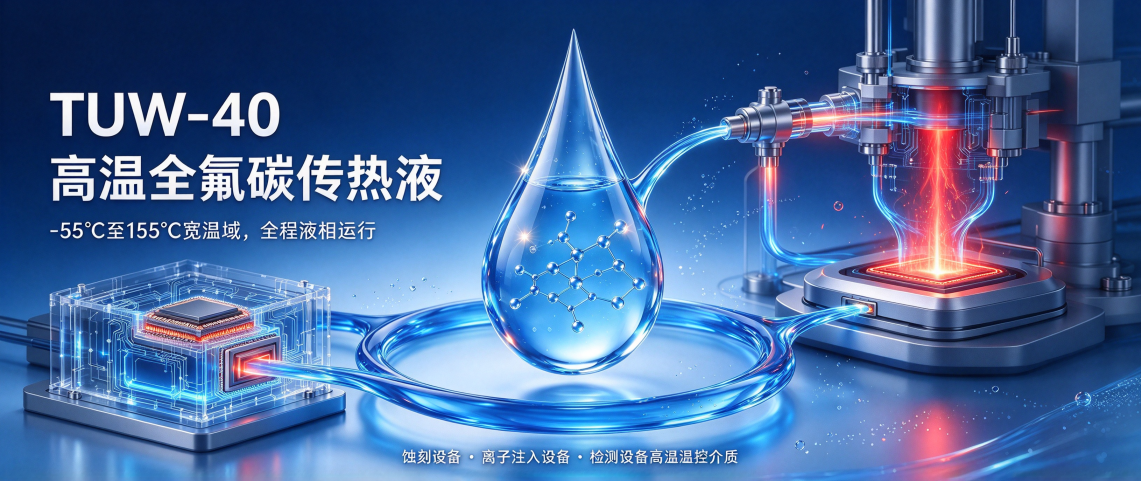
TUW-40 is a single-component perfluorinated heat-transfer fluid covering a liquid range of -55°C to 155°C. With a high boiling point and extremely low evaporation, it is designed for temperature control in etching equipment, ion implantation equipment, and inspection tools. This article details its physical properties, application scenarios, and positioning within the TUW series.
TUW-40 High-Temperature Perfluorocarbon Fluid: -55°C to 155°C Wide Temperature Range — Temperature Control for Etching and Ion Implantation High-Temperature Operations
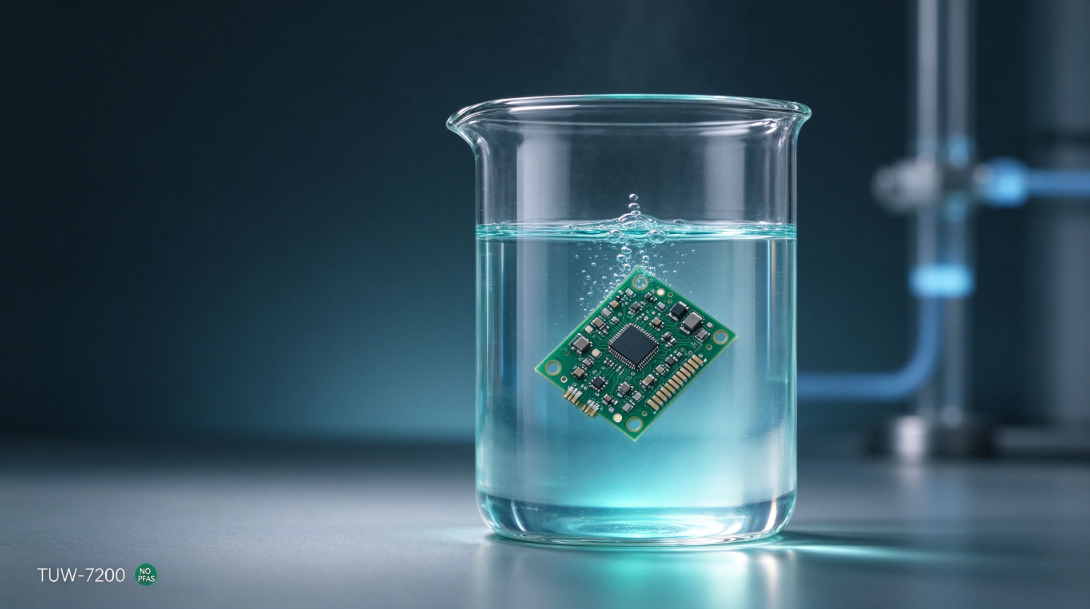
TUW-7200 is a thermally stable perfluorinated liquid that can be used as an electronic cleaning agent, precision cleaner, grease cleaner, cooling medium, hermeticity test fluid, thermostatic fluid, and extraction solvent. This article details its six uses and NO PFAS environmental attributes, and provides guidance on selecting a domestic alternative.
TUW-7200 Electronic Fluorinated Fluid: Precision Cleaning, Hermeticity Leak Testing, Thermostatic Bath — One Fluid for Three Uses, NO PFAS Domestic Alternative