
Boiling Points Ranging from 40°C to 270°C What Factors Should You Prioritize When Selecting Fluorinated Liquids?
2026-07-07
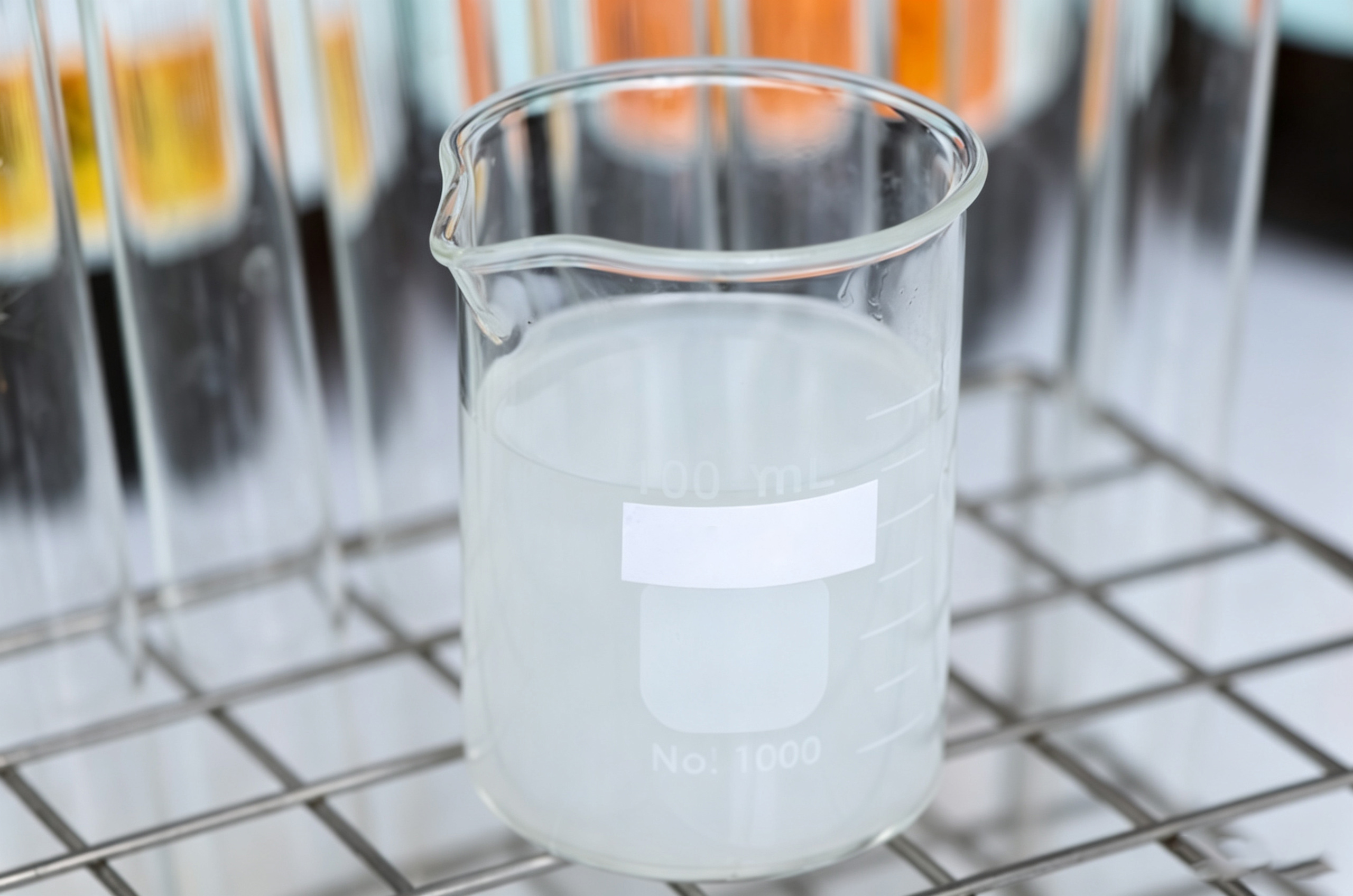
Numerous performance parameters—boiling point, dielectric strength, thermal stability, and material compatibility—all determine whether a fluid is viable for your application. Among these metrics, however, boiling point stands out as the primary screening criterion. It directly dictates the operational temperature window and defines the fluid’s applicable boundaries. Shortlisting candidates first by boiling point, then fine-tuning selections against other parameters, delivers the most efficient evaluation workflow.
Below we break down three boiling point ranges from low to high, covering typical use cases and core selection guidelines for each segment.
Low-Temperature Range: Boiling Point 40–70°C
Precision cleaning constitutes the largest application category here. For semiconductor wafers, optical lenses and medical device cleaning, solvents must evaporate rapidly at ambient temperature without leaving residual deposits. Hydrofluoroether (HFE) formulations with boiling points between 50°C and 61°C dominate this field, as they deliver fast volatilization, non-flammability and zero corrosion to substrates.
Vapor leak testing is another classic application. Low-boiling fluorinated liquids vaporize to form a stable vapor blanket at the top of sealed enclosures. If test pieces contain leaks, vapor escapes through defects to create visible flow trails. Such applications demand tight boiling point control, typically confined to the 49–61°C range.
Low-temperature heat transfer is a third key use case, including laboratory constant-temperature baths and secondary circulation loops for ultra-low freezers with operating temperatures spanning -40°C to 20°C. Fluorinated liquids in this segment must remain liquid and resist solidification across the full temperature band.
Selection Note for Low-Temperature Grades
The core tradeoff here balances volatility and operational safety. Lower boiling points accelerate evaporation yet elevate vapor pressure and fluid consumption rates. Unless ultra-fast drying is an absolute requirement, prioritize grades with boiling points from 55°C to 65°C. Additionally, low-boiling fluorinated fluids may cause swelling in certain rubber seals—material compatibility testing is mandatory upfront.
Medium-Temperature Range: Boiling Point 70–120°C
This range represents the mainstream arena for immersion liquid cooling today.
Single-Phase Immersion Cooling for Data Centers
Operating temperatures are generally maintained between 40°C and 55°C, while fluids require boiling points of 70–100°C to provide a safety margin against boiling triggered by localized hotspots. Benchmark options include the HFE-7500 series with a boiling point of 102°C. These fluids must retain long-term chemical inertness, resisting decomposition and acidic byproduct formation over decades of continuous operation.
Energy Storage Battery Cooling
The design logic mirrors data center systems. Battery packs are fully submerged in fluorinated liquids, with convective heat transfer ensuring uniform cell temperatures. Normal operating temperatures sit at 35–45°C, yet thermal runaway events can push localized temperatures above 150°C. Fluids with excessively low boiling points risk violent vaporization and overpressurization, while overly high boiling points compromise heat dissipation efficiency. Grades with boiling points of 80–100°C paired with engineered pressure relief systems represent the current industry standard.
Direct Cooling for Electronic Components
High-power IGBTs and GPUs rely on direct liquid contact cooling. Some designs adopt phase-change cooling that leverages endothermic vaporization of the fluid. Precise boiling point control is critical here, usually locked to 55–70°C to sustain stable boiling within the chip’s operating temperature envelope.
Selection Note for Medium-Temperature Grades
Long-term chemical stability is paramount for this segment. Liquid cooling systems carry a design lifespan of 10 to 15 years, so fluorinated liquids must avoid substantial degradation over this period. Request accelerated aging test data from suppliers—specifically acid value variation and retained dielectric strength after 1,000 hours of exposure at 85°C / 85% relative humidity. Viscosity also directly impacts pumping power draw and heat exchange efficiency; for single-phase cooling, select fluids with kinematic viscosity below 2 mm²/s.
High-Temperature Range: Boiling Point 150–270°C
Perfluoropolyether (PFPE) fluids dominate the high-boiling segment. Rather than functioning as coolants, they serve as high-temperature heat transfer media and process heat carriers.
- Reflow Soldering Heat Transfer: Specialized soldering processes require inert environments at 200–260°C. High-boiling fluorinated liquids replace thermal oils, offering non-flammable performance with no carbonization or sludge buildup.
- High-Temperature Process Chilling: Semiconductor etching and CVD/PVD chamber temperature control involve wall temperatures exceeding 200°C. High-boiling fluorinated fluids support wide thermal operation from ambient up to 250°C under atmospheric pressure.
- Specialized Thermal Management: Laser equipment cooling and aerospace ground test thermal control. Silicone oils suffer severe oxidation above 250°C, making PFPEs irreplaceable for these extreme-temperature scenarios.
Selection Note for High-Temperature Grades
Thermal stability ranks as the top priority. While PFPEs typically exhibit thermal decomposition temperatures above 300°C, continuous operating temperatures should not exceed 270°C. Always reference the supplier’s specified maximum continuous service temperature. Higher boiling points correspond to elevated viscosity; some PFPE grades reach kinematic viscosities above 10 mm²/s at 100°C, so pump systems must be sized with adequate performance headroom.
Beyond Boiling Point: Other Critical Selection Metrics
Boiling point narrows your candidate pool, but final selection hinges on the following key parameters:
1. Dielectric Strength
A non-negotiable specification for liquid cooling. Direct submersion of electronics risks dielectric breakdown and short circuits with insufficient insulation performance. A minimum rating of >30 kV / 2.5 mm is standard, while data center cooling applications demand >40 kV / 2.5 mm.
2. Latent Heat of Vaporization
The core performance metric for phase-change cooling. Higher latent heat values enable greater heat removal per unit mass of fluid. For ultra-high heat flux chip cooling, every additional 10 kJ/kg of latent heat can eliminate the need for extra heat dissipation hardware.
3. GWP / ODP Environmental Compliance
The global fluorinated fluid supply landscape has shifted dramatically following 3M’s announcement to cease PFAS production in March 2024. Meanwhile, global regulations targeting fluorinated greenhouse gases continue to tighten: the EU F-Gas Regulation mandates reductions in high-GWP fluids, creating compliance risks for export-focused manufacturers. Prioritize new formulations with GWP values below 100 for regulatory alignment.
4. Material Compatibility & Total Cost of Ownership
Compatibility testing is required for all wetted materials in the system, including metals, plastics, rubber gaskets and solder masks. Cost-wise, fluorinated liquid unit prices range from dozens to hundreds of RMB per kilogram. However, full-lifecycle economics depend on evaporation loss rates, recovery efficiency and maintenance frequency. Certain high-boiling grades deliver extremely low vapor losses, translating to lower long-term overall costs despite higher upfront pricing.
Closing Remarks
No single universal fluorinated liquid fits every application. A fluid delivering exceptional performance in liquid cooling may prove entirely unsuitable for precision cleaning workflows. Fluid selection ultimately requires precise matching between the fluorinated liquid’s physical properties and your process operating conditions.
With 3M exiting PFAS manufacturing, the fluorinated liquid supply chain has undergone restructuring, bringing a wider range of new formulations to market and expanding selection options for end users. Even so, rigorous performance validation cannot be skipped. Engage supplier technical teams during the selection phase to obtain complete Technical Data Sheets (TDS) and material compatibility reports, and conduct bench-scale trials before full-scale deployment. Liquid cooling systems operate continuously for over a decade—making correct upfront selection the foundation of hassle-free long-term operation.
Conformal Coating vs Nano-Coating: A Complete Comparison Table for Selection
Perfluoropolyether (PFPE) Oil as Cosmetic Additive: Core Edge – Silky Slip Without Greasiness
Related Article
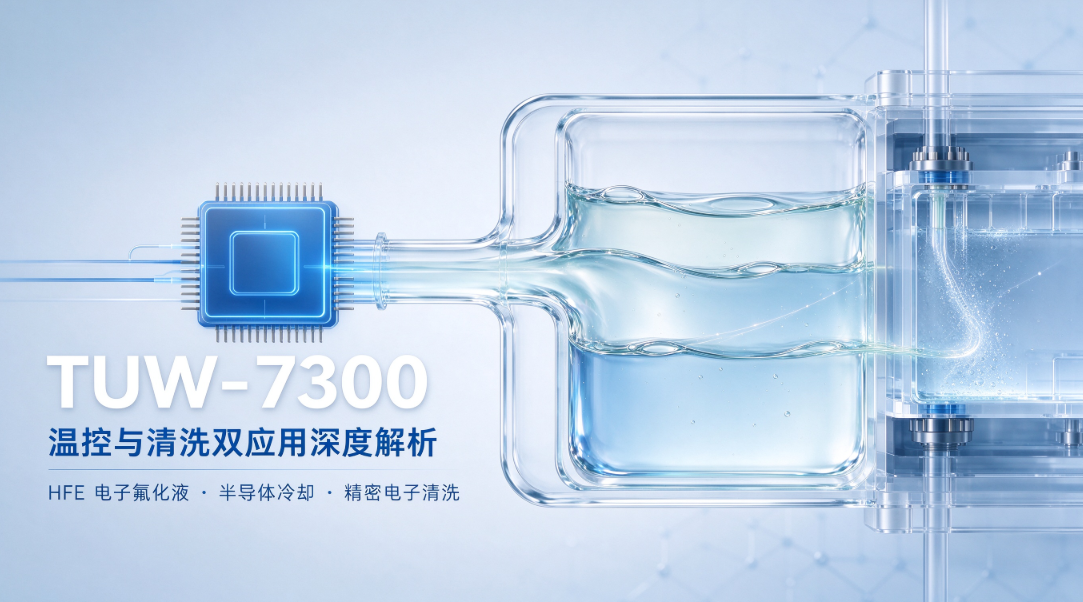
TUW-7300 is a thermally stable hydrofluoroether (HFE) electronic fluorinated fluid, benchmarked against 3M Novec 7300. It combines dual capabilities in semiconductor equipment temperature control and precision electronic cleaning. This article systematically analyzes the dual-scenario application value of TUW-7300, covering product positioning, temperature control applications, cleaning processes, performance parameters, and family product selection.
TUW-7300 HFE Electronic Fluorinated Fluid: In-Depth Analysis of Dual Applications in Semiconductor Equipment Temperature Control and Precision Cleaning

Traditional PCB conformal coating is thick, leaves BGA areas uncovered, and damages pads during rework. This article compares TUW-2704 and TUW-1700 fluoropolymer ultra-thin coatings on film thickness, rework, and protection, and provides selection guidance for NEV electronic control and consumer PCBs.
PCB Nano Conformal Coating Selection: TUW-2704 & TUW-1700 vs. Traditional Conformal Coating
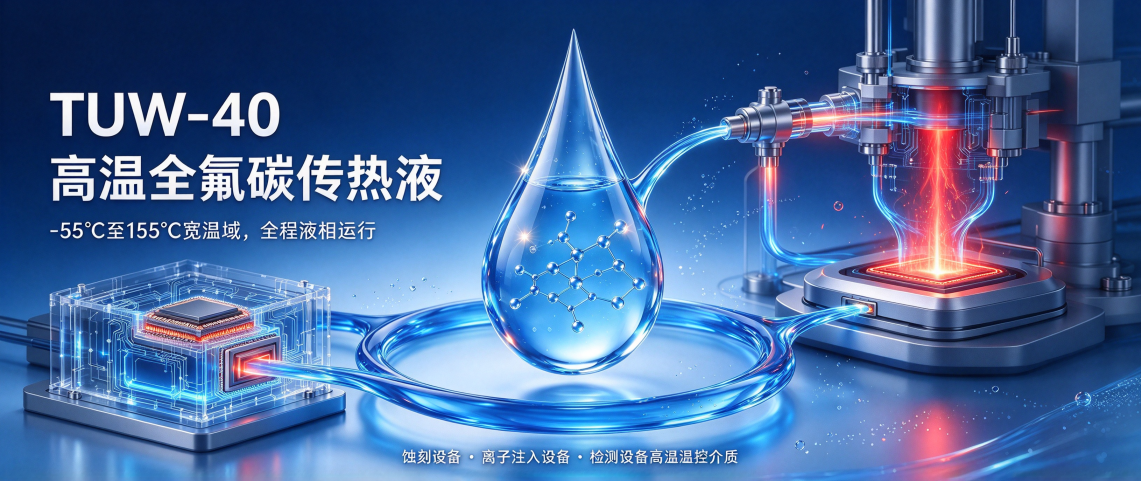
TUW-40 is a single-component perfluorinated heat-transfer fluid covering a liquid range of -55°C to 155°C. With a high boiling point and extremely low evaporation, it is designed for temperature control in etching equipment, ion implantation equipment, and inspection tools. This article details its physical properties, application scenarios, and positioning within the TUW series.
TUW-40 High-Temperature Perfluorocarbon Fluid: -55°C to 155°C Wide Temperature Range — Temperature Control for Etching and Ion Implantation High-Temperature Operations
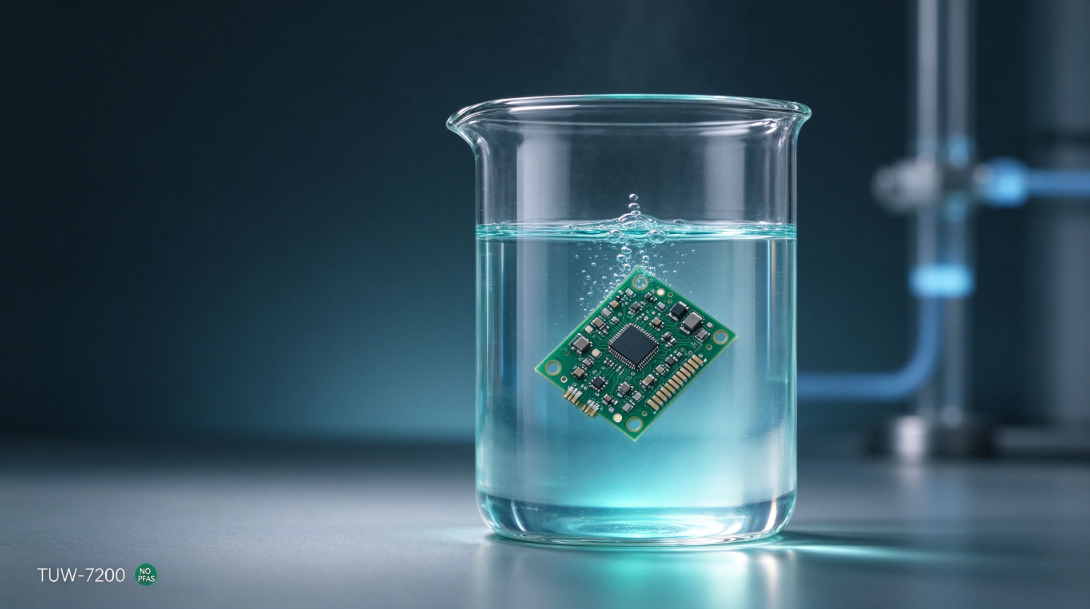
TUW-7200 is a thermally stable perfluorinated liquid that can be used as an electronic cleaning agent, precision cleaner, grease cleaner, cooling medium, hermeticity test fluid, thermostatic fluid, and extraction solvent. This article details its six uses and NO PFAS environmental attributes, and provides guidance on selecting a domestic alternative.
TUW-7200 Electronic Fluorinated Fluid: Precision Cleaning, Hermeticity Leak Testing, Thermostatic Bath — One Fluid for Three Uses, NO PFAS Domestic Alternative