
The AI Computing Era: How to Choose Data Center Immersion Cooling Fluid? Complete Analysis of 7500 Hydrofluoroether
2026-09-18
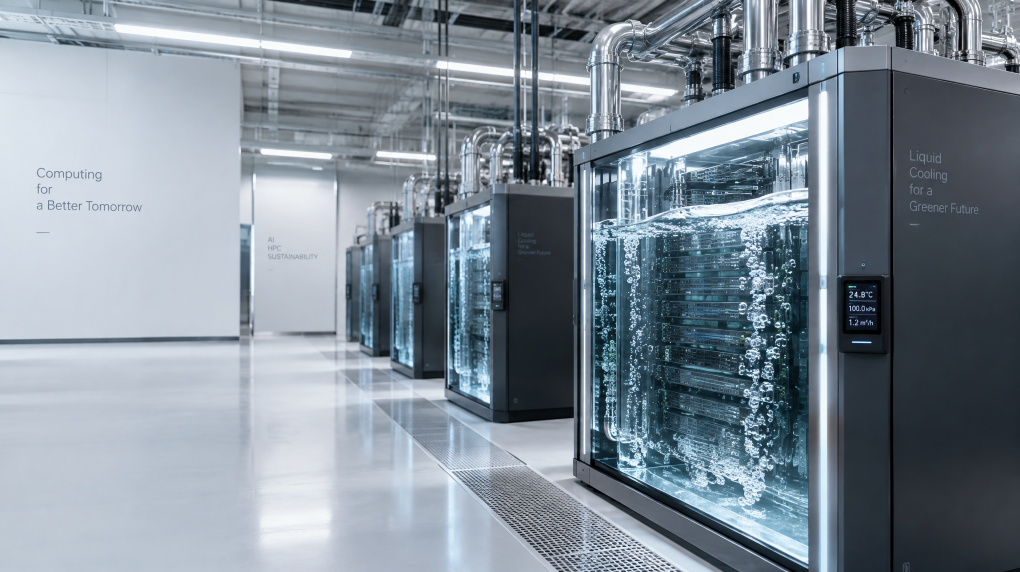
The surge in computing demand driven by AI large-model training and inference continues to push up single-chip power consumption and per-rack power density. Traditional air cooling, which relies on air convection for heat exchange, can no longer cope with high heat flux density; problems such as rack hot spots, uneven heat dissipation, and excessive energy consumption are becoming increasingly prominent.
At the same time, regulators are tightening requirements on data center energy efficiency (PUE, or Power Usage Effectiveness), making green and low-carbon operation a hard requirement. Thanks to its higher heat exchange efficiency, liquid cooling has evolved from an "option" to a "must", and immersion liquid cooling is widely recognized as the premium solution.
What is 7500: a hydrofluoroether designed for heat transfer
7500 belongs to the hydrofluoroether (HFE) family and is an engineered electronic fluorinated fluid designed for heat transfer and cooling applications. Hydrofluoroethers are hydrogen-containing fluorinated ether compounds that combine the stability of fluorides with a moderate molecular structure. As a result, they maintain excellent dielectric and chemical stability while having a significantly lower global warming potential (GWP) than perfluorocarbon fluids, making them the mainstream green choice among electronic cooling media today.
7500 has a clear position in the product line: with heat transfer/cooling as its core purpose, it targets data center immersion cooling and electronic thermal management scenarios, and is the flagship model for cooling applications.
Core properties of 7500
Excellent electrical insulation: The cooling fluid comes into direct contact with live components and circuit boards. 7500 offers high dielectric strength and can be safely used in energized environments, avoiding the risks of short circuits and leakage.
Chemically stable: It is well compatible with metals, plastics, seals, cables and other materials; long-term contact causes no corrosion or swelling, ensuring long-term stable system operation.
Non-flammable: It neither burns nor supports combustion, significantly reducing fire risk in data centers — a core safety advantage over hydrocarbon oil-based cooling media.
Balanced thermal conductivity and flow performance: With good heat transfer capability and low viscosity, it efficiently carries heat away while circulating smoothly through pumps, adapting to the flow design of immersion tanks.
Outstanding environmental attributes: Low GWP and zero ODP (Ozone Depletion Potential), meeting the requirements of green data center construction and carbon footprint accounting.
Main application: data center immersion cooling
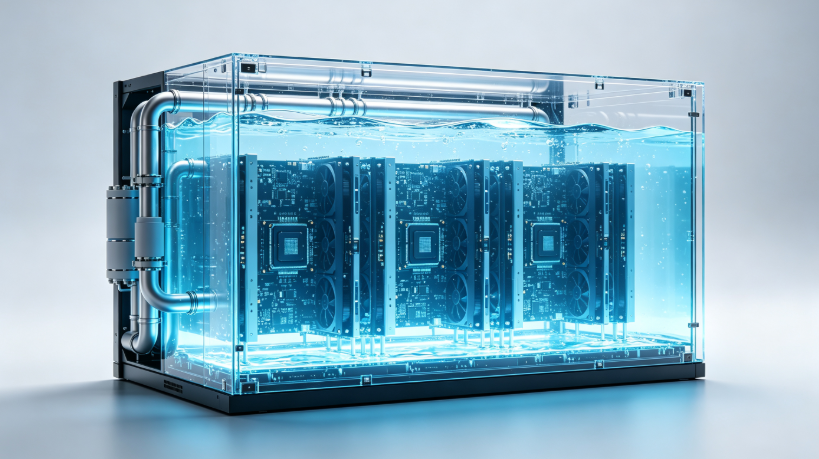
Immersion liquid cooling submerges entire servers or core components directly into the cooling fluid, which comes into direct contact with heat-generating components for heat exchange. The heat transfer path is short and the heat exchange efficiency is high, leaving virtually no cooling dead zones. It can support ultra-high power density racks while greatly reducing fan energy consumption and noise.
7500 is the primary medium for this scenario: in single-phase immersion solutions, the entire server is submerged in the cooling fluid, which carries heat away by the liquid's specific heat capacity; the fluid is then cooled by external heat exchange equipment and recirculated. For high power density scenarios such as AI servers and intelligent computing centers, 7500 effectively controls chip and module temperatures, ensuring stable computing output.
Extended applications: electronic thermal management and more cooling scenarios
In addition to data center immersion cooling, 7500 is also widely used for: thermal management of AI servers and high-performance computing clusters; heat dissipation of high-power equipment such as power electronics and energy storage converters; constant-temperature media for high/low-temperature testing of electronic equipment; and special cooling scenarios requiring insulation, safety and no residue. For processes that require both cooling and insulation protection, 7500 covers both with a single fluid.
Comparison with other cooling media
Compared with hydrocarbon oils and silicone oils: 7500 offers superior electrical insulation and chemical inertness, is non-flammable, and has clear advantages in safety and compatibility, with simpler maintenance.
Compared with perfluorocarbon fluids (PFC): 7500 has lower GWP and is more environmentally friendly, better aligned with green data center requirements; PFC fluids, however, have a wider temperature range and are better suited to extreme temperature conditions. For routine data center thermal management scenarios, 7500 is the more balanced choice.
Selection and usage recommendations
First, determine whether to use a single-phase or two-phase immersion solution, as different solutions impose different requirements on the boiling point and latent heat of the medium. Second, evaluate the compatibility of the cooling fluid with server materials, seals and cables. Third, pay attention to the long-term stability of the medium as well as the refill and recovery system. Fourth, assess supply chain stability and environmental compliance. It is recommended to complete small-scale validation early in the project before rolling out at scale.
In summary, 7500 hydrofluoroether balances performance, safety and environmental friendliness, making it a reliable medium for data center immersion cooling. By evaluating power density, temperature range and operating conditions during selection, its value can be maximized.
Related Article
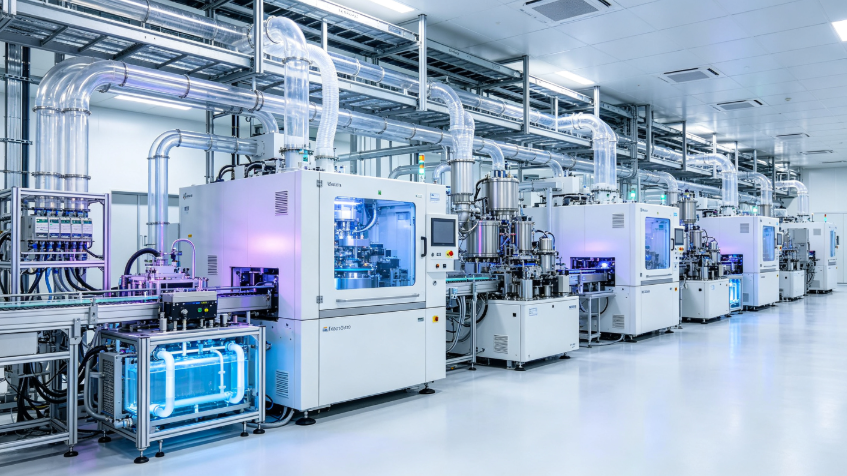
FC-3283 is a PFC thermal fluid for semiconductor etching, ion implantation, CVD and thermal shock testing. See key specs, product advantages, selection tips and TUW PFC/HFE alternatives.
Hidden Thermal Control Master in Wafer Fabs: How FC-3283 Safeguards Etching and Ion Implantation
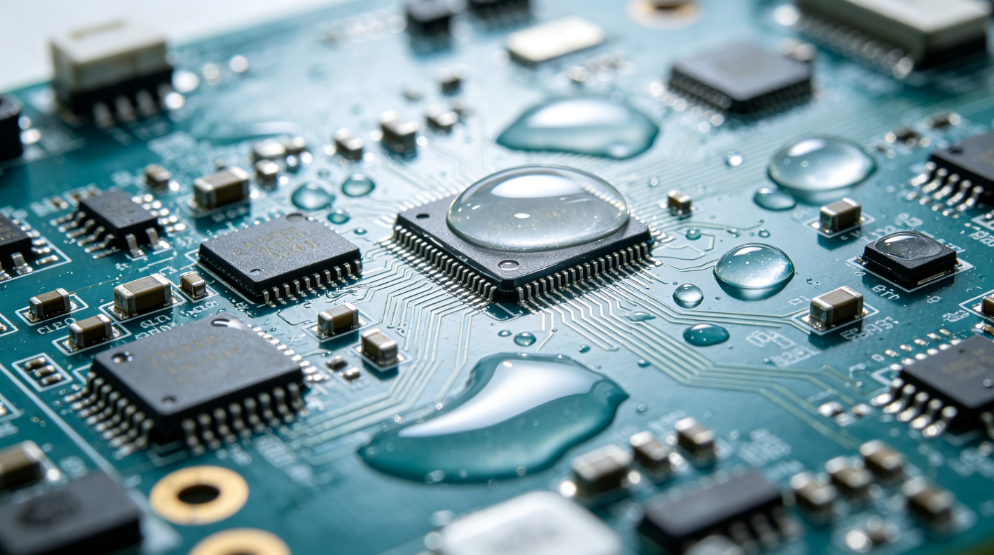
How does a ~1μm nano conformal coating protect PCBs from water, moisture, salt spray and corrosion? Compare EGC-1700, Novec 2704, 5018 and 5058 features, applications and selection tips.
1-Micron “Invisible Armor”: How Nano Conformal Coatings Deliver Waterproof, Moisture-Proof and Anti-Corrosion Protection
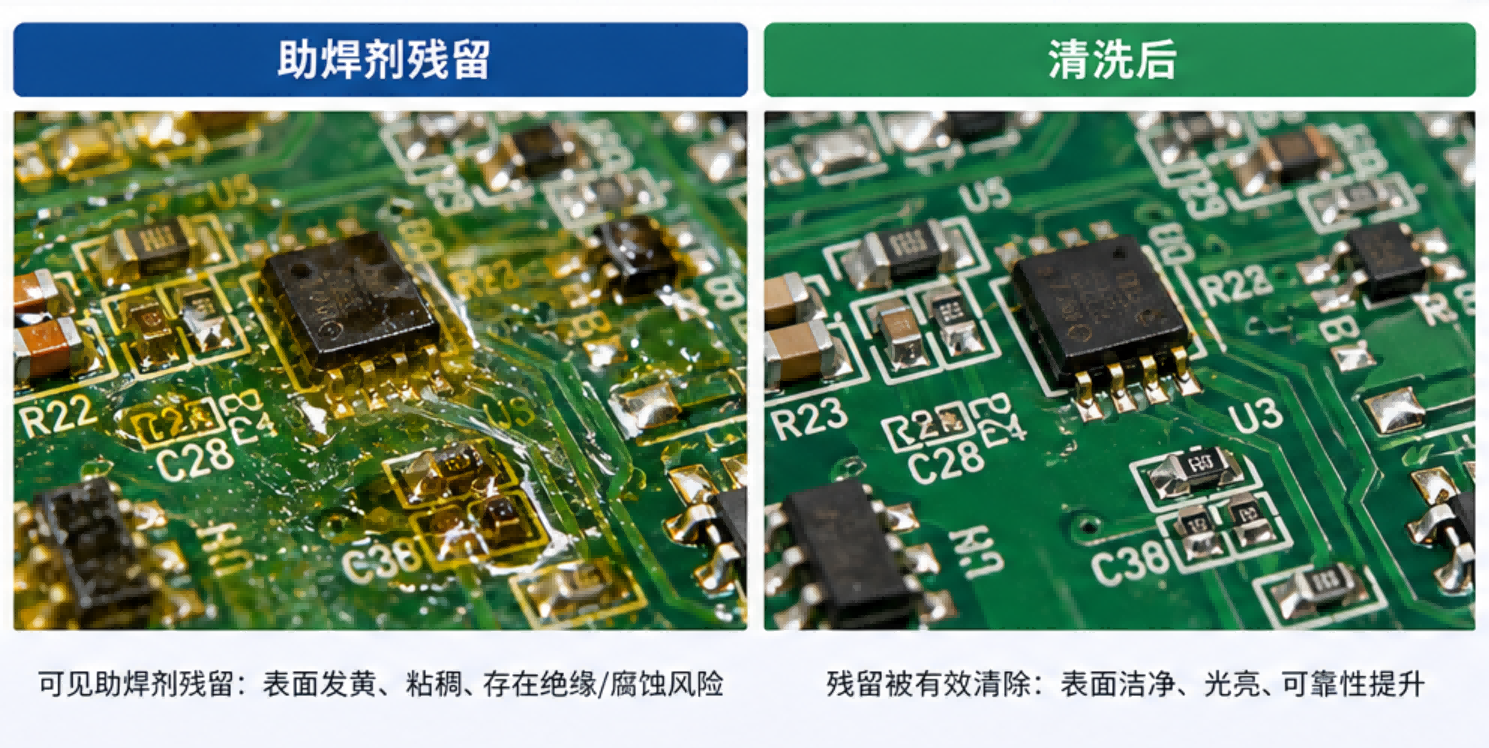
This article focuses on the core problem of PCBA post-welding cleaning in high-reliability scenarios, analyzes three major hidden dangers of no-clean solder paste residues including electrochemical migration, circuit corrosion and process failure. It compares the advantages and disadvantages of traditional water cleaning and solvent cleaning, and highlights the product parameters of environmentally compliant HFE azeotropic cleaning solvents. Accurate selection schemes are provided according to d
To Clean or Not to Clean PCBA? Hidden Risks of Flux Residue and HFE Azeotropic Cleaning Solvent Solutions
AI‑driven computing power surges raise cabinet power consumption, pushing traditional air‑cooling to its physical limits. Immersion liquid cooling has become the mainstream thermal solution for AI data centers. This article analyzes core properties of electronic fluorinated fluids, compares key parameters of HFE‑7500 and FC‑40, and provides medium‑selection guidelines as well as domestic alternative references.
AI Computing Power Surges: Is Immersion Cooling Becoming a Must‑Have for Data Centers? Full Analysis of Immersion Liquid Cooling and Electronic Fluorinated Fluids