
TUW-7300 HFE Electronic Fluorinated Fluid: In-Depth Analysis of Dual Applications in Semiconductor Equipment Temperature Control and Precision Cleaning
2026-10-23
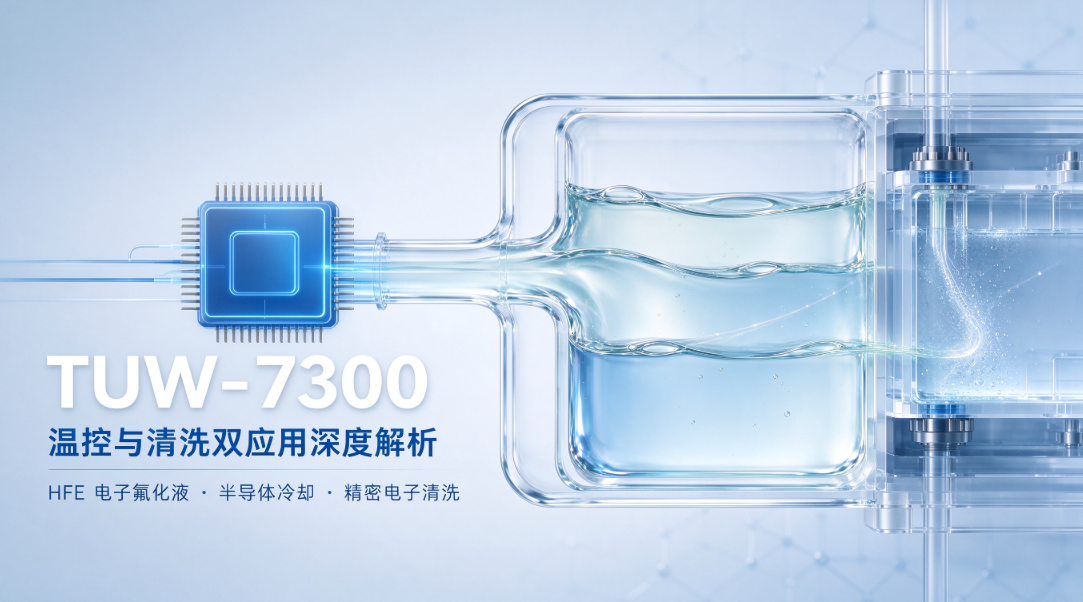
In semiconductor manufacturing and precision electronics manufacturing, electronic fluorinated fluids are upgrading from general-purpose heat transfer media to critical materials affecting equipment stability and process yield. Unlike wet chemicals that directly act on wafer surfaces, electronic fluorinated fluids primarily enter at the equipment end, taking on two core functions: equipment temperature control/cooling and precision component cleaning.
Electronic fluorinated fluids mainly include two categories: PFPE (perfluoropolyether) coolants and HFE (hydrofluoroether) cleaning fluids. The former, with a perfluoroether chain as its main structural backbone, boasts excellent thermal stability and chemical inertness, making it the preferred medium for high-end equipment temperature control. The latter, as an environmentally friendly precision cleaning agent, is known for low surface tension, low residue, and good material compatibility.
Within the HFE product line, most products specialize either in temperature control or cleaning. TUW-7300 is distinctive in that it occupies both tracks simultaneously—it serves as both a cooling medium and constant-temperature fluid for semiconductor equipment, and a cleaning agent for precision electronic components. This "one fluid, two uses" characteristic makes it exceptionally practical on production lines with frequent equipment maintenance and process changes.
1. HFE Electronic Fluorinated Fluids and TUW-7300 Product Positioning
1.1 Two Technical Routes of Electronic Fluorinated Fluids
In the thermal management and precision cleaning systems of semiconductor equipment, electronic fluorinated fluids are mainly divided into two technical routes:
- PFPE (Perfluoropolyether): With a perfluoroether chain as its main structural backbone, the high bond energy of C-F bonds endows the material with excellent chemical inertness and thermal stability. It is the preferred medium for high-end semiconductor equipment temperature control, providing precise temperature control for etching machines, CVD/PVD deposition equipment, testing equipment, and vacuum systems through Chiller/TCU closed-loop circuits.
- HFE (Hydrofluoroether): Mainly used as an environmentally friendly precision cleaning agent, it features low surface tension, low residue, good material compatibility, and fast drying. It is suitable for cleaning semiconductor equipment components, vacuum chambers, valves, showerheads, optical elements, and precision electronics.
TUW-7300 belongs to the HFE system, but on the basis of traditional HFE cleaning fluids, it has enhanced temperature control performance, becoming a versatile product for both "temperature control + cleaning" dual scenarios.
1.2 TUW-7300: An HFE Product Benchmarked Against 3M Novec 7300
TUW-7300 is a thermally stable hydrofluoroether (HFE) electronic fluorinated fluid, directly benchmarked against 3M Novec 7300. It possesses excellent chemical inertness, is non-toxic and odorless, non-flammable, has low surface tension, excellent thermal conductivity, and is VOC-free.
Compared with TUW-7200, TUW-7300 has a clearer positioning in semiconductor cooling scenarios (categorized as semiconductor cooling fluid), while fully retaining its precision cleaning capability. It is one of the HFE family models with the strongest temperature control attributes.
2. Temperature Control Scenario: Semiconductor Equipment Cooling and Constant-Temperature Applications
2.1 Stringent Requirements of Semiconductor Equipment Temperature Control
In semiconductor manufacturing, equipment such as etching, deposition, testing, and vacuum systems requires stable temperature control for process chambers, electrostatic chucks, wafer stages, and key moving components during operation. Taking dry etching as an example, even minor fluctuations in chamber temperature directly affect etch rate, selectivity, and profile accuracy, which in turn affect device electrical performance and yield.
Semiconductor equipment temperature control fluids need to simultaneously meet the following multiple requirements:
- Low-temperature fluidity: The medium remains liquid throughout, from the low-temperature return water of the chiller to the high-temperature outlet water of the process chamber.
- Thermal stability: No decomposition or precipitation during long-term high-temperature operation.
- Electrical insulation: The temperature control circuit is adjacent to high-voltage RF electrodes and beam components.
- Chemical inertness: Long-term contact with metal chambers, seals, and O-rings without corrosion or swelling.
- Low volatility: Reduces loss and contamination of the process environment.
2.2 TUW-7300 Temperature Control Circuit Operating Mode
As a cooling medium, TUW-7300 can be used in temperature control circuits of semiconductor equipment through Chiller/TCU (Temperature Control Unit) closed-loop circuits; as a constant-temperature fluid, it can be used in process tanks and test platforms requiring precise temperature control.
In the closed-loop system, TUW-7300 is driven by a pump, passes through filters and heat exchangers, and enters key temperature control parts of the semiconductor equipment—process chambers, ESC (Electrostatic Chuck), wafer stages, and chamber walls—absorbing heat generated during the process and then returning to the temperature control unit, forming a complete closed loop.

2.3 Core Advantages in Temperature Control Performance
TUW-7300's core advantages in temperature control scenarios are reflected in three aspects:
- Small low-temperature viscosity change: Ensures smooth circuit fluidity under low-temperature conditions, low pump running resistance, and fast heat exchange response.
- Excellent thermal conductivity: Ensures heat exchange efficiency, allowing heat to be quickly transferred from process parts to the temperature control unit.
- Excellent chemical inertness: Ensures no corrosion of circuit materials and no precipitation during long-term operation, extending the life of pipelines and seals and reducing maintenance costs.
3. Cleaning Scenario: Precision Electronics and Low-Residue Oil Contamination Cleaning
3.1 Industry Pain Points in Precision Cleaning
As semiconductor process nodes continue to advance, the cleaning requirements for equipment components and precision electronic parts keep escalating. Chamber components, valves, optical elements, and advanced packaging parts have increasingly high requirements for residue control, material corrosion, and drying cleanliness.
Traditional cleaning agents, when dealing with complex structural parts, often have problems such as high surface tension, poor permeability, high residue, and insufficient material compatibility, making it difficult to meet the cleanliness requirements of advanced manufacturing processes.
3.2 TUW-7300 Cleaning Methods and Penetration Capability
TUW-7300 can be used as a precision electronic cleaning agent and oil contamination cleaning agent. Its low surface tension enables it to penetrate tiny gaps, removing grease, particles, and organic residues; it leaves no residue after volatilization, making it suitable for electronic parts requiring high cleanliness.
Depending on the shape, size, and contamination type of the cleaning object, TUW-7300 can be used in multiple ways:
- Immersion cleaning: Suitable for complex-shaped parts with many gaps; soaking allows the liquid to fully contact all surfaces.
- Spray cleaning: Removes particles and loose contaminants through high-pressure spraying, suitable for large-area parts.
- Wiping cleaning: Used for optical elements, precision electronics, and other sensitive parts not suitable for immersion.
The VOC-free and non-flash-point characteristics make TUW-7300 an environmentally friendly alternative to traditional organic solvents.
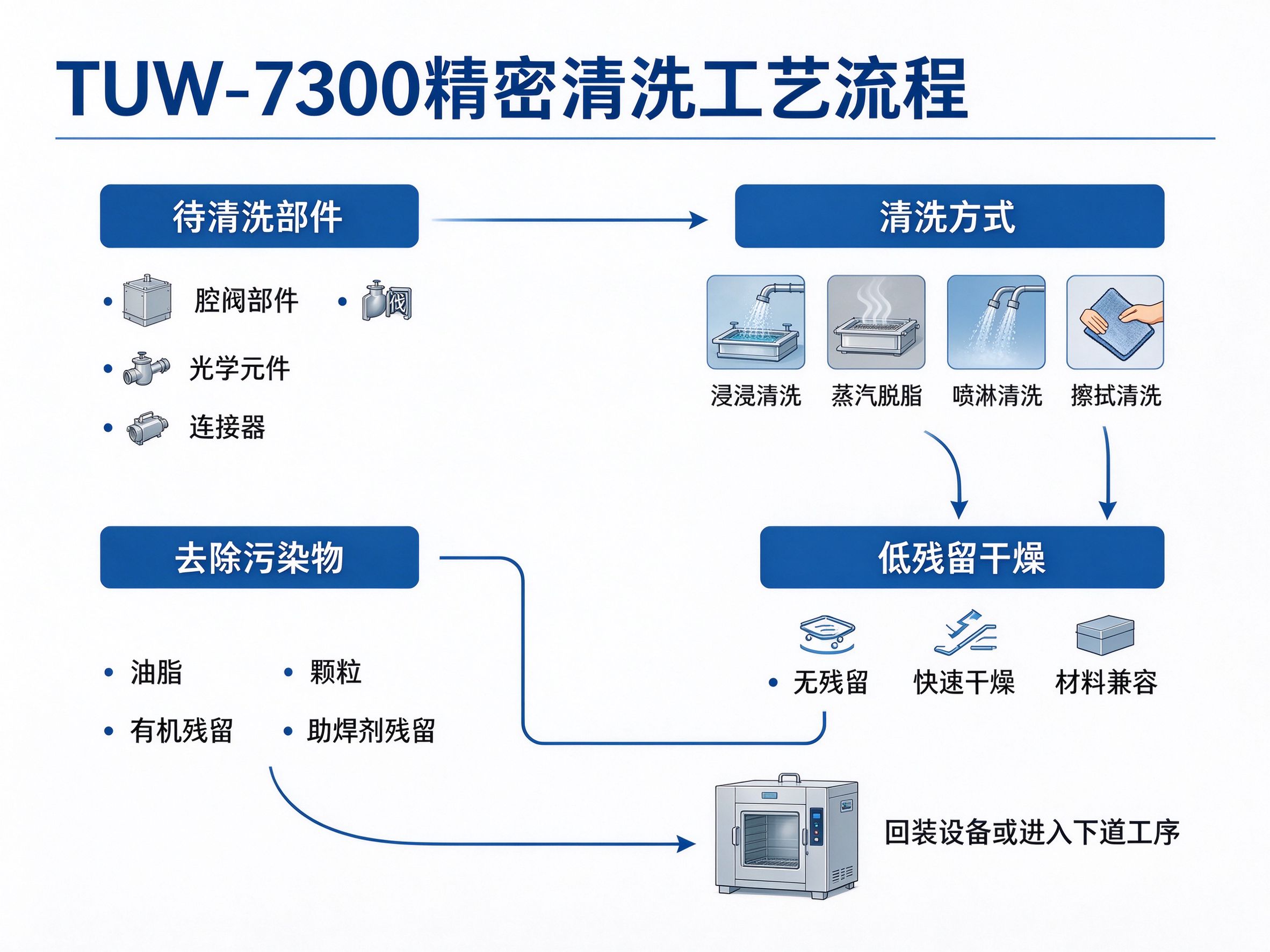
3.3 Typical Cleaning Objects and Removed Contaminants
|
Cleaning Object
|
Typical Contaminants
|
Cleaning Method
|
TUW-7300 Value
|
|
Semiconductor equipment chamber parts
|
Grease, particles, organic residues
|
Immersion, spray
|
Good penetration in complex structures, low residue
|
|
Valves / pipeline parts
|
Micro metal contamination, particles, oil contamination
|
Spray, precision cleaning
|
Material compatibility, reduced corrosion risk
|
|
Optical elements / precision electronics
|
Fingerprints, particles, organic contamination
|
Wiping, spray
|
Does not damage parts, fast drying
|
|
PCB / connectors / packaging parts
|
Flux residues, organic contamination
|
Immersion, vapor degreasing
|
Low surface tension, environmentally friendly alternative
|
4. Leak Testing and Extraction Applications
4.1 Leak Testing Medium
In leak testing, TUW-7300 can be used as a test medium. Its low volatility and chemical inertness ensure stable test results. The low evaporation potential means small liquid level changes during testing, avoiding judgment accuracy issues caused by rapid liquid volatilization; chemical inertness ensures no corrosion or contamination of the tested parts.
4.2 Extraction Temperature Control and Solvent Applications
In extraction scenarios, TUW-7300 can be used as an extraction temperature control fluid and extraction solvent, for temperature control and target component extraction in solvent extraction processes. When used as a temperature control fluid, its excellent thermal conductivity and wide temperature range adaptability ensure stable extraction system temperature; when used as a solvent, its chemical inertness and selective dissolution capability can be used for extraction of specific components.
5. TUW-7300 Core Performance Parameter Matrix
|
Performance Requirement
|
Corresponding Equipment Pain Point
|
TUW-7300 Value
|
|
Chemical inertness
|
Long-term contact with metal chambers and seals without corrosion or swelling
|
Non-toxic, odorless, non-flammable, good material compatibility
|
|
Low surface tension
|
Poor permeability in complex gaps, incomplete cleaning
|
Low surface tension, low evaporation potential, penetrates gaps, little residue after volatilization
|
|
Thermal conductivity
|
Insufficient heat exchange efficiency, slow temperature control response
|
Excellent thermal conductivity, efficient temperature control heat exchange
|
|
Electrical insulation
|
Proximity to high-voltage electrodes, electrical safety risks
|
Excellent electrical insulation, can be used in energized component environments
|
|
Low-temperature fluidity
|
Viscosity rises in low-temperature environments, large circulation resistance
|
Small low-temperature viscosity change, good low-temperature fluidity
|
|
Environmental compliance
|
Traditional solvents have high VOC and non-zero ODP
|
ODP=0, low GWP, no VOC, meets environmental regulations
|
|
Cost-effectiveness
|
High consumption cost of cleaning/cooling fluids
|
Can be distilled and regenerated, reused to reduce costs
|
6. TUW Family Product Comparison
In the TUW series of HFE electronic fluorinated fluids, TUW-7100, TUW-7200, and TUW-7300 form a complete product matrix from general-purpose to specialized models. Selection should be matched according to core application scenarios:
|
Model
|
Positioning
|
Core Application
|
Differentiator
|
|
TUW-7100
|
All-rounder
|
Chamber cleaning, FOUP cleaning, immersion cooling
|
Methyl nonafluorobutyl ether, widest range of uses
|
|
TUW-7200
|
Cleaning + testing + constant temperature
|
Electronic cleaning, leak testing, constant temperature bath
|
More focused on testing scenarios
|
|
TUW-7300
|
Dual temperature control + cleaning
|
Semiconductor cooling, precision electronic cleaning
|
Clearer cooling positioning
|
7. Conclusion and Supply Solution
TUW-7300, as the representative product of "temperature control + cleaning" dual applications in the HFE electronic fluorinated fluid family, inherits the cleaning advantages of HFE materials—low surface tension, low residue, environmental non-toxicity—while enhancing thermal conductivity and low-temperature fluidity, enabling it to meet the long-term operation requirements of semiconductor equipment temperature control circuits.
Against the backdrop of international giants gradually exiting the fluorinated coolant market, domestic electronic fluorinated fluids are embracing historic development opportunities. Shenzhen Huayi Brothers focuses on electronic fluorinated fluids and fluorinated functional liquids supply. TUW-7300 directly benchmarks against 3M Novec 7300, providing reliable domestic alternative options for semiconductor equipment manufacturers. For sample testing or technical exchanges, please feel free to contact us.
PCB Nano Conformal Coating Selection: TUW-2704 & TUW-1700 vs. Traditional Conformal Coating
Related Article
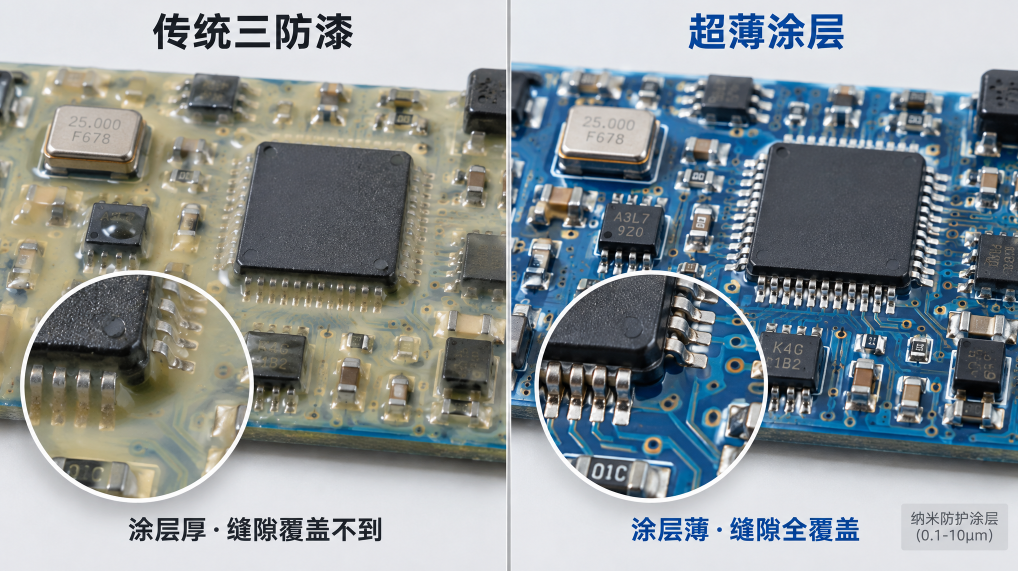
Traditional PCB conformal coating is thick, leaves BGA areas uncovered, and damages pads during rework. This article compares TUW-2704 and TUW-1700 fluoropolymer ultra-thin coatings on film thickness, rework, and protection, and provides selection guidance for NEV electronic control and consumer PCBs.
PCB Nano Conformal Coating Selection: TUW-2704 & TUW-1700 vs. Traditional Conformal Coating
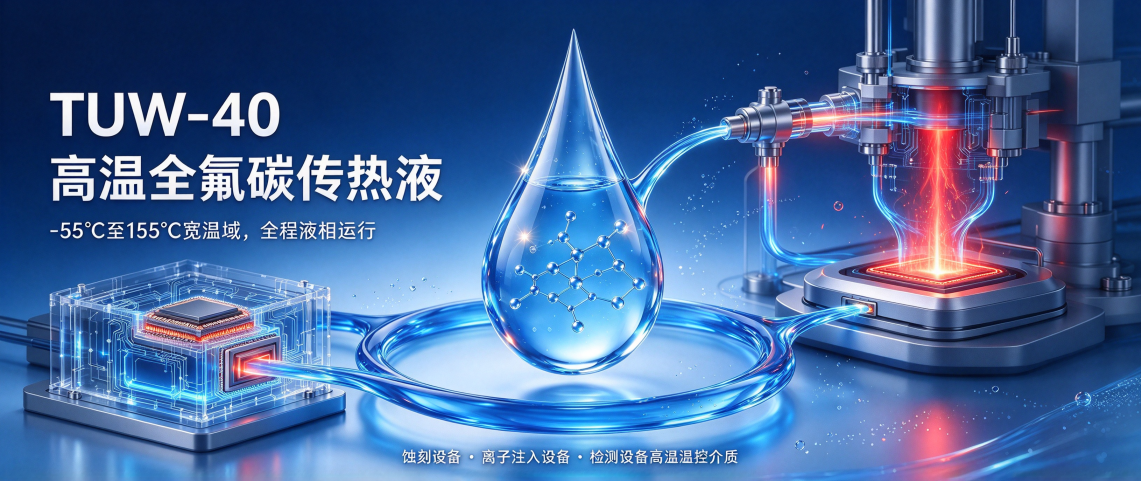
TUW-40 is a single-component perfluorinated heat-transfer fluid covering a liquid range of -55°C to 155°C. With a high boiling point and extremely low evaporation, it is designed for temperature control in etching equipment, ion implantation equipment, and inspection tools. This article details its physical properties, application scenarios, and positioning within the TUW series.
TUW-40 High-Temperature Perfluorocarbon Fluid: -55°C to 155°C Wide Temperature Range — Temperature Control for Etching and Ion Implantation High-Temperature Operations
TUW-7200 is a thermally stable perfluorinated liquid that can be used as an electronic cleaning agent, precision cleaner, grease cleaner, cooling medium, hermeticity test fluid, thermostatic fluid, and extraction solvent. This article details its six uses and NO PFAS environmental attributes, and provides guidance on selecting a domestic alternative.
TUW-7200 Electronic Fluorinated Fluid: Precision Cleaning, Hermeticity Leak Testing, Thermostatic Bath — One Fluid for Three Uses, NO PFAS Domestic Alternative
TUW-347 and TUW-458 are two hydrofluoroether (HFE) eco-friendly solvents commonly used for cleaning, drying, dust removal, and non-condensable gas elimination. TUW-458 can also serve as a synthesis feedstock and electrolyte additive. This article details the chemical identities, technical parameters, application scenarios, and selection differences between the two products.
HFE Eco-Friendly Solvents TUW-347 & TUW-458: The "Invisible Assistants" for Drying, Dust Removal, and Non-Condensable Gas Elimination