
AI Server Rack Power Breaches 30 kW: Why TUW-7500 Hydrofluoroether Becomes the Preferred Immersion Cooling Medium
2026-10-28
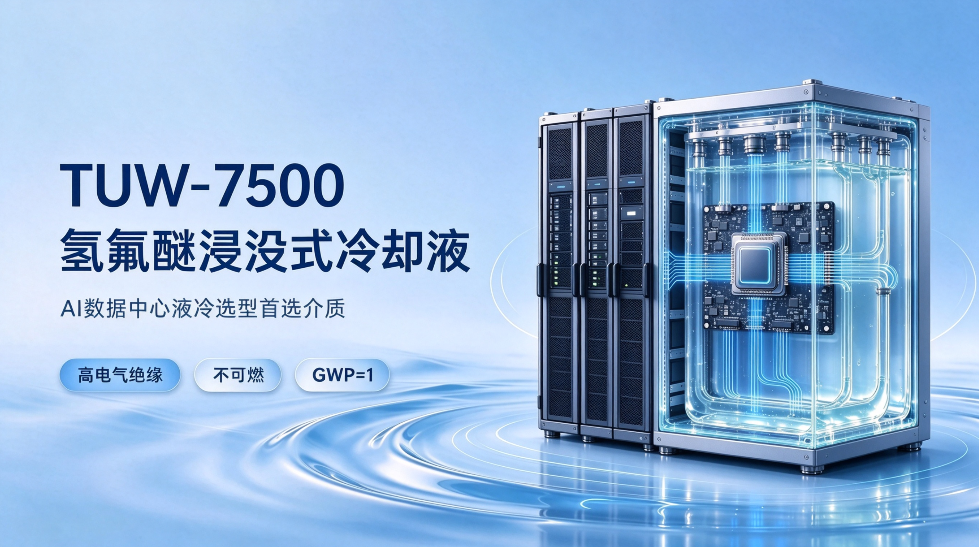
In 2023, a single AI server consumed 500 W–1 kW. By 2026, a single GPU has already surpassed 1,200 W, and an 8-GPU server rack easily exceeds 30 kW in power density. Traditional forced air cooling relies on fans to drive convection, but it can no longer keep up with this heat flux density—rack hotspots routinely exceed 90 °C, and fan energy consumption accounts for over 30% of total power use.
Liquid cooling has shifted from a "premium option" to a "mandatory requirement." Among all liquid cooling approaches, immersion cooling—with its highest heat dissipation efficiency—is regarded as the ultimate solution. But whether immersion cooling runs smoothly depends heavily on an easily overlooked factor: choosing the right cooling fluid.
1. Hard Requirements for Immersion Cooling Fluids
Submerging an entire server in liquid sounds simple, but the fluid must simultaneously satisfy the following conditions:
- High electrical insulation: Directly contacts the motherboard, CPU, and memory—must not cause short circuits.
- Non-flammable: Racks are full of electricity; an ignitable liquid would be a disaster.
- Wide temperature range: Must remain liquid from room-temperature startup to full-load operating temperatures.
- Low viscosity: Pumping energy must stay low—high viscosity would send pump power soaring.
- Material compatibility: Must not corrode copper busbars, swell rubber seals, or alter PCB impedance.
- Low GWP: Data centers face ESG disclosure requirements, and environmental metrics carry growing weight.
Hydrocarbon oils are flammable, water lacks sufficient insulation, and silicone oils conduct heat poorly. Ultimately, everyone lands on fluorinated fluids.
2. What Is TUW-7500?
TUW-7500 is a hydrofluoroether (HFE) electronic fluorinated fluid, chemically named nonafluoroisobutyl methyl ether. Basic parameters:
|
Item
|
Parameter
|
|
Product model
|
TUW-7500
|
|
Chemical name
|
Nonafluoroisobutyl methyl ether
|
|
Molecular formula
|
C₅H₃F₉O
|
|
Appearance
|
Transparent liquid
|
|
Molecular weight
|
332.09
|
|
Boiling point
|
134 °C
|
|
Density (25 °C)
|
1.626 g/mL
|
|
Melting point
|
-93 °C
|
|
Flash point
|
None
|
|
ODP
|
0
|
|
GWP
|
1
|
GWP = 1 is TUW-7500's most prominent environmental label. By comparison, perfluorocarbon (PFC) fluids typically carry a GWP in the hundreds to thousands, while TUW-7500's GWP is only 1—among the lowest tier of all electronic fluorinated fluids. For data centers committed to carbon neutrality and ESG disclosure, this metric is critical.
3. Working Principle in Single-Phase Immersion Cooling
Immersion cooling splits into single-phase and two-phase approaches. TUW-7500 is primarily used in single-phase immersion—the fluid stays liquid throughout and never boils.
The process works like this: the entire server is immersed in a tank filled with TUW-7500. The fluid makes direct contact with heat-generating components such as the CPU, GPU, and VRM, carrying heat away through convection. A pump at the bottom of the rack draws out the heated fluid, passes it through an external dry cooler or cooling tower to lower its temperature, and then returns it to the rack—a closed-loop cycle.
Because liquid heat capacity far exceeds air (water is 3,500 times that of air, and fluorinated fluids are several times that of air), heat exchange efficiency dwarfs air cooling. Inside the rack there are virtually no cooling dead zones, and servers can run stably at lower temperatures, extending chip lifespan.
4. Why TUW-7500 Suits This Scenario
Electrical Insulation Safety
The cooling fluid soaks directly against live circuitry, so dielectric strength must be high. TUW-7500 is an insulating liquid—servers need no additional sealing and can be immersed as-is.
Non-Flammable Eliminates Firefighting Risk
Data center fire suppression design is a major cost center. Hydrocarbon-based coolants are flammable and require gas fire-suppression systems. TUW-7500 has no flash point—it neither burns nor explodes—allowing lower fire-protection ratings and reduced insurance premiums.
GWP = 1 Meets ESG Requirements
Major internet companies' AI data centers have explicit carbon neutrality timelines. Selecting a cooling medium with GWP = 1 is itself part of carbon footprint management.
-93 °C Melting Point Handles Winter Cold
If a data center is located in northern regions, the fluid could solidify after winter shutdowns. TUW-7500's -93 °C melting point means even if rack insulation fails, the fluid won't freeze—restart stays safe.
Distillation-Regenerable
Over long operation, the fluid may pick up dust or trace moisture. TUW-7500 can be purified by distillation and reused, lowering total lifecycle cost.
5. Practical Comparison Against Other Cooling Media
|
Dimension
|
TUW-7500
|
Hydrocarbon oil
|
Silicone oil
|
PFC
|
|
Electrical insulation
|
Excellent
|
Average
|
Good
|
Excellent
|
|
Flammability
|
Non-flammable
|
Flammable
|
Low flammability
|
Non-flammable
|
|
GWP
|
1
|
Low
|
Low
|
Hundreds to thousands
|
|
Material compatibility
|
Good
|
Swells seals easily
|
Fair
|
Excellent
|
|
Boiling point
|
134 °C
|
~300 °C
|
~300 °C
|
Varies by grade
|
|
Purchase cost
|
Medium
|
Low
|
High
|
Medium–High
|
|
Typical scenario
|
AI data center immersion cooling
|
Traditional industrial cooling
|
Transformers
|
Extreme semiconductor temperature control
|
TUW-7500 strikes a strong balance among safety, environmental performance, and material compatibility. PFCs also perform well, but their high GWP faces growing regulatory restrictions.
6. What to Verify Before Deployment
Choosing TUW-7500 for immersion cooling does not mean you can buy it and pour it straight in. The following verification steps are mandatory:
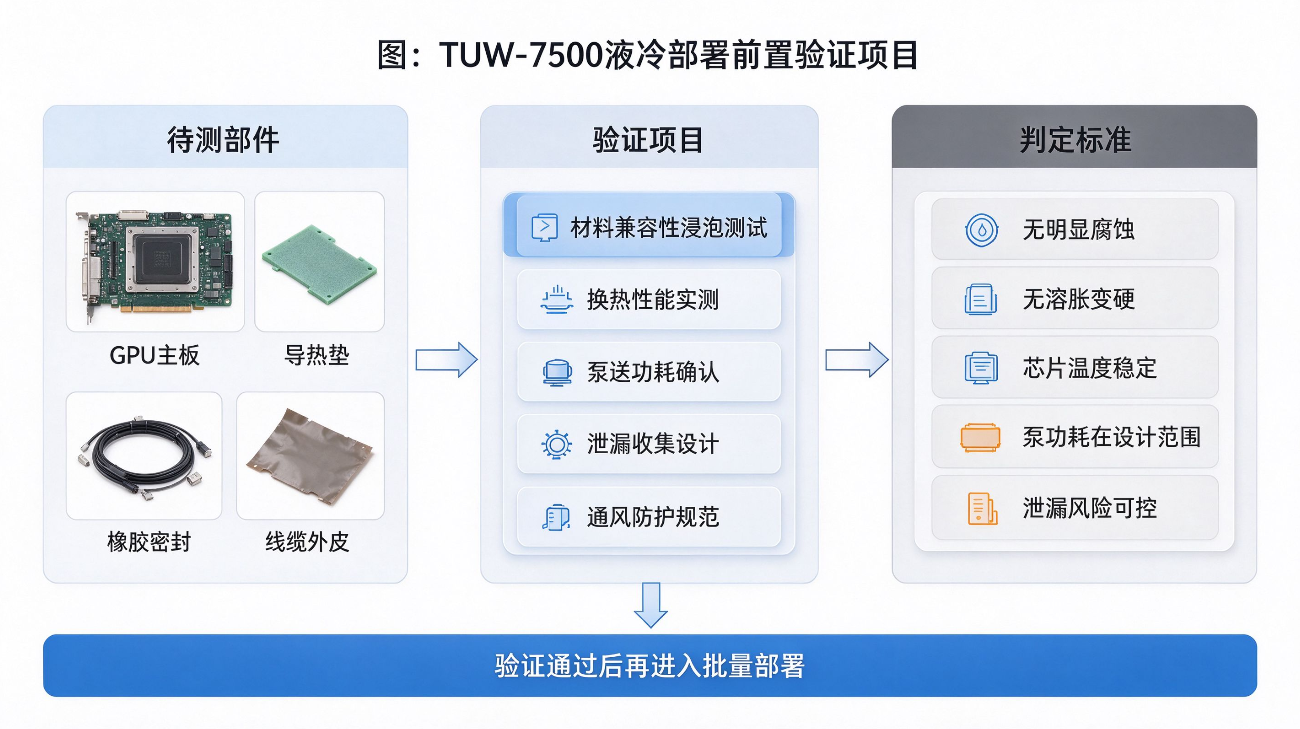
- Material compatibility: Run immersion tests against the server's CPU thermal pads, rubber seals, and cable jackets.
- Heat exchange performance: Measure chip temperatures under varying loads in a test rack.
- Pumping power: Confirm pump selection matches the fluid's density and viscosity.
- Leak response: Design leak collection and makeup-fluid plans.
- Operator protocols: Fluorinated fluids are non-toxic, but ventilation and protective measures are still required during handling.
7. Extended Applications
Beyond data centers, TUW-7500 can also be used for:
- Power conversion system (PCS) liquid cooling for energy storage: Heat dissipation for power electronics modules.
- High-power laser equipment cooling: Heat dissipation for high-power-density lasers.
- High-low temperature test baths: Constant-temperature media for laboratories.
- Avionics cooling: Heat dissipation for onboard equipment in extreme environments.
Shenzhen Huayi Brothers specializes in supplying electronic fluorinated fluids and functional fluorinated liquids, providing product documentation, sample testing, and application engineering support for customers.
TUW-7100 Electronic Fluorinated Fluid: One Solution for Precision Cleaning, Thermal Cooling & Drying
Related Article
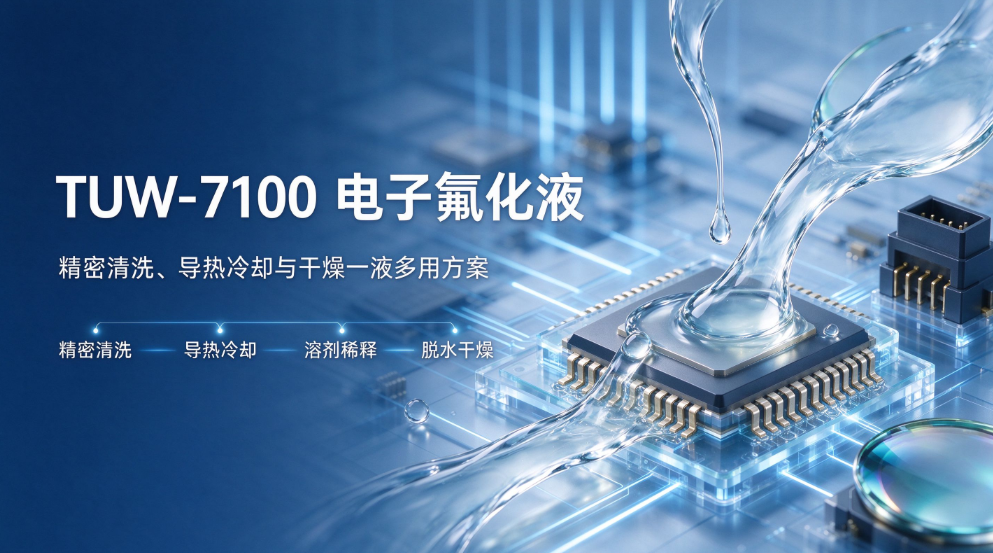
TUW-7100 covers precision cleaning, thermal cooling, solvent dilution, and dehydration drying in a single fluid. This article details its physical properties and the cost-saving value of "one fluid, multiple uses."
TUW-7100 Electronic Fluorinated Fluid: One Solution for Precision Cleaning, Thermal Cooling & Drying
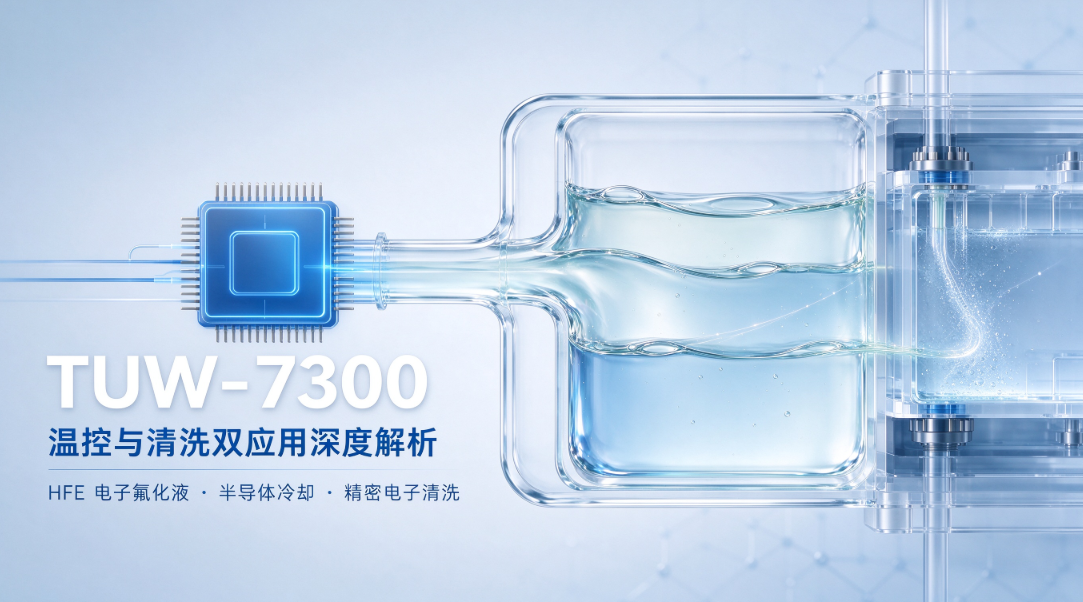
TUW-7300 is a thermally stable hydrofluoroether (HFE) electronic fluorinated fluid, benchmarked against 3M Novec 7300. It combines dual capabilities in semiconductor equipment temperature control and precision electronic cleaning. This article systematically analyzes the dual-scenario application value of TUW-7300, covering product positioning, temperature control applications, cleaning processes, performance parameters, and family product selection.
TUW-7300 HFE Electronic Fluorinated Fluid: In-Depth Analysis of Dual Applications in Semiconductor Equipment Temperature Control and Precision Cleaning
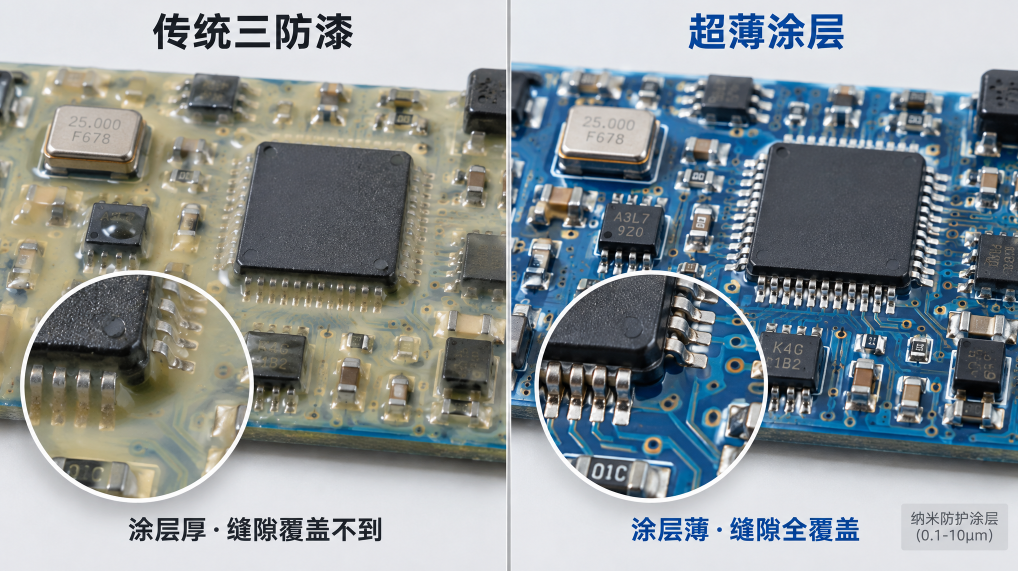
Traditional PCB conformal coating is thick, leaves BGA areas uncovered, and damages pads during rework. This article compares TUW-2704 and TUW-1700 fluoropolymer ultra-thin coatings on film thickness, rework, and protection, and provides selection guidance for NEV electronic control and consumer PCBs.
PCB Nano Conformal Coating Selection: TUW-2704 & TUW-1700 vs. Traditional Conformal Coating
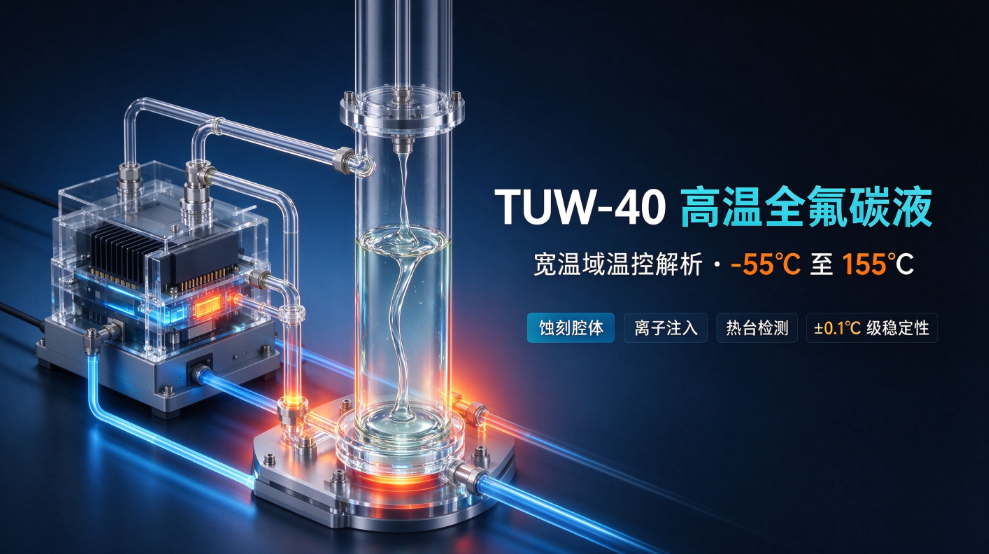
TUW-40 is a single-component perfluorinated heat-transfer fluid covering a liquid range of -55°C to 155°C. With a high boiling point and extremely low evaporation, it is designed for temperature control in etching equipment, ion implantation equipment, and inspection tools. This article details its physical properties, application scenarios, and positioning within the TUW series.
TUW-40 High-Temperature Perfluorocarbon Fluid: -55°C to 155°C Wide Temperature Range — Temperature Control for Etching and Ion Implantation High-Temperature Operations