
In-depth Application of Electronic Fluorinated Fluids in Semiconductor Manufacturing: A Full Analysis of TUW Series from Equipment Temperature Control to Precision Cleaning
2026-10-12
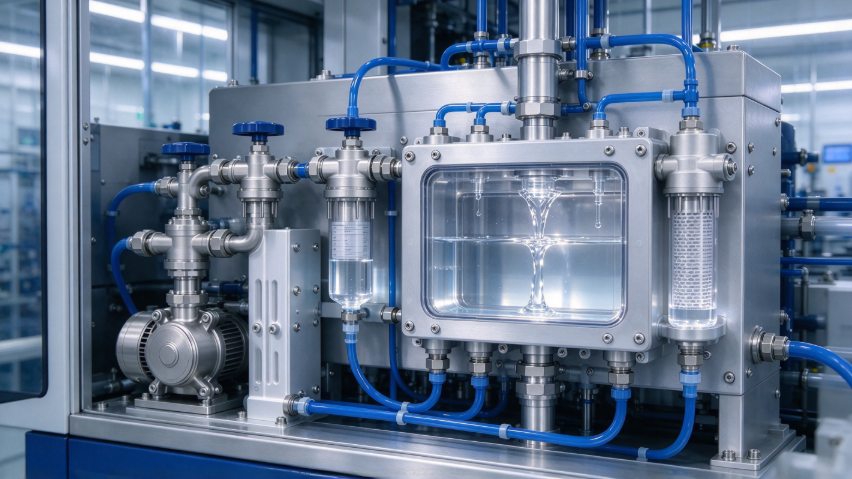
Across the entire semiconductor manufacturing flow, electronic fluorinated fluids are an auxiliary material that is easily overlooked yet critically important. Unlike wet chemicals that act directly on the wafer surface, electronic fluorinated fluids work mainly on the equipment side and perform two core functions: equipment temperature control and cooling, and precision component cleaning.
In terms of product architecture, electronic fluorinated fluids fall into two main categories. The first is heat transfer fluids for equipment temperature control, including hydrofluoroether (HFE) and perfluorocarbon (PFC) systems, which offer a wide temperature range, high electrical insulation and chemical inertness. The second is hydrofluoroether (HFE) cleaning agents for precision cleaning, known for low surface tension, low residue and good material compatibility.
Electronic fluorinated fluids do not take part in wafer processes directly, yet by keeping equipment running stably and components clean they indirectly affect process yield and product consistency. As advanced nodes keep raising requirements for temperature control accuracy and cleanliness, these fluids have been upgraded from a general heat transfer medium to a key material that influences equipment stability and yield.
1. Equipment Temperature Control: Why Semiconductor Equipment Cannot Do Without Electronic Fluorinated Fluids
1.1 Temperature Control Pain Points in Etch, Deposition and Test Equipment
In semiconductor manufacturing, etch, deposition and test equipment must keep key locations such as the process chamber, electrostatic chuck (ESC) and wafer stage at a stable temperature during operation. In plasma etching, for example, a slight fluctuation in chamber temperature directly affects etch rate, selectivity and profile accuracy, and further affects device electrical performance and yield. At advanced nodes, equipment temperature control accuracy has reached the ±0.1 ℃ level.
1.2 Performance Thresholds for Heat Transfer Fluids and the Closed-Loop Circuit
Semiconductor equipment heat transfer fluids must meet several requirements at the same time; cooling performance alone is not enough to qualify for core equipment applications:
Table 1 Performance requirements for semiconductor equipment temperature control fluids
|
Requirement
|
Equipment pain point
|
Value of electronic fluorinated fluids
|
|
Wide temperature range
|
Low-temperature and high-temperature operating conditions in etch and test equipment
|
Covers multiple temperature zones and does not freeze at low temperatures
|
|
Low viscosity
|
Circulating resistance rises in a low-temperature environment
|
Maintains flow and heat transfer efficiency
|
|
Electrical insulation
|
The control loop runs close to plasma, electrodes and high-voltage components
|
High dielectric strength, lower electrical risk
|
|
Chemical inertness
|
Corrosive gases and by-products are present in the etch chamber
|
Long-term stability with no reaction and no corrosion
|
|
Low volatility and low residue
|
Chamber contamination affects yield and stability
|
Reduces contamination and process drift
|
|
Material compatibility
|
Long-term contact with tubing, seals, pumps and valves
|
No swelling, no aging, no leakage
|
The typical application of electronic fluorinated fluids is a closed-loop circuit built around a chiller/TCU temperature control unit. Facility cooling water provides the primary cold source; after precise adjustment by the temperature control unit, a pump drives the heat transfer fluid through filters and heat exchangers into the process chamber, electrostatic chuck and chamber walls, where it removes process heat and returns to the unit, forming a complete closed loop. The closed design keeps the heat transfer fluid from direct contact with process gases or the chamber environment, avoiding contamination risk.
2. Precision Cleaning: How HFE Became the First Choice for Low-Residue Cleaning
2.1 Higher Cleaning Requirements for Components as Process Nodes Advance
As process nodes advance, cleaning requirements for equipment components keep rising. Chamber parts, valves, showerheads, optical components and advanced packaging parts face increasingly strict requirements on residue control, material corrosion and drying cleanliness. Conventional cleaning agents tend to have high surface tension, poor penetration and high residue, making it difficult to meet the cleanliness requirements of advanced nodes.
2.2 Low Surface Tension Delivers Penetration and Low Residue
With a low surface tension of 10-18 mN/m, hydrofluoroether (HFE) penetrates micron-scale gaps and, through immersion cleaning, vapor degreasing, spray cleaning and wipe cleaning, removes oils, wax, particles, ionic contamination and flux residue, leaving almost no residue after evaporation.
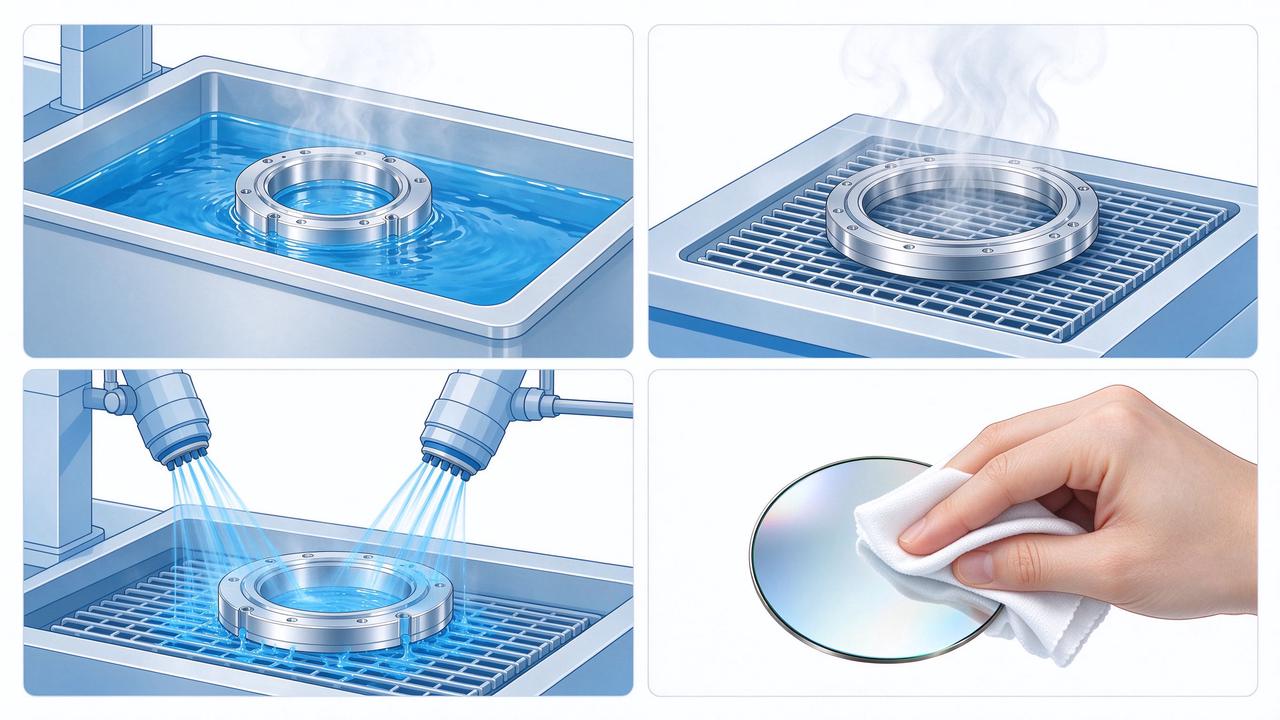
Table 2 Typical HFE cleaning targets and their value
|
Cleaning target
|
Typical contaminants
|
Cleaning method
|
Value of HFE
|
|
Semiconductor equipment chamber parts
|
Oils, particles, organic residue
|
Immersion, vapor degreasing
|
Good penetration into complex structures, low residue
|
|
Valves, showerheads and tubing
|
Metal micro-contamination, particles, oil
|
Spray, precision cleaning
|
Material compatibility, lower corrosion risk
|
|
Optical components and precision electronics
|
Fingerprints, particles, ionic contamination
|
Wipe, spray
|
No damage to components, fast drying
|
|
PCBs, connectors and packaging parts
|
Flux residue, organic contamination
|
Vapor degreasing, immersion
|
Low surface tension, environmentally friendly alternative
|
3. The TUW Series: A Complete Domestic Substitution Solution from Temperature Control to Cleaning
The TUW series of electronic fluorinated fluids from Shenzhen Huayi Brothers covers both semiconductor equipment temperature control and precision cleaning, giving downstream customers a domestic substitution option benchmarked against international original-equipment models.
3.1 Temperature Control Line: High- and Low-Temperature Heat Transfer Options Benchmarking International Brands
Temperature control product line:
Table 3 TUW series temperature control product line
|
Model
|
Equivalent to
|
Key characteristics
|
Typical applications
|
|
TUW-40
|
Novec 40
|
Temperature range -55 °C to 155 °C, single-component high boiling point
|
High-temperature operation of etch, ion implantation and inspection equipment
|
|
TUW-3283
|
FC-3283
|
Boiling point 128 °C, electrolytically purified high-purity perfluorocarbon
|
Temperature control for etch, ion implantation and CVD equipment
|
|
TUW-7500
|
Novec 7500
|
GWP=1, melting point -93 °C, hydrofluoroether
|
Immersion cooling for AI data centers
|
|
TUW-770
|
FC-770
|
Pour point -127 °C, perfluorocarbon
|
Cooling for supercomputing, defense electronics and high-voltage components
|
|
TUW-7300
|
Novec 7300
|
Hydrofluoroether for dual temperature control and cleaning use
|
Semiconductor cooling, precision electronics cleaning
|
|
TUW-7200
|
Novec 7200
|
Multi-purpose for cleaning, leak testing and constant temperature
|
Electronics cleaning, leak testing, constant-temperature baths
|
3.2 Precision Cleaning Line: From Precision Degreasing to Coating Protection
Precision cleaning product line:
Table 4 TUW series precision cleaning product line
|
Model
|
Key characteristics
|
Typical applications
|
|
TUW-71IPA
|
Boiling point approx. 57 °C, surface tension 16 mN/m
|
Rapid cleaning and degreasing of precision electronic parts
|
|
TUW-71DA
|
Azeotrope, no flash point
|
Immersion defluxing, degreasing
|
|
TUW-72DA
|
Azeotrope, medium to heavy duty degreasing
|
PCBA flux cleaning, vapor degreasing
|
|
TUW-72DE
|
Azeotrope, solvent for coating and lubricant deposition
|
Dual use for degreasing and coating deposition
|
|
TUW-73DE
|
Heavy-duty vapor degreasing
|
Cleaning of complex geometry parts
|
|
TUW-7100
|
Nonafluorobutyl methyl ether, multi-purpose
|
Chamber cleaning, FOUP cleaning, immersion cooling
|
|
TUW-347
|
HFE environmentally friendly solvent
|
Drying, dust removal, removal of non-condensable gases
|
|
TUW-458
|
HFE environmentally friendly solvent
|
Drying, dust removal, electrolyte additives
|
In addition, the TUW-2704 electronic coating agent provides PCBs and electronic components with an ultra-thin, moisture-resistant and corrosion-resistant coating, completing the full cycle of temperature control, cleaning and protection. All TUW products share zero ODP, low GWP, non-flammability with no flash point and excellent electrical insulation, meet RoHS and other environmental requirements, and are long-term stable ODS alternatives.
4. Conclusion
As a key auxiliary material on the equipment side of semiconductor manufacturing, electronic fluorinated fluids are seeing growing demand as advanced nodes advance. As international fluorochemical manufacturers progressively adjust their PFAS product lines and supply uncertainty increases, domestically produced electronic fluorinated fluids face a historic opportunity. Shenzhen Huayi Brothers focuses on the supply of electronic fluorinated fluids and fluorine-containing functional liquids. The TUW series covers the full range from low-temperature drying to high-temperature temperature control, and from precision cleaning to coating protection, and provides customers with product documentation, sample testing and application discussions. For sample testing, please contact us through the panel on the right.
HFE Eco-Friendly Solvents TUW-347 & TUW-458: The "Invisible Assistants" for Drying, Dust Removal, and Non-Condensable Gas Elimination
From Thermal Shock to Package Leak Testing: A Detailed Look at TUW-3283 in Electronic Reliability Verification
Related Article
This article introduces the product positioning and core characteristics of TUW 2704 fluoropolymer electronic coating agent, compares its differences with traditional conformal paint, and explains its applications in PCB moisture and corrosion protection as well as the selection logic for scenarios such as new energy and high-density boards.
PCB Protection Solution Selection: TUW 2704 Nano Conformal Coating vs. Traditional Conformal Paint
3M has discontinued FC-3283 — how should wafer fabs choose a domestic replacement? This article details the TUW-3283 electrochemical fluorination product's parameter alignment with FC-3283, the selection logic, and a four-step switchover process to help you complete your domestic substitution smoothly.
TUW-3283 Electronic Fluorinated Fluid: A Domestic Replacement Guide for Wafer Fabs After the FC-3283 Phase-out

What's the difference between HFE and PFC? Which one to pick for cooling, cleaning, and testing? This article compares 14 TUW-series products in a single master table and gives scenario-based selection recommendations.
One Table to Rule Them All: How to Choose Between HFE and PFC — The Complete TUW Series Electronic Fluorinated Fluid Selection Guide
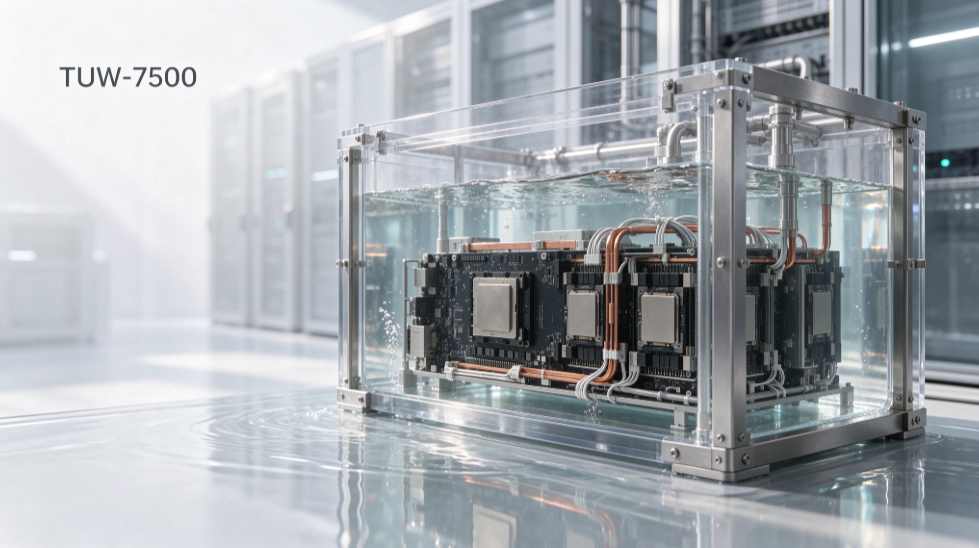
As AI server rack power density breaks 30 kW, TUW-7500 hydrofluoroether delivers a GWP of just 1, becoming the preferred medium for single-phase immersion cooling. This article details its insulating, non-flammable, and environmentally friendly properties along with deployment verification points.
AI Server Rack Power Breaches 30 kW: Why TUW-7500 Hydrofluoroether Becomes the Preferred Immersion Cooling Medium