TUW-71DA Azeotropic Cleaning Fluid
TUW-71DA
A 40 °C azeotropic fluorinated cleaning fluid with 16.4 mN/m surface tension and no flash point, combining defluxing, degreasing and ionic-residue removal. Alternative to 3M Novec 71DA.
Quantity:
[Overview]
TUW-71DA Azeotropic Cleaning Fluid is a constant-boiling blend of a hydrofluoroether and a co-solvent: 40 °C boiling point, 1.33 g/mL density, 16.4 mN/m surface tension, no flash point. Because it is azeotropic, vapour and liquid stay at the same composition through repeated boiling and distillation — the sump does not drift on a continuously running vapour degreaser and does not need frequent full replacement.
Its role is fast-drying, high-solvency cleaning at low temperature: rosin flux, oils, waxes and ionic residue all come off, which suits high-throughput lines with heat-sensitive parts. As an alternative to 3M Novec 71DA, TUW-71DA Azeotropic Cleaning Fluid matches the boiling point and surface tension closely enough that existing vapour-zone set-points usually carry over, and it contains no ODP substances, so it can replace HCFC-225 and nPB.
[Key Properties]
- Appearance: Clear liquid, mild odour
- Boiling point: 40 °C
- Density (25 °C): 1.33 g/mL
- Freezing point: −29 °C
- Kinematic viscosity (25 °C): 0.3383 mm²/s
- Surface tension (25 °C): 16.4 mN/m
- Vapour pressure (25 °C): 50.8 kPa
- Latent heat of vaporisation: 209.3 kJ/kg
- Flash point: None
- ODP: 0
[Typical Applications]
1. Immersion and vapour defluxing — Flux and solder-paste residue on PCBA, connectors, terminals and power modules, typically immersion plus vapour rinse.
2. Degreasing and wax removal — Stamping oils, cutting oils, polishing wax and release agents on hardware, optics and machined parts.
3. Ionic contamination control — Relays, sensors and medical electronics where ionic residue limits are tight; ultrasonics shorten the cycle.
4. Coating and lubricant deposition — Dilution and deposition solvent for PFPE lubricants and moisture-barrier coatings, drying film-free.
[Handling & Compatibility]
Do not dilute an azeotrope like an ordinary solvent: a third component can shift the boiling point, causing stratification or a drifting distillate temperature. Top up with the same grade and check density and distillation range before returning recovered fluid to the sump.
Compatible with aluminium, copper, stainless steel and most engineering plastics; soak-test magnesium, zinc alloys and elastomers for 24 hours first. Ventilate the work area, avoid inhaling thermal decomposition products, distil spent fluid and send still bottoms to a licensed contractor.
On a running line, the top-up interval for TUW-71DA Azeotropic Cleaning Fluid depends on drag-out and recovery rate: on a two-shift vapour tank, check density and distillation range monthly, and if the distillate runs 1 °C above fresh fluid it is time to distil the whole sump or change it. Clean the fixtures regularly as well, or the oil on them keeps feeding contamination back into the tank.
[Packaging & Availability]
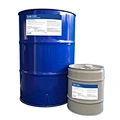
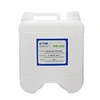
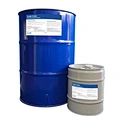
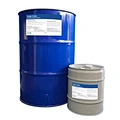
25 kg pails and 250 kg drums, with 5 L and 20 L trial packs. Held in stock in South China and shipped with TDS, SDS and batch COA.