TUW-72DE Azeotropic Cleaning Fluid
TUW-72DE
A 43 °C azeotropic cleaning fluid with 19 mN/m surface tension and no flash point, covering medium-to-heavy degreasing plus coating and lubricant deposition. Alternative to 3M Novec 72DE.
Quantity:
[Overview]
TUW-72DE Azeotropic Cleaning Fluid is the other constant-boiling blend in the 72 series: 43 °C boiling point, 1.28 g/mL density, 19 mN/m surface tension — the highest of the four grades — and 46.7 kPa vapour pressure. The higher surface tension makes it spread into an even film rather than beading up, which actually helps coating and lubricant deposition uniformity.
It also targets medium-to-heavy degreasing and flux removal, but is more often used for combined clean-and-coat processes: remove oils and particles first, then deposit a coating or lubricant from the same chemistry. TUW-72DE Azeotropic Cleaning Fluid holds its composition through distillation, which suits lines that run continuously without frequent sump changes; converting from 3M Novec 72DE keeps the existing process parameters.
[Key Properties]
- Appearance: Clear liquid, mild odour
- Boiling point: 43 °C
- Density (25 °C): 1.28 g/mL
- Freezing point: No data available
- Kinematic viscosity (25 °C): 0.3516 mm²/s
- Surface tension (25 °C): 19 mN/m
- Vapour pressure (25 °C): 46.7 kPa
- Latent heat of vaporisation: 217.7 kJ/kg
- Flash point: None
- ODP: 0
[Typical Applications]
1. Medium-to-heavy degreasing — Machining oils, rust preventives, polishing compounds and wax, by immersion, ultrasonic or spray.
2. Flux residue cleaning — Flux removal on PCBA and terminal parts, more consistent with a vapour rinse.
3. Coating and film formation — Dilution solvent for functional, moisture-barrier and release systems — even film, no craters.
4. Lubricant deposition — Carrier for PFPE and dry-film lubricants on precision bearings, guideways and micro-motors.
[Handling & Compatibility]
Top up with the same grade only; check density and distillation range before reuse and re-distil if density drifts more than 0.02 g/mL from 1.28. The TDS gives no freezing point, so confirm before cold-weather storage or shipment.
Compatible with metals, glass, ceramics and most plastics; soak-test elastomers first. Ventilate the area, avoid inhaling decomposition products, distil spent fluid and dispose of bottoms through a licensed contractor.
Where the process needs cleaning followed by film formation, keep the wash tank and the deposition tank separate so that TUW-72DE Azeotropic Cleaning Fluid handles only the final rinse and dilution. Control the deposition bath by viscosity or solids content, stir for ten minutes after each top-up, and film thickness will be noticeably more consistent.
[Packaging & Availability]
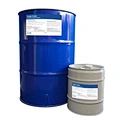
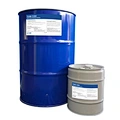
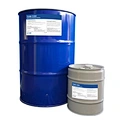
25 kg pails and 250 kg drums, with 5 L and 20 L trial packs. Stocked and shipped with TDS, SDS and batch COA.