TUW-7300 Fluorinated Fluid
TUW-7300
A high-boiling 98 °C HFE fluid with a 6.1 dielectric constant and >25 kV dielectric strength, suited to hot cleaning, optics and medical parts degreasing. Alternative to 3M Novec 7300.
minimum order:
1 kilogram
Supply Ability:
3000kilogram / Day
Country of Origin:
CHINA
Stock Time:
3Day
Quantity:
[Overview]
TUW-7300 Fluorinated Fluid is the 98 °C grade of the HFE range. Its hotter vapour zone and longer condensation path handle the stubborn soils that lower-boiling solvents leave behind: heavy flux after reflow, lens grinding compounds, and silicone oils or release agents on medical parts.
Compared with the 7100 and 7200 grades, TUW-7300 Fluorinated Fluid offers stronger solvency and slower evaporation, so parts dwell longer in the vapour and blind holes wet out more completely. The higher boiling point also reduces condenser load and solvent loss, which brings top-up cost down on long-running lines. It is a direct alternative to 3M Novec 7300 with no change to pipework or interface dimensions.
[Key Properties]
- Boiling point: 98 °C
- Pour point: −38 °C
- Density (25 °C): 1.6 g/mL
- Dielectric constant: 6.1
- Dielectric strength: >25 kV
- Surface tension: 15 mN/m
- Kinematic viscosity (23 °C): 1.18 mm²/s
- Specific heat (25 °C): 1.14 J/(g·°C)
- ODP / GWP: 0 / 297
- Flash point: None
- Average molecular weight: 350
[Typical Applications]
1. High-temperature vapour degreasing — Heavy flux, solder paste, conformal-coating overspray and fixture carbon on SMT and mixed-technology lines.
2. Optics and precision parts — Degreasing and particle removal on lenses, prisms, coated optics, precision bearings and gyro assemblies.
3. Medical device cleaning — Final clean of surgical instruments, endoscope components and stainless implants before assembly.
4. Heat transfer and rinsing — Water-free rinse, flux removal rinse, constant-temperature loops and small heat-transfer circuits.
[Handling & Compatibility]
TUW-7300 Fluorinated Fluid is safe on ferrous and non-ferrous metals, contains no chlorine and forms no acidic breakdown products, so the pitting risk on aluminium is low. Amorphous plastics such as polycarbonate and ABS may stress-crack in prolonged contact — run a 48-hour immersion and stress test before specifying it for structural parts.
The fluid is non-flammable with no flash point, and its low vapour pressure keeps ambient losses small. Decomposition products at high temperature are still irritant, so fit local exhaust at the still and the cleaning tank. Recover by vacuum distillation and control still temperature to avoid local overheating.
For process settings, run ultrasonics at 40–80 kHz with the bath at 45–60 °C and hold parts in the vapour zone for 60–90 s to finish rinse and dry. Extend immersion and oscillate the basket for blind holes. Specify 316L stainless for tanks and FKM seals rather than standard NBR.
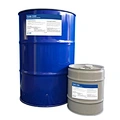
[Packaging & Availability]
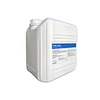
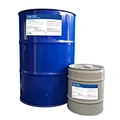
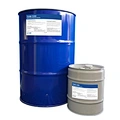
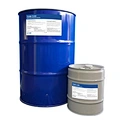
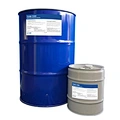
Supplied in 25 kg pails and 250 kg drums, with 5 L and 20 L trial packs. Available from stock with TDS, SDS and a batch certificate of analysis.