Can't Get PCBA Flux Residue Clean? A Complete Comparison of TUW's Five Azeotropic Cleaners, from Light to Heavy
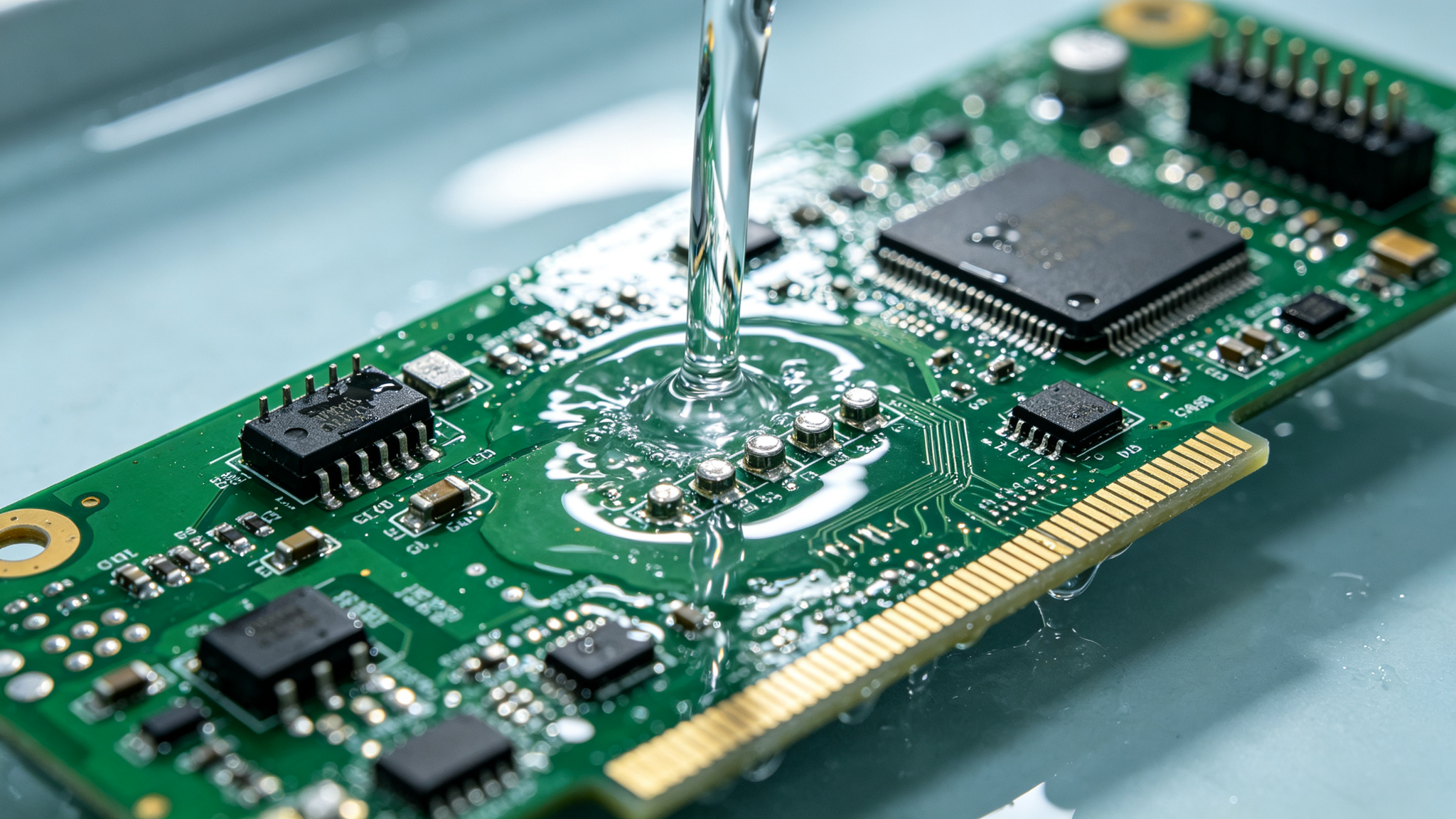
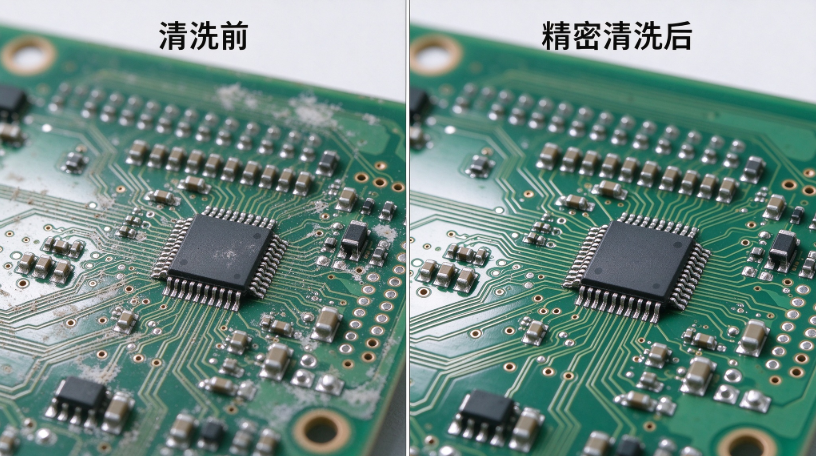
Engineers working on PCBA processes all know that flux residue is a "not big, not small" kind of nuisance. It's "small" because most products work fine with it; it's "big" because when it causes a problem in automotive or medical electronics, it becomes a recall-level incident.
Once flux residue absorbs moisture and ions, it can grow conductive anodic filaments (CAF) under an electric field, causing insulation resistance to drop or even leading to short circuits. As cleanliness requirements for automotive-grade and medical-grade products keep rising, the term "no-clean" is being re-examined. Choosing the right cleaning agent is the first step toward solving the problem.
1. Why a Single Hydrofluoroether Isn't Enough
Pure hydrofluoroether (HFE, such as TUW-7100) is indeed clean, safe, and non-flammable, but its solvency is limited. When facing stubborn residues such as RMA flux, rosin, or heavy oils, a single HFE often cannot get the job clean.
The solution is an azeotropic mixed solvent: a co-solvent (such as isopropanol/IPA or trans-1,2-dichloroethylene/t-DCE) is added to the HFE, and the two are mixed in a specific ratio to form an azeotrope — a mixture whose vapor and liquid phases have identical composition at the boiling point, allowing distillation and recovery. The co-solvent boosts solvency, while the HFE provides a safe, environmentally friendly carrier.
2. TUW Five Azeotropic Cleaners — Parameter Overview
| Model | Boiling Point | Density | Surface Tension | Heat of Vaporization | Solvency | Positioning |
|---|---|---|---|---|---|---|
| TUW-71IPA | ~57°C | 1.22 g/cm³ | 16 mN/m | — | Light | Light duty |
| TUW-71DA | 40°C | 1.33 g/mL | 16.4 mN/m | 209.3 kJ/kg | Medium-heavy | Medium-heavy |
| TUW-72DA | 44°C | 1.27 g/mL | 18 mN/m | 251.2 kJ/kg | Heavy | Heavy-duty vapor degreasing |
| TUW-72DE | 43°C | 1.28 g/mL | 19 mN/m | 217.7 kJ/kg | Coating deposition / cleaning | Coating & cleaning |
| TUW-73DE | 43°C | 1.3 g/cm³ | 19.9 | — | Multi-process general purpose | Multi-process |
3. Selecting by Contamination Level: From Light to Heavy
Light contamination: TUW-71IPA
TUW-71IPA is a blend of HFE and isopropanol (IPA). IPA is itself a commonly used electronic-grade cleaning agent; when mixed with HFE, it retains HFE's fast-drying, residue-free nature while gaining IPA's solvency for polar contaminants.
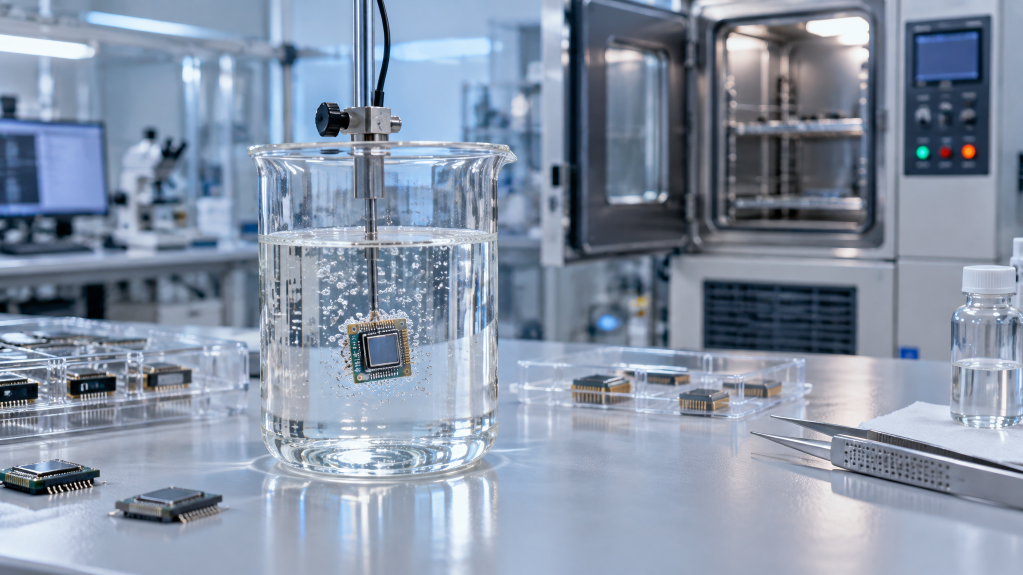
Typical uses: light flux residue after PCB soldering, fingerprints on optical lenses, sensor contact cleaning, and degreasing of hard drive components. With a dielectric strength of 12.2 kV, it can be used to clean sensitive components live. Its fast-drying nature means no drying step is needed after cleaning — parts can go straight to the next process.
Medium-to-heavy oils and grease: TUW-71DA
TUW-71DA is an azeotrope with a boiling point of 40°C and a density of 1.33 g/mL. Compared with 71IPA, it offers stronger solvency, targeting medium-to-heavy oils and grease from machining and assembly — such as stamping oil, drawing oil, and residual oil after heat treatment.
Typical uses: batch degreasing of machined metal parts, cleaning of precision hardware, and mold cleaning. Its low 40°C boiling point means fast evaporation and high vapor-degreasing efficiency.
PCBA flux cleaner: TUW-72DA
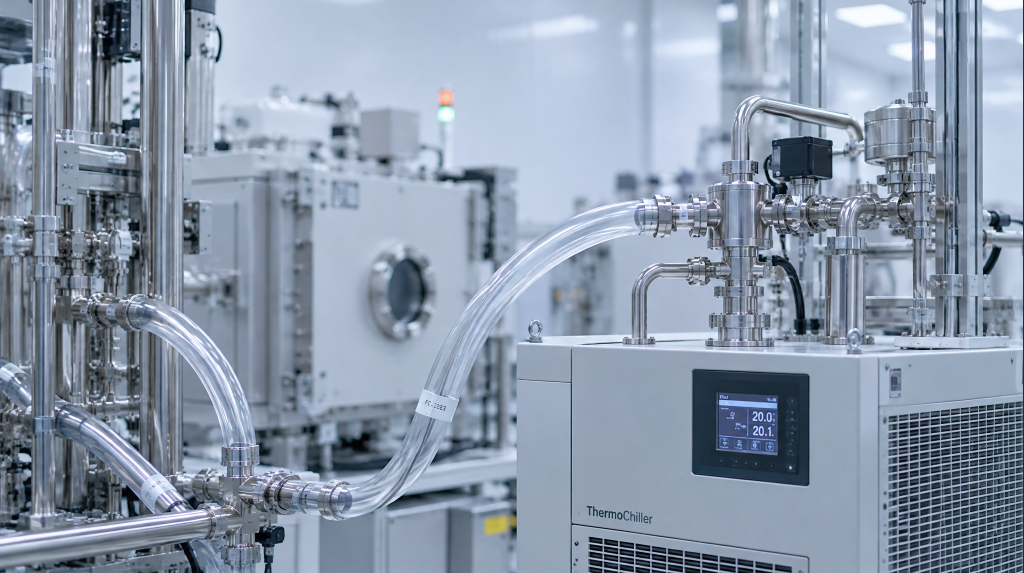
TUW-72DA has a boiling point of 44°C and a heat of vaporization of 251.2 kJ/kg. It is specifically designed for vapor-degreasing processes and offers targeted solvency for RMA flux and no-clean flux residues.
Typical scenarios: automotive electronics PCBA (where ionic cleanliness must meet specifications), medical electronic control boards, and aerospace modules. These products share the same characteristics: harsh operating environments, long service-life requirements, and severe consequences once they fail. Uncleaned flux residue is a ticking time bomb.
Coating & cleaning dual purpose: TUW-72DE
In addition to cleaning, TUW-72DE has a specialty use — as a deposition solvent for coatings and lubricants. By dissolving a functional coating in 72DE and spraying or dipping it onto the workpiece, the coating deposits uniformly as the solvent evaporates.
This process is widely used in precision machinery, micro motors, and optical lenses — traditional brushing is uneven, and dipping is hard to control in quantity; solvent deposition enables micron-level uniform lubrication films.
Multi-process general purpose: TUW-73DE
TUW-73DE has the widest process compatibility: vapor degreasing, immersion cleaning, manual wiping, and spray washing all work. If a production line has both vapor-cleaning equipment and manual workstations, choosing 73DE unifies the media and avoids switching fluids.
4. How to Combine the Five Cleaners
For a complete PCBA cleaning line, a gradient based on contamination level is recommended:
Pre-cleaning with TUW-71IPA (light duty, quickly removes surface film) → main cleaning with TUW-72DA (removes flux residue) → rinse with pure HFE (removes co-solvent residue) → natural evaporation and drying.
This gradient combination both ensures cleaning effectiveness and controls cost — the stronger, more expensive solvent is used only where it is needed.
5. Comparison with Water-Based Cleaning and Traditional Solvents
| Comparison Dimension | TUW Azeotropic Solvents | Water-Based Cleaning | Traditional Chlorinated Solvents |
|---|---|---|---|
| Drying method | Natural evaporation, no drying needed | Requires drying tunnel | Requires air drying |
| Wastewater | No wastewater | Requires wastewater treatment | Varies |
| Safety | Non-flammable, low toxicity | Safe | Toxic / flammable |
| Material compatibility | Does not damage PCBA | Watch water-sensitive components | May corrode some plastics |
| Overall cost | Medium (recoverable via distillation) | High equipment investment | High compliance cost |
6. Implementation Recommendations
- Conduct residue analysis first: Use infrared spectroscopy or ion chromatography to confirm the flux type, then choose a cleaner with matching solvency.
- Run material compatibility testing: Confirm the cleaner does not damage the PCB solder mask, component plastic housings, or labels.
- Verify cleanliness: Use ROSE testing or an ionic contamination tester to confirm the parts meet specifications after cleaning.
- Set up a recovery system: Azeotropes can be regenerated by distillation, reducing long-term operating costs by 30–50%.
Shenzhen Huayi Brothers specializes in supplying electronic fluorinated fluids and fluorinated functional liquids, offering product documentation, sample testing, and application consulting. For sample testing, feel free to contact: 15014124590 / 18870870567
Related Article