HFE Eco-Friendly Solvents TUW-347 & TUW-458: The "Invisible Assistants" for Drying, Dust Removal, and Non-Condensable Gas Elimination

The yield of precision electronics, optical components, and semiconductor devices is often determined by seemingly insignificant details: residual water marks after cleaning, airborne micro-dust, and non-condensable gases in pipelines. Traditional water-wash processes rely on lengthy hot-air drying, which slows cycle times and leaves water stains; meanwhile, older solvent systems such as trichloroethylene, n-propyl bromide (nPB), and HFCs face growing pressure from ODP, GWP, and RoHS/REACH compliance requirements. Solving these problems requires not only equipment and process optimization but also the right medium — and that is precisely where HFE eco-friendly solvents add value.
I. The "Invisible Needs" in Precision Manufacturing
In scenarios involving optical lenses, precision instruments, semiconductor packaging, and medical electronics, even a single residual water mark or speck of dust on a component surface can cause cosmetic defects or performance anomalies. These issues are invisible to the naked eye yet directly determine yield rates. TUW-347 and TUW-458 are eco-friendly solvents designed precisely for these "invisible problems," performing auxiliary functions such as cleaning, drying, dust removal, and non-condensable gas elimination. They serve widely across medical, electronics, precision instrumentation, optical lenses, communications, and aerospace industries.
II. What is TUW-347 (HFE-347)?
TUW-347 is a hydrofluoroether (HFE) eco-friendly solvent used as a cleaning agent, drying agent, and auxiliary for dust and non-condensable gas removal. It evaporates quickly and leaves no residue, making it ideal for applications demanding fast drying and a streak-free finish.
Chemical Identity: Chemical name: 1,1,2,2-tetrafluoroethyl-2,2,2-trifluoroethyl ether; Molecular formula: C₄H₃F₇O; CAS No.: 406-78-0.
Key Physical Properties:
| Parameter | Value |
|---|---|
| Boiling range | Approx. 56.2°C |
| Melting / freezing point | −91°C |
| Density | 1.487 g/cm³ (25°C) |
| GC purity | 99.5% – 99.99% |
| Refractive index | 1.27 |
| Appearance / odor | Clear liquid, slight odor |
| Flammability | Non-flammable, no flash point |
| ODP | 0 |
Why it dries fast: Its low boiling range of 56.2°C means it evaporates rapidly at room temperature, enabling near-instant drying of workpiece surfaces after cleaning without the need for prolonged hot-air drying. This makes it particularly well-suited for in-line drying stations with fast cycle times that cannot tolerate water marks.
III. What is TUW-458 (HFE-458)?
TUW-458 (1,1,2,2-tetrafluoroethyl-2,2,3,3-tetrafluoropropyl ether) belongs to the same HFE eco-friendly solvent family. In addition to cleaning, drying, dust removal, and non-condensable gas elimination, it can also serve as a feedstock for synthesizing other fluorinated products and as an electrolyte additive, offering a broader application scope.
Chemical Identity: Molecular formula: C₅H₄F₈O (HCF₂CF₂CH₂OC₂CF₂H); CAS No.: 16627-68-2; Molecular weight: 232.
Key Physical Properties:
| Parameter | Value |
|---|---|
| Boiling point | 93.2°C (760 mmHg) |
| Melting point | −94°C |
| Density | 1.533 g/cm³ (25°C) |
| GC purity | ≥ 99.95% |
| Dielectric constant (1 kHz) | 5.82 |
| Dielectric strength | 40 kV/mm |
| Dynamic viscosity | 0.61 cP |
| Specific heat capacity | 1.37 kJ/(kg·K) |
| Appearance | Colorless, transparent liquid |
| Flash point | None |
| ODP | 0 |
Why it extends into electrolyte and synthesis applications: The ultra-high purity of ≥99.95% suppresses ionic impurities and moisture to extremely low levels, which — combined with a high dielectric strength of 40 kV/mm — meets the stringent purity and insulation requirements of battery and capacitor electrolytes. Its boiling point of 93.2°C also makes it easier to control temperature during synthesis reactions and reduces volatilization losses.
IV. Application Scenarios in Detail
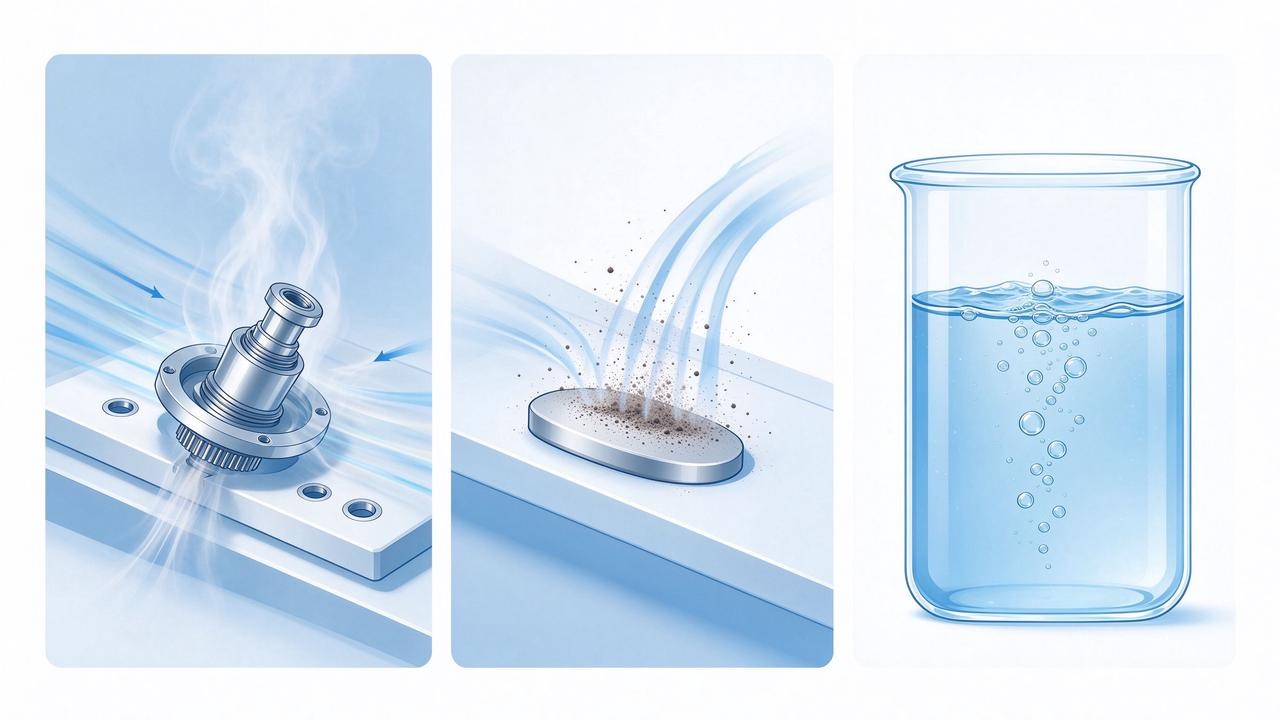
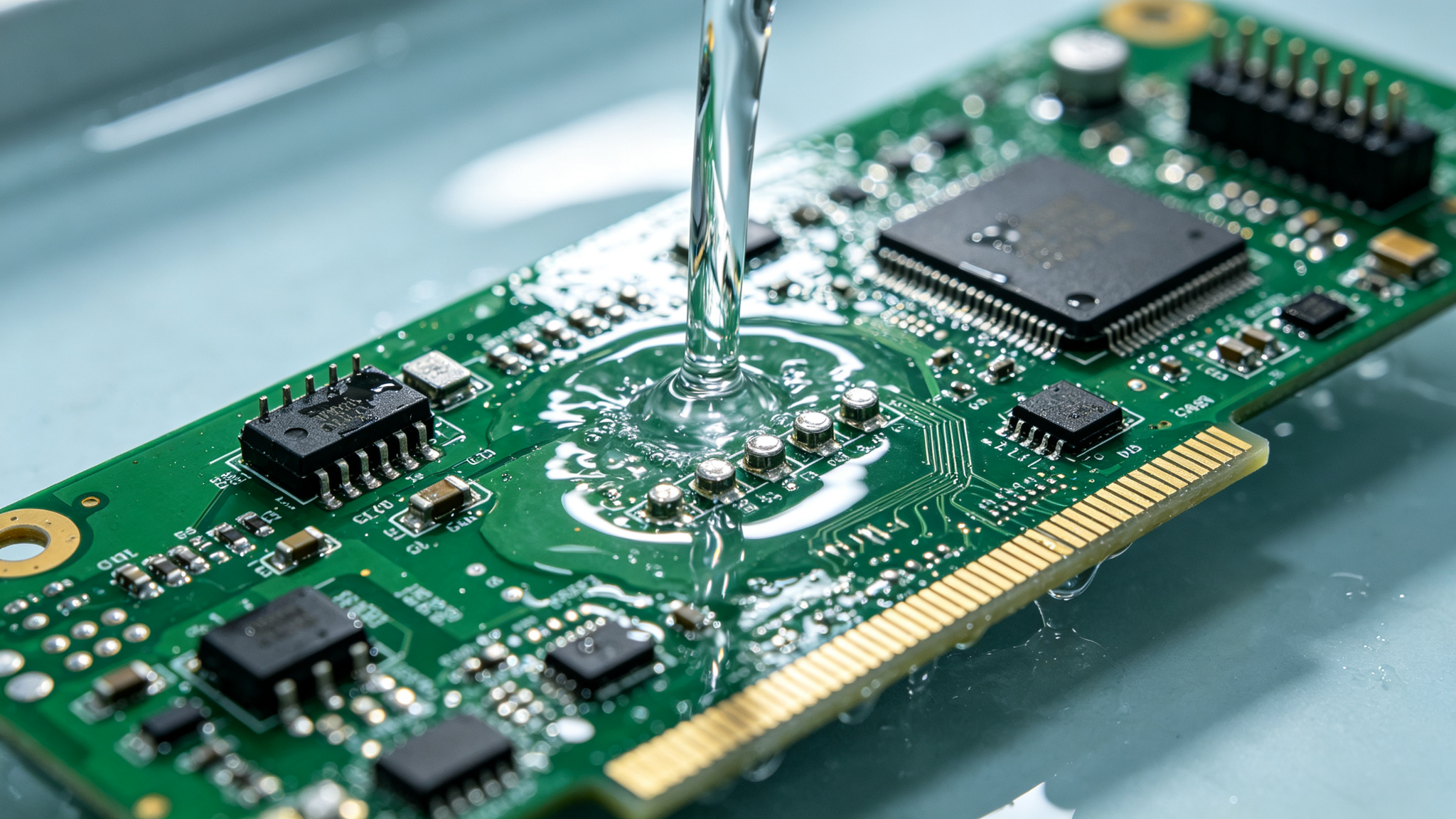
Precision Cleaning. Its low surface tension enables penetration into tiny crevices and micropores of components to remove light oil, fingerprints, flux residue, and particulates from precision parts. It volatilizes completely, leaving no stains, water marks, or oily films — suitable for precision metal parts, connectors, optical lenses, and semiconductor packaging.
Drying Agent. After cleaning, workpieces are immersed in or sprayed with the solvent, which rapidly displaces and carries away surface moisture without leaving water traces or marks, significantly shortening subsequent hot-air drying time and improving process cycle times.
Dust and Non-Condensable Gas Removal. Thanks to its low surface tension and rapid volatilization, it assists in removing floating dust adhered to workpiece surfaces. In refrigeration, heat pump, or vacuum systems, it is used before commissioning to displace and flush non-condensable gases from pipelines, preventing residual gases from compromising heat-exchange efficiency and process stability.
Feedstock and Additive (TUW-458 exclusive). It serves as a feedstock for synthesizing other fluorinated products, or as an electrolyte additive to improve the electrochemical performance and stability of lithium batteries, supercapacitors, and other devices.
V. Environmental & Safety
Both products are HFE-system eco-friendly solvents: ODP of zero, so they do not deplete the ozone layer; low GWP and short atmospheric lifetimes; and chlorine- and bromine-free, satisfying RoHS and REACH environmental compliance requirements. On the usage side, both are non-flammable with no flash point, offering high operational safety. Spent fluid can be reclaimed and recycled via distillation to further reduce total cost of ownership. As alternatives to ODS (ozone-depleting substances), they can be widely used across medical, electronics, precision instrumentation, optical lenses, communications, and aerospace industries.
VI. How to Choose Between the Two
| Comparison Item | TUW-347 (HFE-347) | TUW-458 (HFE-458) |
|---|---|---|
| Positioning | Eco-friendly solvent | Eco-friendly solvent + feedstock |
| Cleaning / drying | Applicable | Applicable |
| Dust / non-condensable gas removal | Applicable | Applicable |
| Synthesis feedstock | — | Applicable |
| Electrolyte additive | — | Applicable |
| Suitable scenarios | General precision drying/dust removal, fast-drying stations | Drying/dust removal + fluorinated product synthesis / electrolytes |
Selection in one sentence: For routine drying, dust removal, and cleaning scenarios — especially fast-cycle lines pursuing "clean and instantly dry" operation — TUW-347 is sufficient. For applications that also need to support downstream fluorinated product synthesis, or that require an electrolyte additive for batteries/capacitors, choose TUW-458.
Shenzhen Huayi Brothers specializes in supplying electronic fluorinated fluids and fluorine-containing functional liquids. For sample testing or process-specific selection guidance, feel free to click the consultation button on the right.
In-depth Application of Electronic Fluorinated Fluids in Semiconductor Manufacturing: A Full Analysis of TUW Series from Equipment Temperature Control to Precision Cleaning
Related Article