Why Supercomputers and Military Electronics Can't Do Without TUW-770, the "Extreme-Temperature All-Rounder" Fluorocarbon Fluid
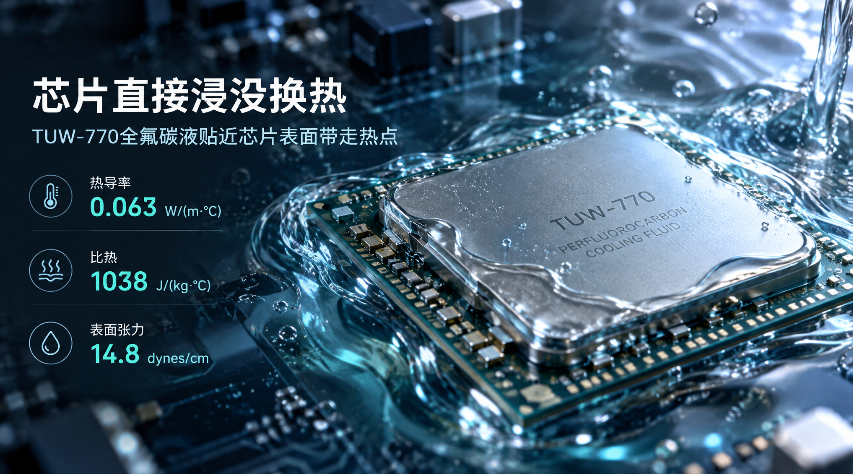
Inside a supercomputer rack, a single CPU can draw more than 500W, and with dozens of chips running at full load in one rack, the total power density is 5–10 times that of an ordinary data center. Military electronics are even more extreme — the computer inside a tank must work in a cabin ranging from −40°C to +85°C, and the electronics in a missile must withstand aerodynamic heating above 125°C.
These scenarios share one trait: thermal reliability requirements are extremely high, and once overheating occurs it means mission failure or even equipment loss. Ordinary cooling media under such extreme conditions either freeze, boil, or chemically decompose. TUW-770 fluorocarbon fluid was designed precisely for these "cannot fail" scenarios.
1. What Is TUW-770?
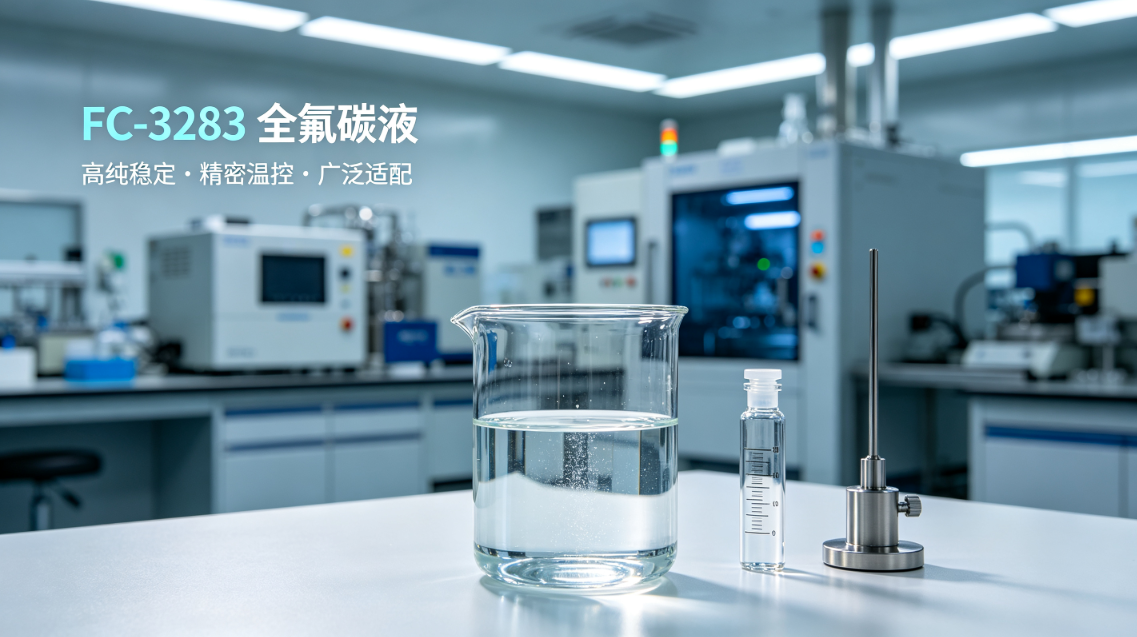
TUW-770 benchmarks against 3M Fluorinert FC-770 and belongs to the fluorocarbon (PFC) fluid family. Its positioning is not "best cost-performance," but rather stability and reliability under extreme temperature ranges and harsh chemical environments.
As a fluorocarbon fluid, TUW-770 has a pour point as low as −127°C and a boiling point of 95°C at atmospheric pressure, covering the entire liquid-phase operating window from extreme cold start-up to high-temperature full load. Why not use hydrofluoroether (HFE)? Because although HFE has a lower GWP, it is inferior to PFC in extremely wide temperature ranges and long-term high-temperature stability. Military and supercomputer customers are willing to pay a premium for "absolute reliability."
2. Core Advantages of PFC in Extreme Scenarios
| Performance | TUW-770 Performance | Why It Matters |
|---|---|---|
| Chemical inertness | Barely reacts with any material; compatible with most metals, plastics, and elastomers | Long-term contact with chips, solder joints, and seals causes no corrosion |
| Temperature range | Pour point −127°C, boiling point 95°C, stable liquid over a wide range | Operates throughout the range from low-temperature start-up to high-temperature full load |
| Electrical insulation | Dielectric strength >40kV (0.1 in gap), dielectric constant 1.9, resistivity >3×10¹⁴ ohm·cm | Direct contact with live components without short-circuit risk |
| Thermal stability | Strong carbon-fluorine bonds, calculated critical temperature 238°C, no decomposition under long-term high temperature | Performance does not degrade over years of continuous operation |
| Safety | No flash point, non-flammable, ODP=0 | Extremely low fire risk around high-power equipment |
3. Applications in Supercomputers
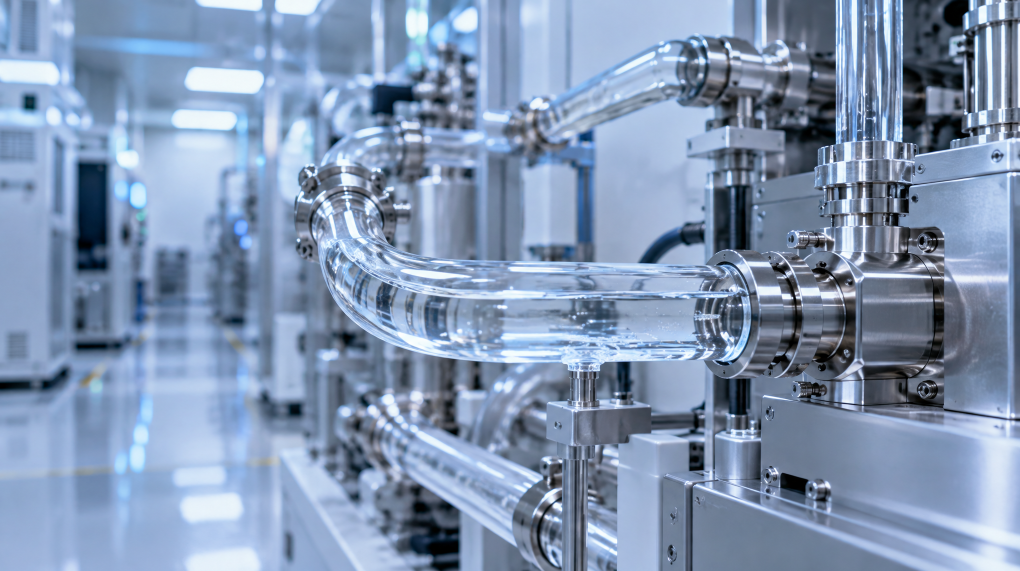
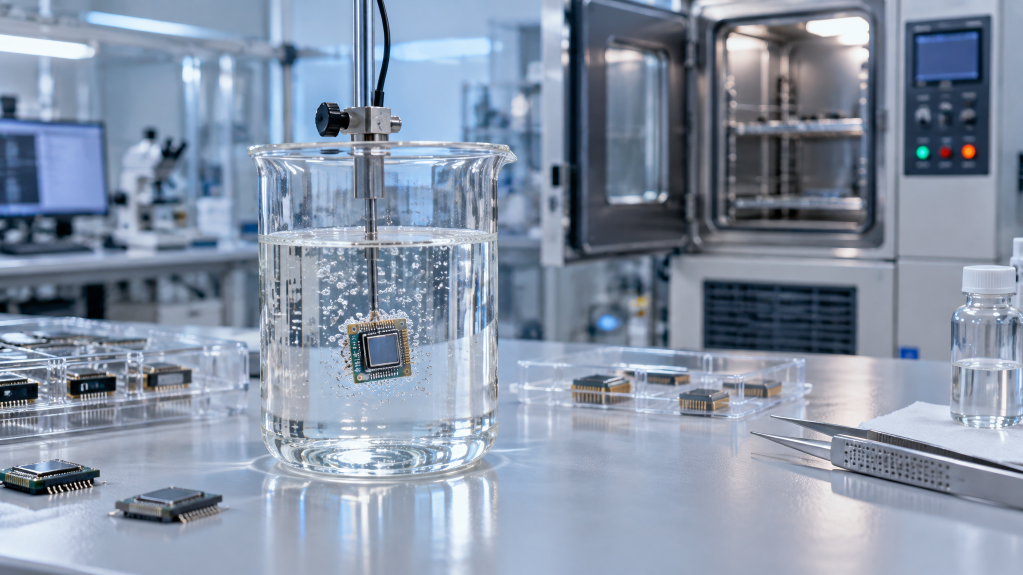
Many top supercomputers on the TOP500 list use direct-contact cooling — CPUs and accelerators are immersed directly in the coolant. This approach delivers the shortest heat-transfer path and eliminates the local hot spots that air cooling cannot resolve.
TUW-770's roles in supercomputers: direct immersion heat exchange for CPUs/GPUs, with chip surface heat carried away directly by the liquid; cooling for power modules (VRM) to eliminate hot spots at the GPU power-supply MOSFETs; and cooling for server memory and network cards in high-density areas air cooling cannot reach.
On the data side, TUW-770 has a thermal conductivity of 0.063 W/(m·°C) and specific heat of 1038 J/(kg·°C). Combined with a kinematic viscosity of just 0.79 cSt and a low surface tension of 14.8 dynes/cm, it can quickly penetrate the microscopic gaps between chips and heat sinks, carrying away local hot spots as well. Supercomputers run at full load 365 days a year, and the cooling medium cannot fail mid-way. Here, PFC's thermal stability and chemical inertness are hard requirements, not value-adds.
4. Applications in Military Electronics
Military electronic equipment works in far harsher conditions than commercial products: the tank and armored-vehicle cabin ranges from −40°C to +85°C with intense vibration; airborne equipment switches rapidly between high-altitude cold and aerodynamic heating; shipborne equipment faces high salt spray and humidity; and field communications vehicles are exposed to dust, moisture, and salt spray.
TUW-770's wide temperature range and chemical inertness mean that in these environments, the cooling medium itself never becomes the failure point. Equipment may fail because a chip or a sensor broke — but not because "the coolant froze" or "the coolant corroded the piping." The extremely low pour point of −127°C guarantees reliable cold-start operation, and the absence of a flash point provides a safety margin under high-temperature and battle-damage scenarios.
5. Extended Applications in Semiconductor Equipment
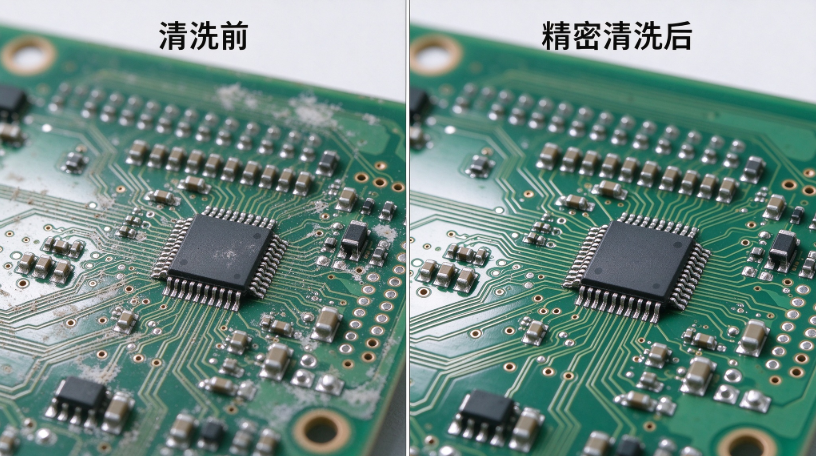
Beyond supercomputers and the military, TUW-770 is also used for: constant-temperature cooling of semiconductor etchers and ion implanters (for higher-temperature needs, see TUW-3283 and TUW-40); cooling of high-voltage transformers and high-power power-electronics devices; high/low-temperature media for thermal-shock test chambers; and cooling of power amplifiers in radar and RF equipment. Thanks to its stable liquid phase at 95°C and low surface tension of 14.8 dynes/cm, it is also well suited for drying and cleaning precision components, and can be recycled and reused through distillation.
6. A Fair Look at PFC's Limitations
It is important to be candid about two limitations of PFC-type fluids.
The first is higher GWP. The global warming potential of fluorocarbon fluids is typically an order of magnitude higher than that of hydrofluoroethers. Some overseas PFC grades have already been discontinued or are being production-capped. If your application has strict carbon-emission requirements, you should evaluate HFE alternatives.
The second is higher price. PFC raw materials and manufacturing costs exceed those of HFE. But for supercomputer and military scenarios, the medium's cost is a tiny fraction of the entire system — reliability comes first.
7. The Value of Domestic Chinese TUW-770
Against the backdrop of tightening supply of the overseas original FC-770, the value of domestic Chinese TUW-770 lies in: stable supply — produced domestically, unaffected by overseas discontinuation; short lead times — reachable within weeks, without months of ocean shipping; fast technical-service response — local teams available for on-site support; and controlled costs — eliminating import intermediaries.
For long-cycle military projects and supercomputer-center construction, we recommend evaluating domestic replacement early and establishing dual-source supply. Shenzhen Huayi Brothers focuses on supplying electronic fluorinated liquids and fluorine-containing functional liquids, providing product documentation, sample testing, and application-solution exchange. For sample testing, please contact: 15014124590 / 18870870567.
Related Article