TUW-71DE Azeotropic Cleaning Fluid
TUW 71DE
A 41 °C azeotropic cleaning fluid at 1.37 g/mL with strong solvency, no flash point and no residue on parts, for immersion and vapour degreasing plus coating-solvent duty. Alternative to 3M Novec 71DE.
Quantity:
[Overview]
TUW-71DE Azeotropic Cleaning Fluid is another constant-boiling blend: 41 °C boiling point, 1.37 g/mL density — the highest of the four grades — 16.6 mN/m surface tension and no flash point. The higher density and comparatively low latent heat make the vapour zone easy to establish and give efficient condensation on parts, which suits larger tanks and batch-loaded immersion or vapour degreasing equipment.
TUW-71DE Azeotropic Cleaning Fluid is positioned for general medium-duty cleaning plus specialty solvent work: it removes oils, waxes and flux residue, and is often used as a coating solvent and lubricant-deposition carrier that dries fast and leaves no solvent marks. Lines already running 3M Novec 71DE can convert on the existing process window, re-checking only top-up volume and distillation temperature.
[Key Properties]
- Appearance: Clear liquid, mild odour
- Boiling point: 41 °C
- Density (25 °C): 1.37 g/mL
- Freezing point: −24 °C
- Kinematic viscosity (25 °C): 0.3285 mm²/s
- Surface tension (25 °C): 16.6 mN/m
- Vapour pressure (25 °C): 51 kPa
- Latent heat of vaporisation: 200.9 kJ/kg
- Flash point: None
- ODP: 0
[Typical Applications]
1. Immersion and vapour degreasing — Oils, cutting fluids and polishing compounds on batch hardware, stampings and machined parts.
2. Flux and solder-paste cleaning — Post-solder cleaning of PCBA and power devices, with ultrasonic or spray assist to shorten the cycle.
3. Coating solvent — Dilution solvent for functional, moisture-barrier and release coatings — good levelling, no residue.
4. Lubricant deposition — Carrier for PFPE and dry-film lubricants, depositing evenly on precision bearings and guideways.
[Handling & Compatibility]
Top up only with the same grade; mixing another solvent shifts the distillation range. Before returning recovered fluid, check density and distillate temperature — a density drift beyond 0.02 g/mL from 1.37 means re-distil.
Compatible with metals and most plastics, though prolonged contact can swell some rubber seals; specify FKM where elastomers are exposed. Ventilate the area, avoid inhaling decomposition products, distil spent fluid and dispose of bottoms through a licensed contractor.
For batch-loaded tanks, manage TUW-71DE Azeotropic Cleaning Fluid by density and distillation range: log the distillate temperature weekly and inspect the condenser and return line if it moves by more than 1 °C. Track top-up volume against drag-out too — a sudden rise usually means the fixture angle or the withdrawal speed needs adjusting, not that the solvent has gone off.
[Packaging & Availability]
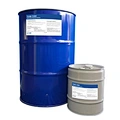
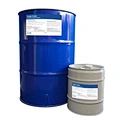
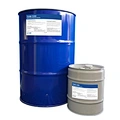
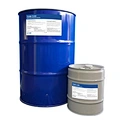
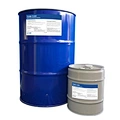
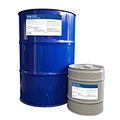
25 kg pails and 250 kg drums, with 5 L and 20 L trial packs. Stocked and shipped with TDS, SDS and COA.