Electronic Nano Coating — Unlocking the Microscopic Code Behind Electronic Device Performance
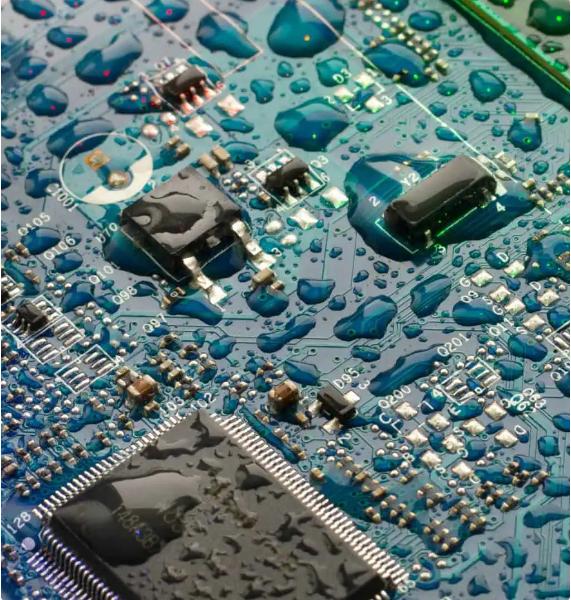
In today’s world of increasingly sophisticated and miniaturized devices—such as smartphones, smart wearables, and electronic systems in new energy vehicles—an invisible “guardian” is playing a crucial role: electronic nano coating. With a nanoscale thickness (1–100 nanometers), this multifunctional “outer layer” protects electronic components from harsh environments while enhancing their performance. It has become a key driver in the technological advancement of the electronics industry.
1. What Is Electronic Nano Coating?
Electronic nano coating is a thin film—only nanometers thick—formed on the surfaces of electronic components, circuit boards, sensors, and similar devices using physical or chemical methods. The materials used may include metal oxides (such as silicon dioxide and aluminum oxide), organic polymers (such as fluorocarbons), and graphene. By precisely controlling the composition and structure, these coatings can achieve single or combined functions such as waterproofing, corrosion resistance, insulation, thermal conductivity, and antibacterial protection.
Compared with traditional coatings, the FC-1750 electronic nano coating offers several core advantages:
Ultra-thin – With a thickness of only 10–100 nm, it does not affect the compact design of electronic devices.
Uniform coverage – It can penetrate tiny gaps between components to provide complete protection.
Multifunctional integration – Through material design, it can deliver multiple functions simultaneously (e.g., “waterproof + conductive” or “anti-corrosion + heat-conductive”).
Waterproof and moisture-proof – Fluorine-based nano coatings form a hydrophobic layer on component surfaces, preventing water penetration. Devices can even function after brief immersion (as in smartwatches with 50-meter waterproof ratings).
Corrosion and oxidation resistance – Metal nano coatings (e.g., titanium alloy coatings) block corrosive substances such as air and sweat, extending the lifespan of mainboards and sensors.
Scratch and wear resistance – Nano-ceramic coatings with hardness up to 9H protect screens and lens glass from scratches.
2. Application Scenarios: From Everyday Devices to Cutting-Edge Technology
Consumer electronics – Fingerprint-resistant coatings on smartphone screens, waterproof coatings for wireless earphones, and sweat-resistant coatings on smartwatches enhance durability and user experience.
Industrial electronics – Sensors and controllers in factories operate under high temperature, humidity, and dust. Nano coatings enable stable performance and reduce maintenance costs.
New energy sector – In electric vehicles, nano coatings protect electronic components in the Battery Management System (BMS) and charging piles, ensuring corrosion resistance, heat dissipation, and safe, efficient charging.
Aerospace – Electronic systems in satellites and drones face extreme temperatures and radiation. Nano coatings provide radiation resistance and high/low temperature endurance, ensuring reliable operation in harsh environments.
3. Future Trends: Smarter, Greener, More Precise
As electronic devices continue to evolve toward miniaturization, integration, and intelligence, electronic nano coatings are also advancing rapidly:
Intelligent coatings – By integrating nanosensors, coatings can monitor device conditions (e.g., temperature, damage) in real time and provide active protection through feedback.
Eco-friendly fabrication – Development of solvent-free and low-energy processes (such as Atomic Layer Deposition, ALD) reduces environmental pollution.
Customized design – Tailored solutions for different devices (e.g., stretchable coatings for flexible electronics or antibacterial coatings for medical electronics) make “one coating for one device” a reality.
Conclusion
Though microscopically invisible, electronic nano coatings profoundly transform the performance and lifespan of electronic devices. They serve not only as a protective shield but also as a catalyst for industrial upgrading. With ongoing advances in materials science and nanotechnology, the next generation of electronic nano coatings will be smarter, more efficient, and eco-friendly—powering the sustainable growth of smart homes, the Internet of Things, and the new energy industry.
Vacuum Pump Oil JVF4-15 — Reliable Power for Precision Vacuum Systems
TUW-7500 — A High-Performance, Reliable Substitute for 3M™ Novec™ 7500
Related Article