
Vacuum Pump Backstreaming: The Most Underestimated Source of Contamination in Semiconductor Manufacturing
2026-05-29
What is Backstreaming?
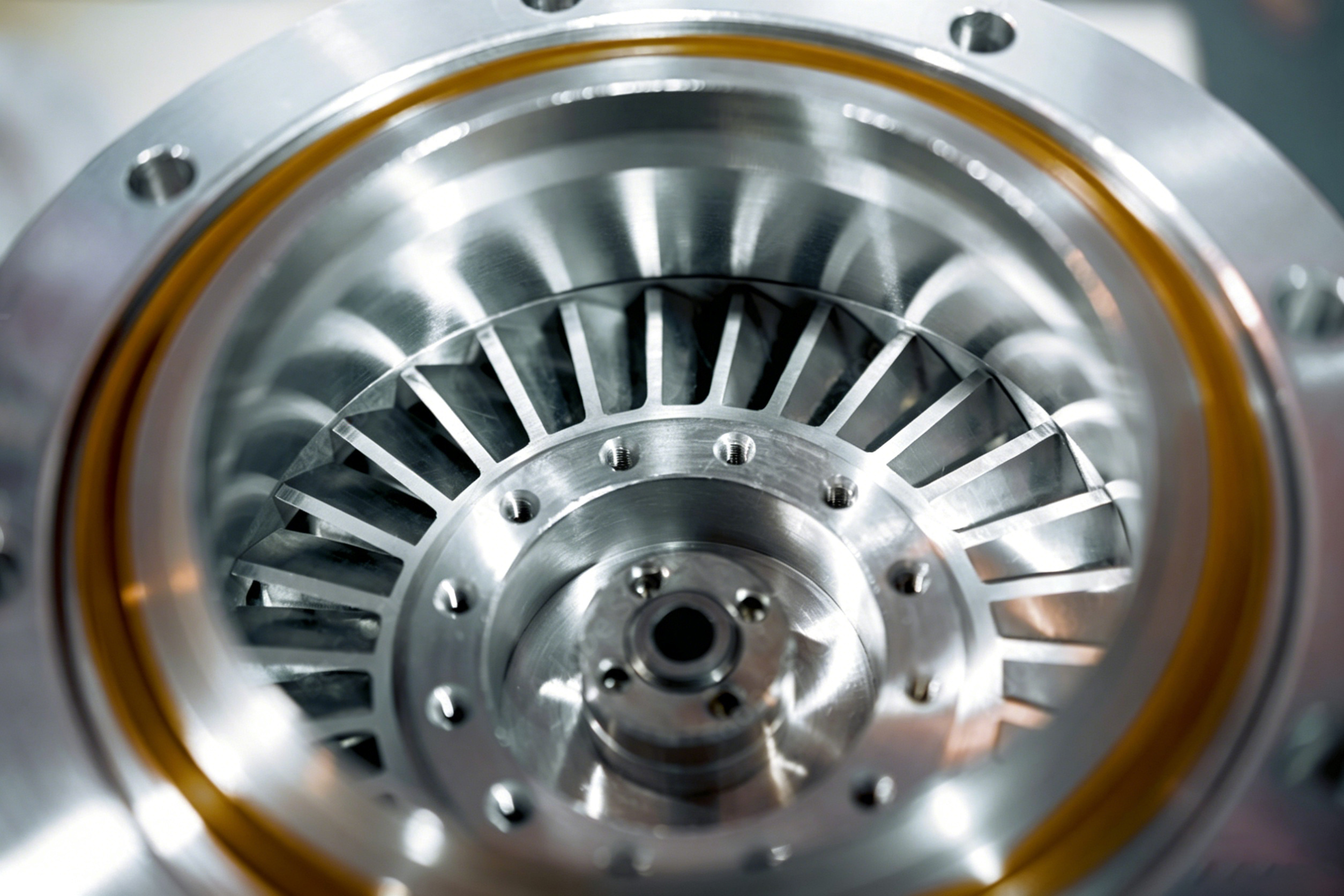
During operation, the lubricating oil inside a vacuum pump evaporates gradually under high temperature and low pressure. Oil vapor molecules travel backward along the exhaust pipeline and eventually deposit on process chambers and wafer surfaces. This phenomenon is defined as backstreaming.
This is far from an occasional issue. Studies show that for vacuum systems using mineral oil, the contamination level from backstreamed oil reaches 0.5 μg/cm²·h at a position 30 cm from the pump outlet. For a 12-inch wafer, several micrograms of oil film accumulate on its surface every hour. At the 7nm process node, this is enough to trigger critical dimension deviations and wafer defects.
The Domino Effect of Backstreaming
| Contamination Area | Specific Impact | Consequence |
|---|---|---|
| Organic deposition on wafer surface | Uneven photoresist coating | Line width deviation over 10% |
| Contamination on chamber inner walls | Drifting etching rate | Poor batch-to-batch consistency |
| Contamination on optical components | Reduced transmittance of lithography lenses | Frequent downtime for cleaning |
| Contamination in ion implantation systems | Shifted implantation energy | Abnormal electrical parameters of devices |
Field Case: At an 8-inch wafer fab using mineral oil vacuum pumps for PECVD processes, equipment had to be shut down for chamber cleaning every 200 hours, with each shutdown lasting 4 to 6 hours. After switching to PFPE pump oil, the cleaning interval was extended to over 2000 hours.
Why Mineral Oil Fails to Prevent Backstreaming
The performance of lubricants under vacuum is primarily determined by vapor pressure.
表格
| Oil Type | Vapor Pressure (25°C) | Backstreaming Tendency | Thermal Decomposition Temperature |
|---|---|---|---|
| Mineral Oil | 10⁻³ - 10⁻⁵ torr | Severe | 180 - 220°C |
| Synthetic Ester Oil | 10⁻⁵ - 10⁻⁷ torr | Moderate | 250 - 280°C |
| PFPE Oil | 10⁻⁸ - 10⁻¹⁰ torr | Extremely Low | >350°C |
The vapor pressure of mineral oil is 5 to 7 orders of magnitude higher than that of PFPE oil. Under identical vacuum conditions, mineral oil evaporates hundreds of thousands of times faster.
To make matters worse, mineral oil starts to decompose at 180-220°C, generating low-molecular-weight fragments such as alkenes and alkanes. These byproducts have even higher vapor pressure and worsen backstreaming. In contrast, PFPE oil features a thermal decomposition temperature above 350°C and barely decomposes under normal operating conditions.
Fomblin® PFPE Vacuum Pump Oil: Product Positioning
表格
| Model | Target Pump Type | Key Features | Typical Applications |
|---|---|---|---|
| Y LVAC | General Rotary Pumps | Ultra-low vapor pressure, high chemical inertness | CVD, Sputtering, Vacuum Evaporation |
| Y LVAC RP | General Rotary Pumps | Enhanced anti-wear and anti-rust performance | Corrosive processes: Etching, Stripping |
| Y HVAC | Diffusion Pumps | Ultra-low vapor pressure, superior high-vacuum performance | High-vacuum Coating, Ion Implantation |
Total Cost of Ownership: PFPE vs Mineral Oil
Many users notice that PFPE oil costs 8 to 15 times more than mineral oil per unit, while ignoring the total cost of ownership.
表格
| Cost Item | Mineral Oil | Fomblin PFPE Oil |
|---|---|---|
| Unit Price | Low | High (8-15 times) |
| Oil Change Interval | 3 - 6 months | 2 - 5 years |
| Downtime for Backstreaming-related Cleaning | Every 200 - 500 hours | Every 2000+ hours |
| Production Loss per Shutdown | $5,000 - $10,000 | Negligible |
| Chamber Maintenance Cost | Frequent maintenance | Minimal maintenance |
| Wafer Scrap & Yield Loss | 2% - 3% yield reduction | Less than 0.1% yield reduction |
Field Calculation: A 12-inch wafer fab operates 4 vacuum pumps for PECVD processes. With mineral oil, oil replacement is required 16 times per year in total. With PFPE oil, the annual replacement frequency drops to only 2 times. Taking downtime, cleaning and yield losses into account, the fab saves approximately $80,000 annually by adopting PFPE oil.
Guidelines for Switching from Mineral Oil to PFPE Oil
- No Mixing Allowed: Mineral oil and PFPE oil are immiscible. The pump chamber must be thoroughly cleaned before refilling with PFPE oil. Professional on-site disassembly and cleaning are recommended for the first replacement.
- Subsequent Maintenance: Routine oil changes afterwards require no additional disassembly or cleaning.
- Seal Compatibility: PFPE oil is compatible with FKM (Fluoroelastomer) and FFKM (Perfluoroelastomer). It is incompatible with NBR (Nitrile Butadiene Rubber), so relevant seals need to be replaced in advance.
Conclusion
Vacuum pump oil backstreaming is a hidden yet quantifiable problem. It triggers no equipment alarms but continuously undermines production yield and operational efficiency. Though mineral oil has a lower upfront cost, the cumulative expenses from frequent oil changes, unplanned downtime, maintenance and wafer scrap far exceed those of PFPE solutions.
With vapor pressure at the 10⁻⁸ torr level and thermal stability above 350°C, Fomblin PFPE oil suppresses backstreaming to a negligible level. The choice is not simply about cheap or expensive, but about identifying and addressing invisible operational losses.
Selection of High-temperature Synthetic Heat Transfer Fluids
Vacuum Lubrication Solution for Extreme Working Conditions Fomblin® PFPE Perfluoropolyether Lubricants Featuring Chemical Inertness and High-temperature Stability
Related Article
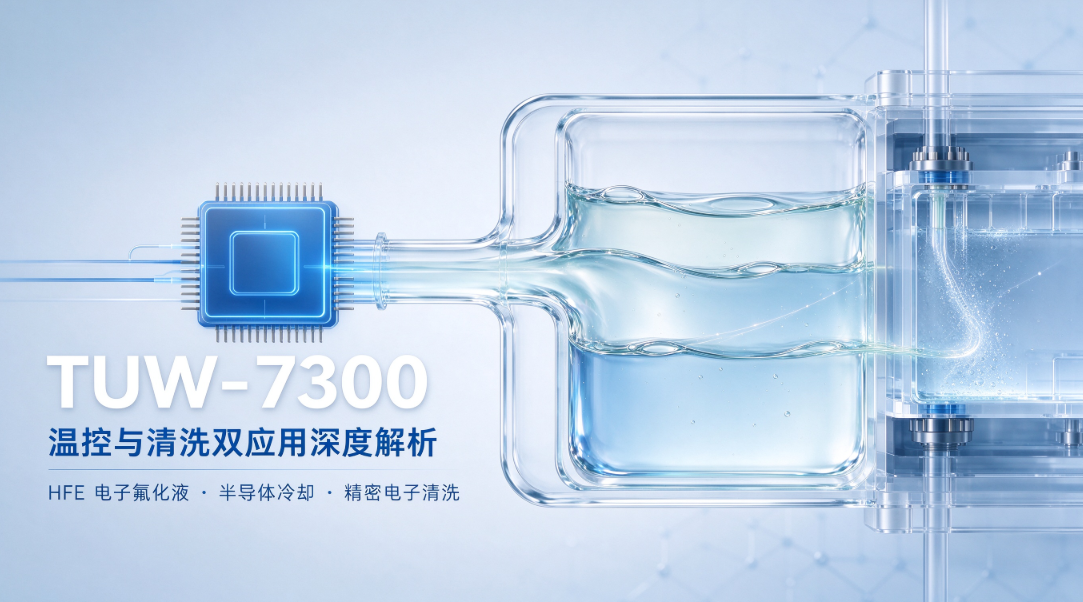
TUW-7300 is a thermally stable hydrofluoroether (HFE) electronic fluorinated fluid, benchmarked against 3M Novec 7300. It combines dual capabilities in semiconductor equipment temperature control and precision electronic cleaning. This article systematically analyzes the dual-scenario application value of TUW-7300, covering product positioning, temperature control applications, cleaning processes, performance parameters, and family product selection.
TUW-7300 HFE Electronic Fluorinated Fluid: In-Depth Analysis of Dual Applications in Semiconductor Equipment Temperature Control and Precision Cleaning

Traditional PCB conformal coating is thick, leaves BGA areas uncovered, and damages pads during rework. This article compares TUW-2704 and TUW-1700 fluoropolymer ultra-thin coatings on film thickness, rework, and protection, and provides selection guidance for NEV electronic control and consumer PCBs.
PCB Nano Conformal Coating Selection: TUW-2704 & TUW-1700 vs. Traditional Conformal Coating
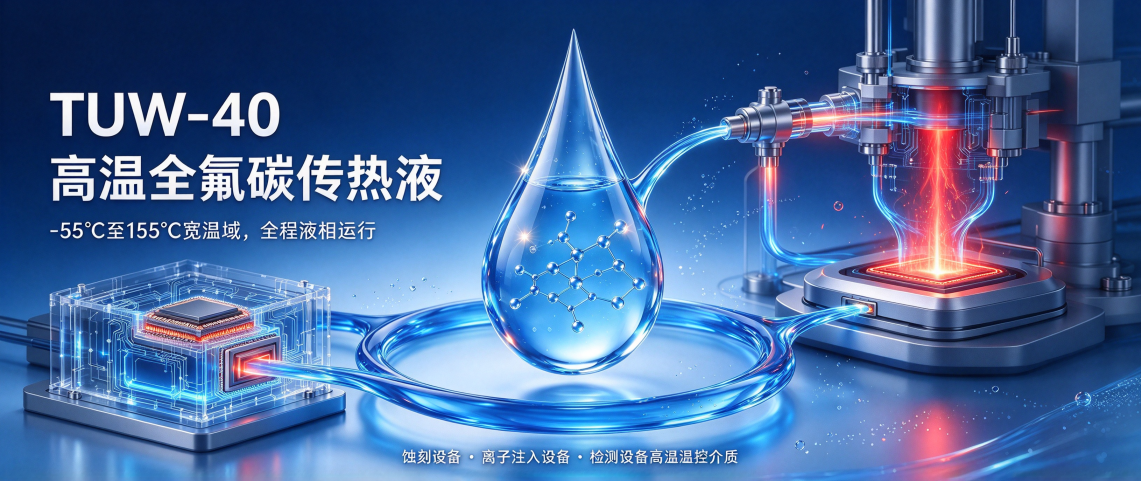
TUW-40 is a single-component perfluorinated heat-transfer fluid covering a liquid range of -55°C to 155°C. With a high boiling point and extremely low evaporation, it is designed for temperature control in etching equipment, ion implantation equipment, and inspection tools. This article details its physical properties, application scenarios, and positioning within the TUW series.
TUW-40 High-Temperature Perfluorocarbon Fluid: -55°C to 155°C Wide Temperature Range — Temperature Control for Etching and Ion Implantation High-Temperature Operations
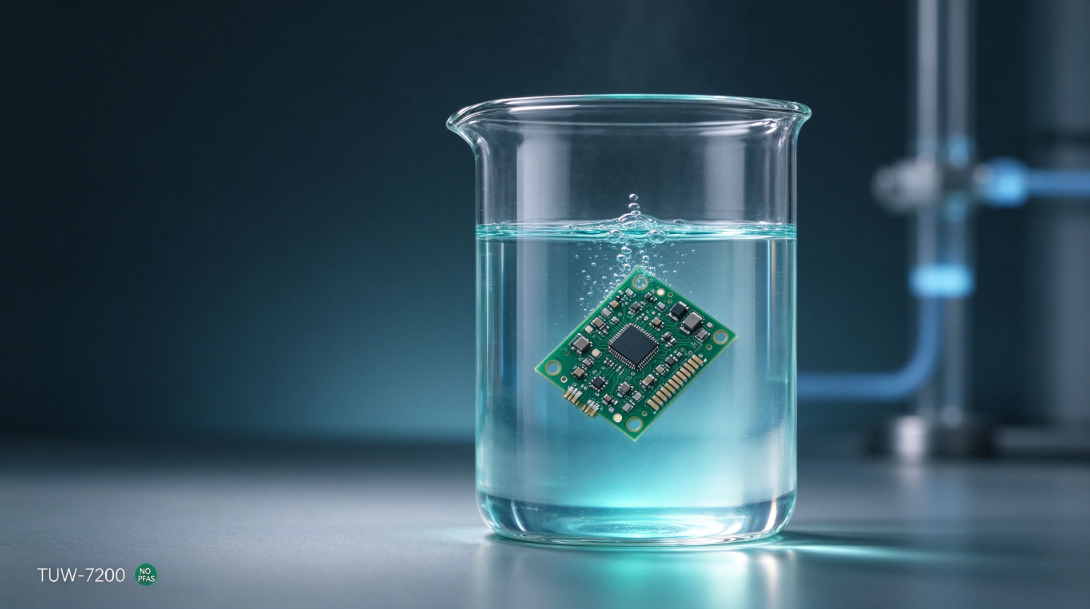
TUW-7200 is a thermally stable perfluorinated liquid that can be used as an electronic cleaning agent, precision cleaner, grease cleaner, cooling medium, hermeticity test fluid, thermostatic fluid, and extraction solvent. This article details its six uses and NO PFAS environmental attributes, and provides guidance on selecting a domestic alternative.
TUW-7200 Electronic Fluorinated Fluid: Precision Cleaning, Hermeticity Leak Testing, Thermostatic Bath — One Fluid for Three Uses, NO PFAS Domestic Alternative