
Molecular‑Level Penetration + Nano‑Scale Film‑Forming: How Nano‑Coatings Achieve Full Coverage of 0.1 μm Gaps?
2026-08-11
1. Coverage Limitations of Conformal Conventional Coatings
Traditional conformal coatings generally have a surface tension above 30‑40 mN/m and relatively high viscosity. When applied, they can only cover the macroscopic surfaces of components and fail to penetrate tiny gaps. For BGA packaged devices, the bottom pin pitch can be as small as 0.4 mm with gap heights of only tens of micrometres. For micro‑components such as 0201 devices, the gaps between pins and pads even drop to the sub‑micrometre level. Conventional conformal coatings can hardly provide effective coverage in these areas, leaving numerous unprotected dead zones. Moisture and salt mist penetrate through these zones, resulting in solder joint corrosion, short‑circuit and other failures.
2. Molecular‑Level Penetration Mechanism of Nano‑Coatings
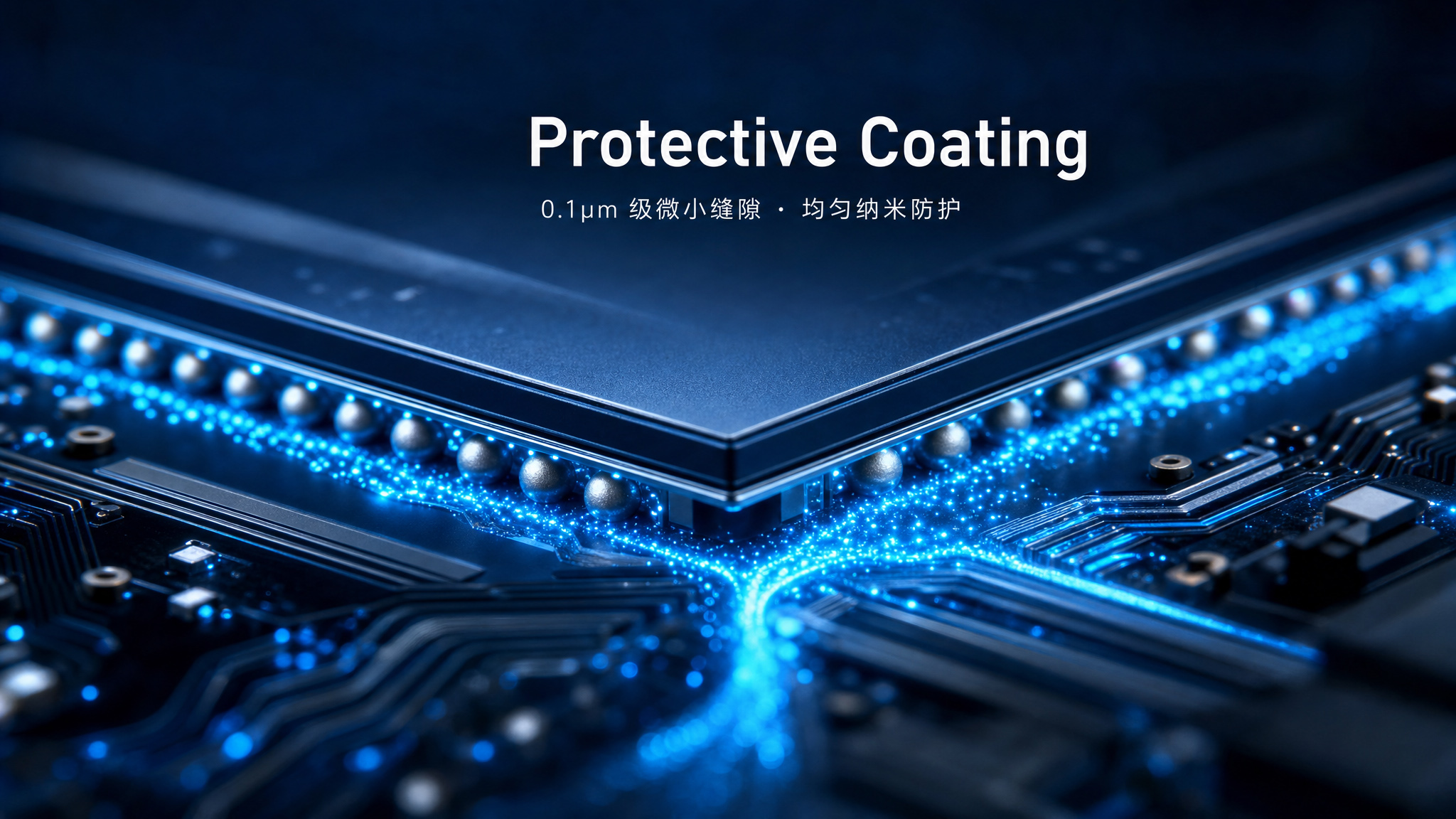
Huayi‑series nano‑coatings feature an ultra‑low surface tension of 15‑20 mN/m. According to the Washburn capillary penetration equation, a liquid’s penetration capacity into narrow gaps is positively correlated with surface tension and negatively correlated with viscosity. The ultra‑low surface tension of nano‑coatings provides excellent capillary driving force, enabling spontaneous penetration into gaps merely 0.1 μm wide.
Meanwhile, fluorine‑containing active molecules within the coating chemically react with functional groups such as hydroxyl groups on substrate surfaces to form covalent bonds. The dual mechanism of molecular‑level penetration plus chemical bonding ensures comprehensive protection on both macroscopic surfaces and inside micro‑gaps.
3. Fundamental Revolution in Protection Performance
Conventional conformal coatings usually achieve less than 60 % coverage for regions such as BGA bottoms. By contrast, nano‑coatings realise over 95 % gap coverage via capillary penetration. In compliance with coating quality requirements specified in IPC‑A‑610 standard, nano‑coatings further improve protection integrity on the basis of meeting standard requirements, offering a feasible technical route for high‑density electronic product protection.
4. Practical Application Verification
After high‑density PCBs from Huayi Brothers were treated with TUW‑series (TUW‑2708) nano‑coating, fluorescence inspection confirmed that the coating sufficiently penetrated traditional blind areas including BGA bottoms and pin gaps of 0201 components. After 500‑hour 85 °C / 85 %RH double‑85 testing, the PCBs maintained normal electrical performance, verifying the protection reliability brought by molecular‑level penetration.
Surface Tension as Low as 18 mN/m — Full Analysis of Nano‑Coating "Capillary Penetration" Technology
Pre-Coating Mandatory Operations: PCB Cleaning, Drying, Temperature & Humidity Control — 7 Critical Preparation Steps Prior to Nano-Conformal Coating Application
Related Article
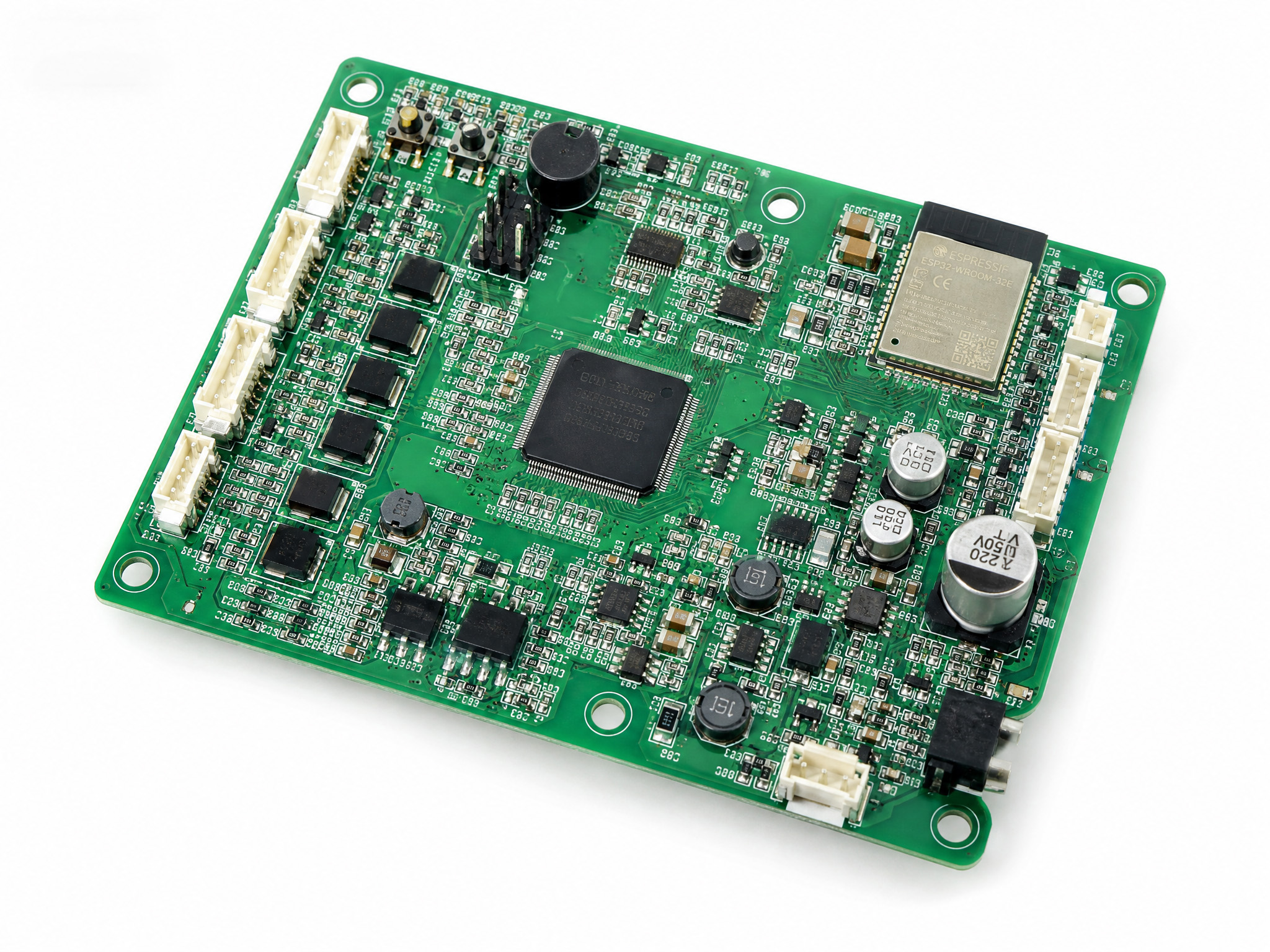
The global market for intelligent robot vacuums is booming, with all-in-one sweeping and mopping products becoming mainstream. However, mopping and hot-air drying induce internal condensation, causing PCBA corrosion and failures. This paper analyzes the exclusive failure modes and explores board-level protection solutions for robot vacuums.
The "Internal Rainy Season" of Robot Vacuum PCBAs: How to Protect Circuit Boards from Condensation in the Mopping Era
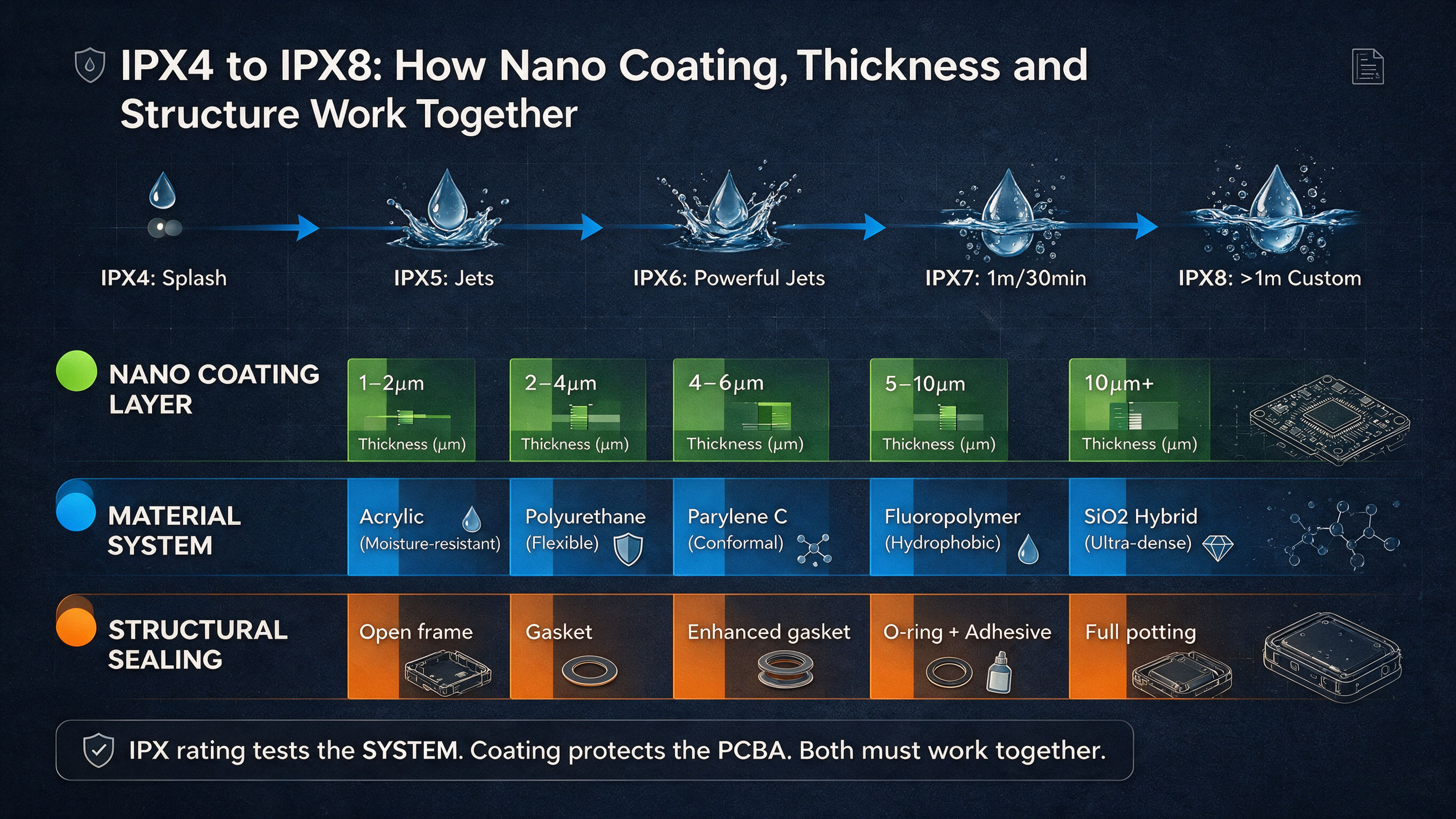
From IPX4 to IPX8, simply applying a thicker coating is not enough — it requires coordinated upgrading of coating film thickness, material system, and structural sealing. This article breaks down the true meaning of each IPX level, explains how the three lines of defense work together, and provides an actionable upgrade roadmap from IPX4 to IPX8.
From IPX4 to IPX8: How Nano Coating Thickness, Material Systems, and Structural Waterproofing Work Together
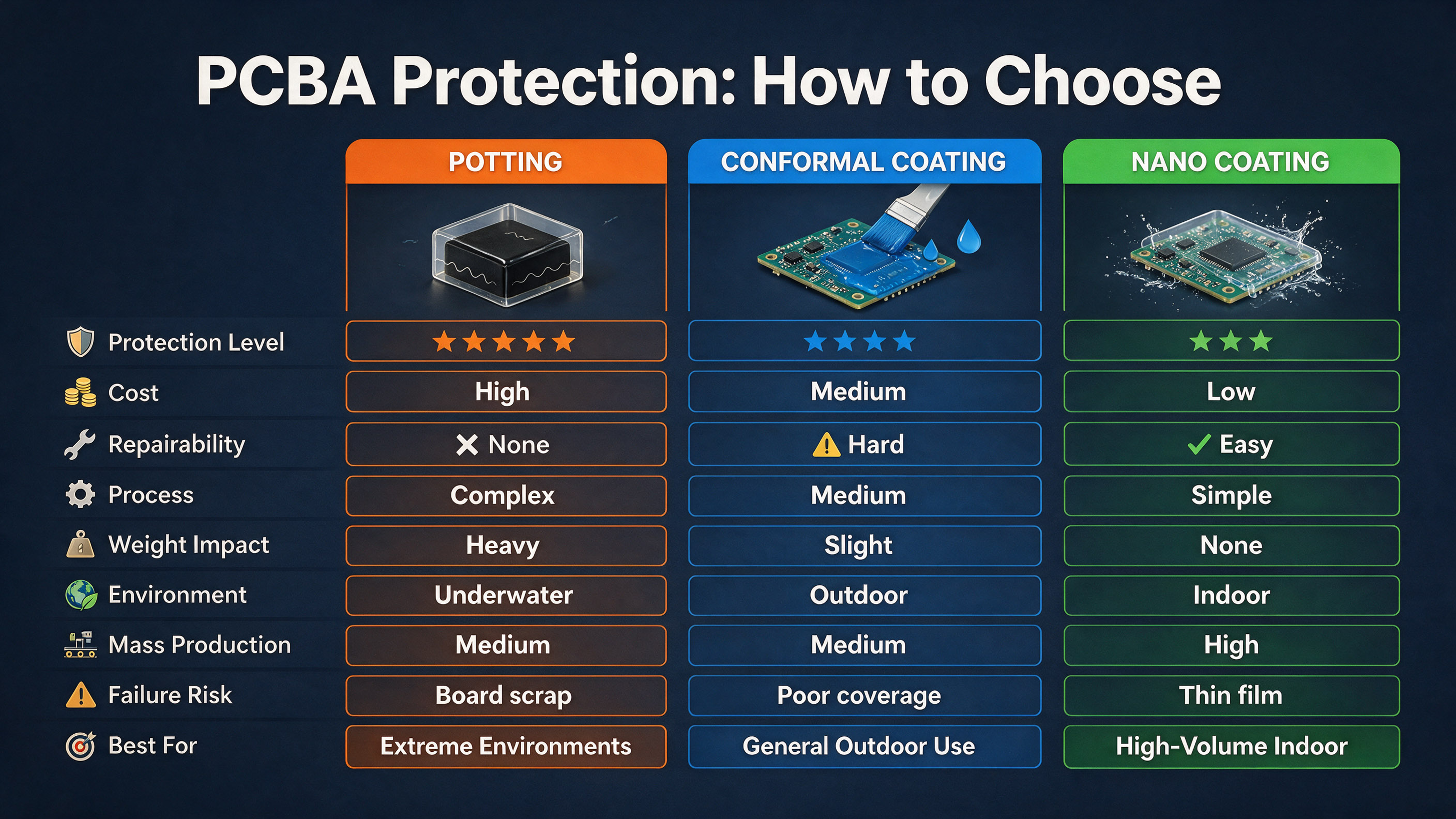
This article systematically compares three mainstream PCBA protection schemes — conformal coating, potting, and nano coating — across four dimensions: the fundamental nature of film thickness, an eight-dimensional comparison, a selection decision framework, and composite solutions. The core message is simple: there is no "best" scheme, only the "best-matched" one.
Potting, Conformal Coating, or Nano Coating? A Clear Comparison of Cost, Repairability, and Reliability
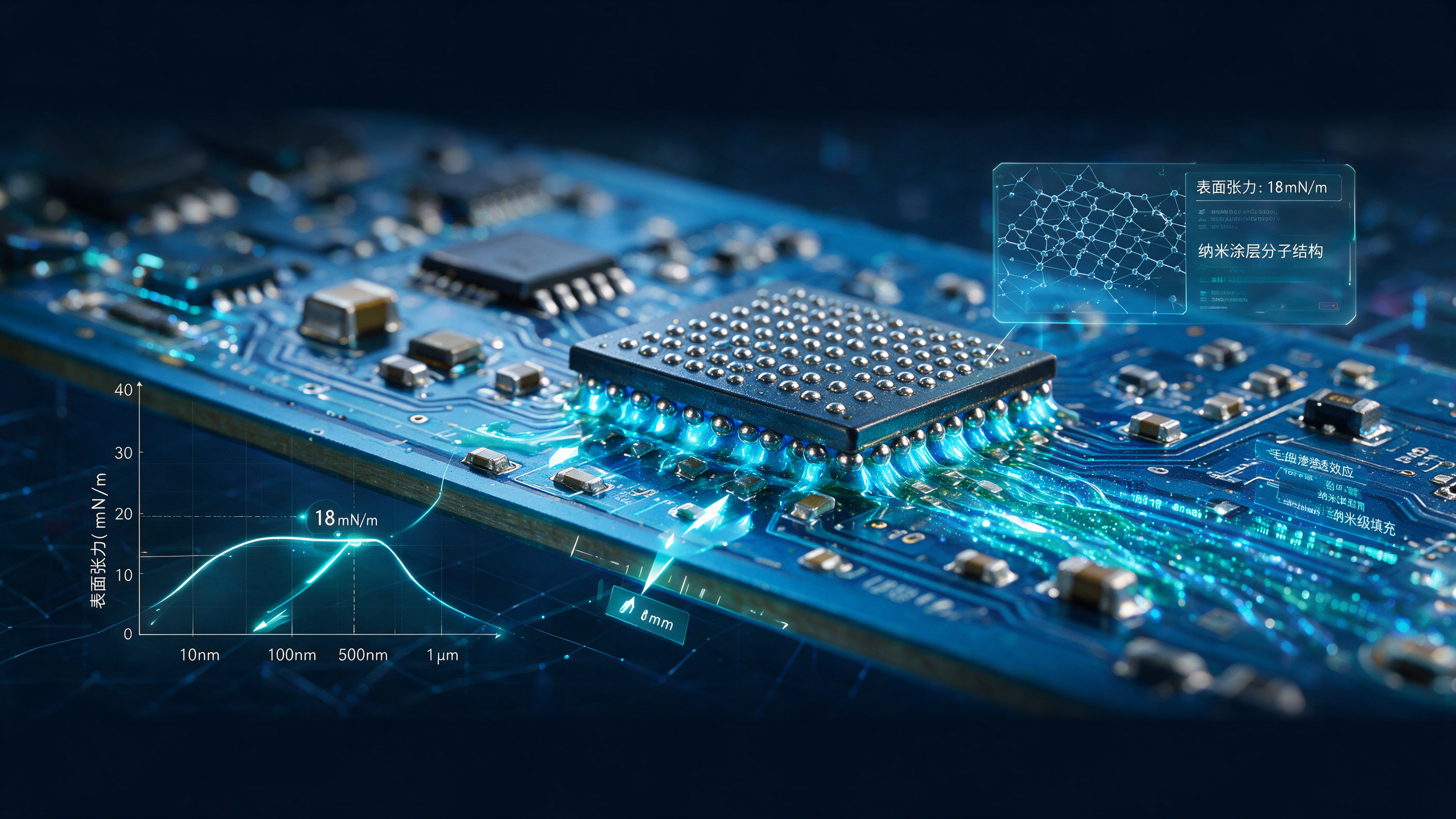
Thanks to its low surface tension for capillary penetration, the nano‑coating can reach traditional coating blind spots such as underneath BGAs and pin gaps of 0201 components, eliminating protection dead zones for PCBs.
Surface Tension as Low as 18 mN/m — Full Analysis of Nano‑Coating "Capillary Penetration" Technology