
Surface Tension as Low as 18 mN/m — Full Analysis of Nano‑Coating "Capillary Penetration" Technology
2026-08-14

1. The Critical Role of Surface Tension
In PCB coating processes, surface tension is a core parameter governing coating performance. Higher surface tension causes liquid to contract into spherical droplets, hindering spreading and penetration over substrate surfaces. Lower surface tension delivers superior spreading and penetrating capability.
Conventional acrylic conformal coatings exhibit surface tension of approximately 35‑42 mN/m, while silicone‑based conformal coatings range from 25‑30 mN/m; neither can penetrate sub‑millimetre gaps. The TUW‑series nano‑coatings feature ultra‑low surface tension of 15‑20 mN/m with a typical value of 18 mN/m, comparable to perfluoropolyether fluids.
2. Capillary Penetration Mechanism
Spontaneous liquid spreading occurs when liquid surface tension is lower than the critical surface energy of the substrate. With an ultra‑low surface tension of 18 mN/m, the nano‑coating penetrates micro‑narrow gaps including underneath BGAs and around 0201 / 01005 micro‑components via capillary action.
It achieves contact angles below 30° on common PCB materials such as FR‑4, copper foil and solder mask, indicating excellent wettability. According to classic capillary penetration theory, narrower gaps generate greater capillary driving force, provided the liquid wets the wall surface. The coating can penetrate micro‑gaps as narrow as 0.1 μm within seconds.
3. Resolving Traditional Coating Blind Spots
The nano‑coating addresses the following typical hard‑to‑coat areas:
- Underside of BGA devices (solder ball pitch: 0.4‑0.8 mm, gap height of only tens of micrometres);
- 0201 / 01005 components (size down to 0.6×0.3 mm or smaller with extremely narrow gaps);
- Fine‑pitch QFP / LQFP pins (pitch: 0.4‑0.65 mm, deep and narrow gaps);
- Inner walls of metallized through‑holes, which high‑viscosity coatings fail to fully cover.
4. Process Compatibility and Quality Assurance
Owing to its capillary‑penetration property, the nano‑coating is compatible with spraying, dipping, selective coating and other processes. Validated on TUW2704 per IPC‑A‑610 standard, fluorescence inspection demonstrates that coverage at BGA undersides and fine‑pitch regions increases by more than 40 % compared with conventional conformal coatings, effectively removing protection blind zones.
Potting, Conformal Coating, or Nano Coating? A Clear Comparison of Cost, Repairability, and Reliability
Molecular‑Level Penetration + Nano‑Scale Film‑Forming: How Nano‑Coatings Achieve Full Coverage of 0.1 μm Gaps?
Related Article
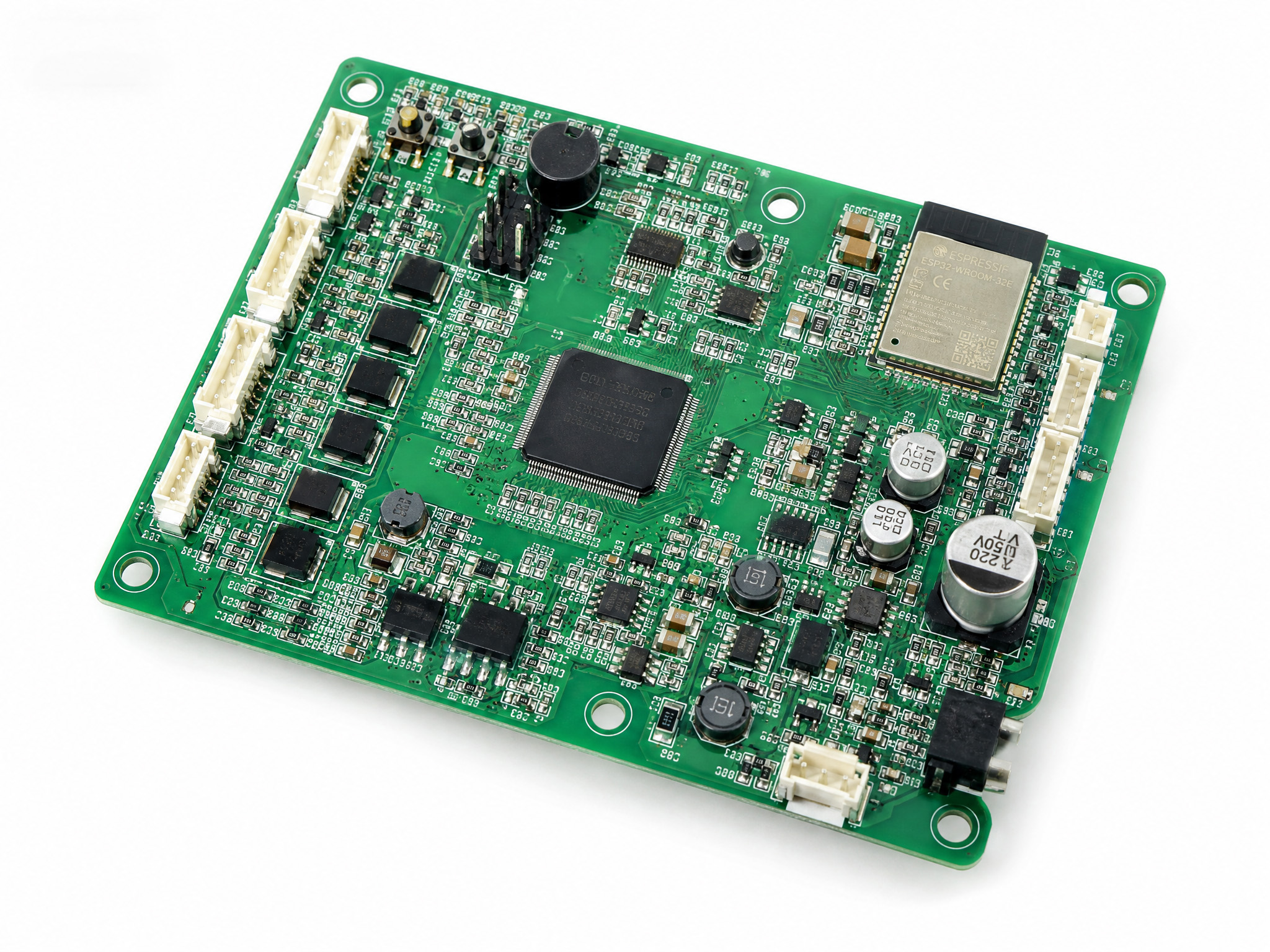
The global market for intelligent robot vacuums is booming, with all-in-one sweeping and mopping products becoming mainstream. However, mopping and hot-air drying induce internal condensation, causing PCBA corrosion and failures. This paper analyzes the exclusive failure modes and explores board-level protection solutions for robot vacuums.
The "Internal Rainy Season" of Robot Vacuum PCBAs: How to Protect Circuit Boards from Condensation in the Mopping Era
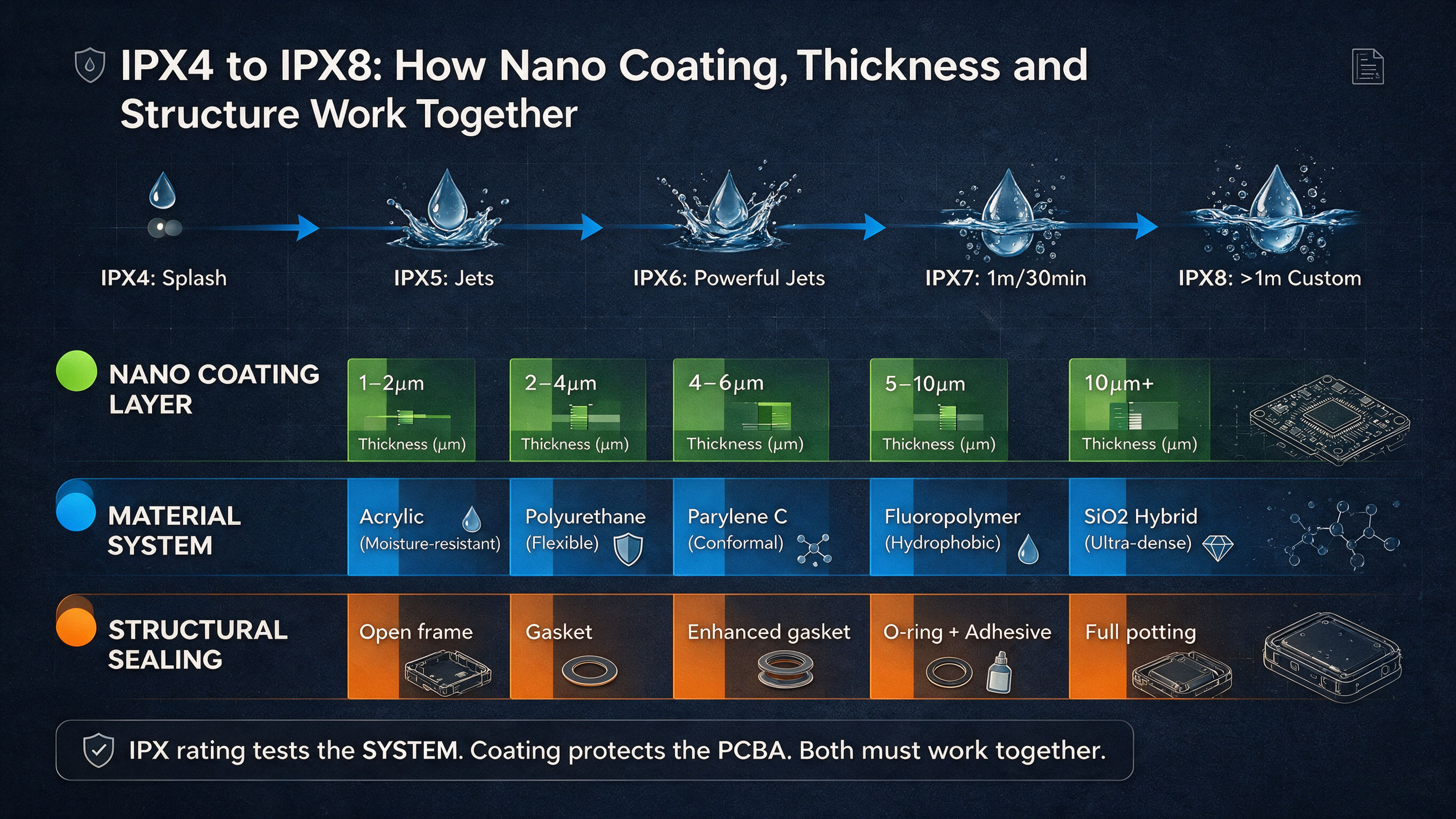
From IPX4 to IPX8, simply applying a thicker coating is not enough — it requires coordinated upgrading of coating film thickness, material system, and structural sealing. This article breaks down the true meaning of each IPX level, explains how the three lines of defense work together, and provides an actionable upgrade roadmap from IPX4 to IPX8.
From IPX4 to IPX8: How Nano Coating Thickness, Material Systems, and Structural Waterproofing Work Together
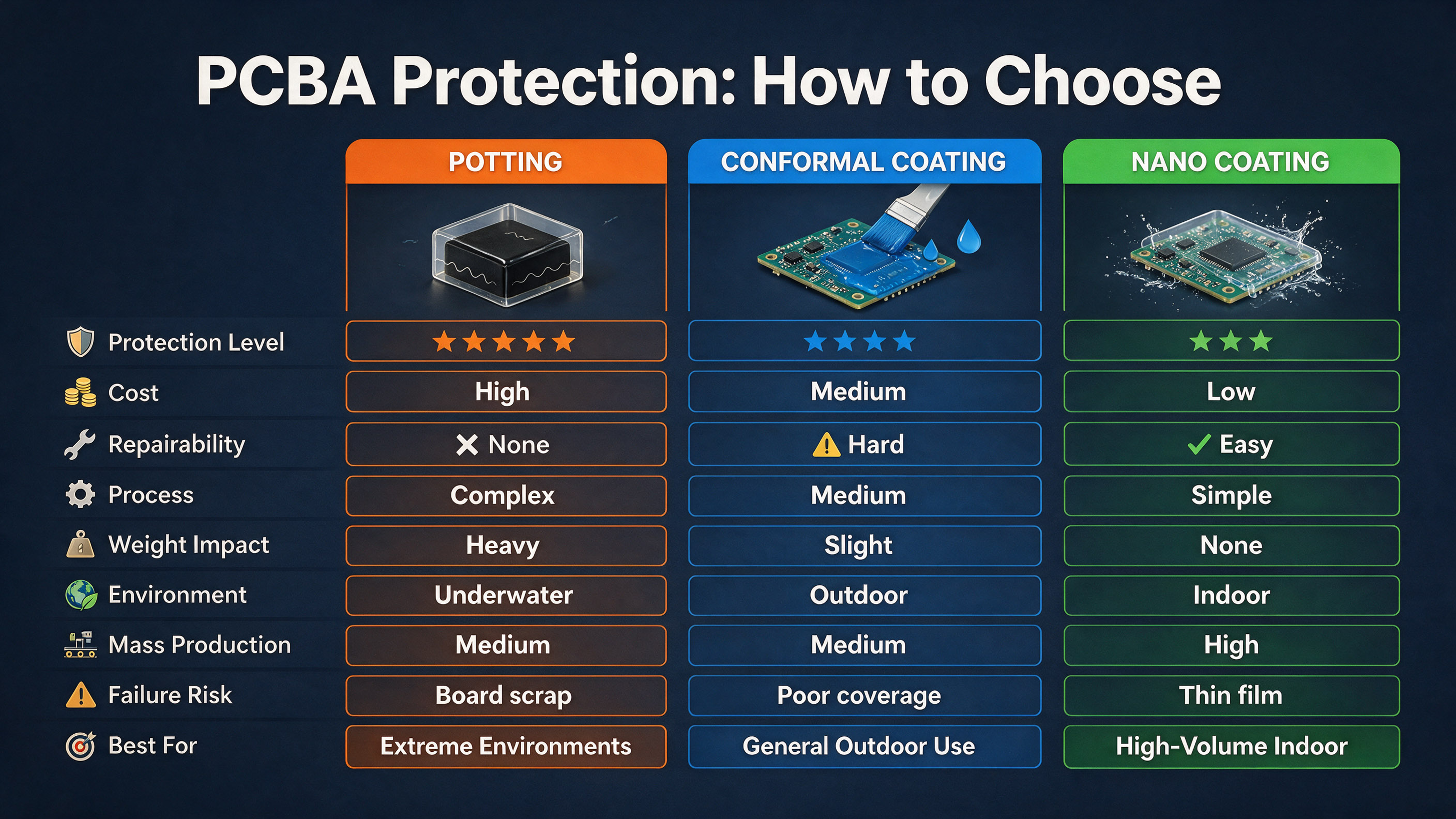
This article systematically compares three mainstream PCBA protection schemes — conformal coating, potting, and nano coating — across four dimensions: the fundamental nature of film thickness, an eight-dimensional comparison, a selection decision framework, and composite solutions. The core message is simple: there is no "best" scheme, only the "best-matched" one.
Potting, Conformal Coating, or Nano Coating? A Clear Comparison of Cost, Repairability, and Reliability
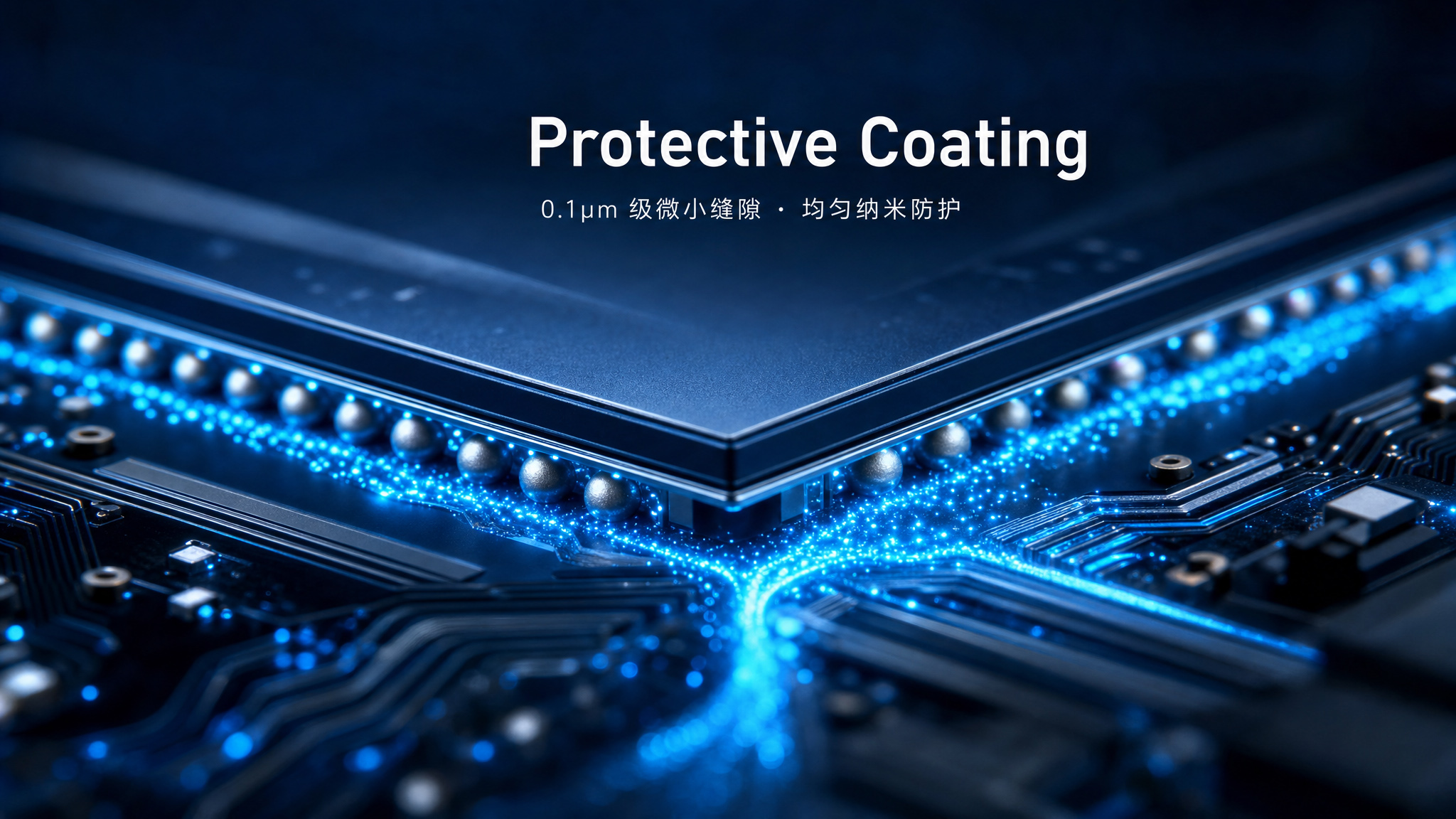
Benefiting from molecular‑level penetration capability, nano‑coatings can penetrate into micro‑gaps as small as 0.1 μm to form uniform nano‑scale protective films, delivering a brand‑new solution for PCB protection.
Molecular‑Level Penetration + Nano‑Scale Film‑Forming: How Nano‑Coatings Achieve Full Coverage of 0.1 μm Gaps?