In-depth Application of Electronic Fluorinated Fluids in Semiconductor Manufacturing: A Full Analysis of TUW Series from Equipment Temperature Control to Precision Cleaning
In the full workflow of semiconductor manufacturing, electronic fluorinated fluids are easily overlooked yet critical auxiliary materials. Unlike wet chemicals that act directly on wafer surfaces, electronic fluorinated fluids are mainly deployed on semiconductor equipment and undertake two core functions: equipment temperature control and cooling, and precision component cleaning.
From the perspective of product portfolio, electronic fluorinated fluids fall into two main categories. The first category is heat transfer fluids for equipment temperature control, including hydrofluoroether (HFE) and perfluorocarbon (PFC) systems, featuring wide temperature range, high dielectric strength and chemical inertness. The second category is hydrofluoroether (HFE) cleaning agents for precision cleaning, renowned for low surface tension, negligible residue and excellent material compatibility.
Electronic fluorinated fluids do not participate directly in wafer processing. Instead, they indirectly affect process yield and product consistency by ensuring stable equipment operation and component cleanliness. As advanced process nodes impose stricter requirements on temperature control accuracy and cleanliness, electronic fluorinated fluids have evolved from general heat transfer media into key materials that govern equipment stability and production yield.
I. Equipment Temperature Control: Why Semiconductor Equipment Relies on Electronic Fluorinated Fluids
During semiconductor manufacturing, equipment such as etchers and deposition and test systems require stable temperature control for key components including process chambers, electrostatic chucks (ESC) and wafer stages. Taking plasma etching as an example, tiny temperature fluctuations inside the chamber will directly alter etching rate, selectivity and profile precision, thereby affecting the electrical performance and yield of devices. For advanced process nodes, equipment temperature control accuracy has reached the ±0.1℃ level.
Temperature control fluids for semiconductor equipment must satisfy multiple performance requirements simultaneously; adequate cooling performance alone is insufficient for deployment in core equipment scenarios.
| Performance Requirement | Corresponding Equipment Pain Points | Value of Electronic Fluorinated Fluid |
|---|---|---|
| Wide temperature range | Etching and testing equipment operate under low and high temperature conditions | Supports multi-zone operation, no solidification at low temperatures |
| Low viscosity | Circulation resistance rises in low-temperature environments | Maintains fluidity and heat exchange efficiency |
| Electrical insulation | Temperature control loops are adjacent to plasma, electrodes and high-voltage components | High dielectric strength, mitigates electrical hazards |
| Chemical inertness | Corrosive gases and by-products exist inside etching chambers | Long-term stability, no reaction or corrosion |
| Low volatility & low residue | Chamber contamination leads to yield loss and process drift | Reduces contamination and process deviation |
| Material compatibility | Long-term contact with pipelines, seals, pumps and valves | Prevents swelling, aging and leakage |
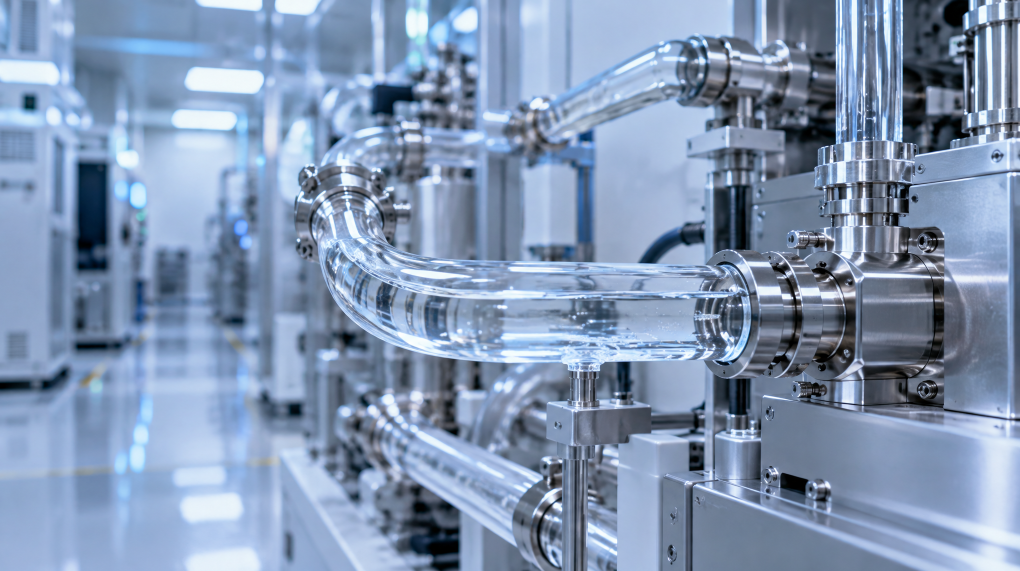
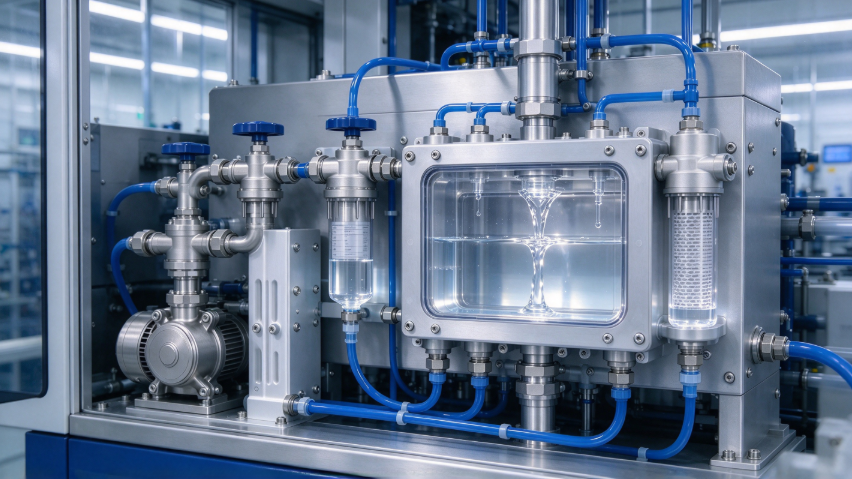
Electronic fluorinated fluids are typically applied in a closed-loop circulation system composed of Chiller/TCU temperature control units. Plant cooling water provides primary cold source. After precise regulation by the temperature control unit, heat transfer fluid is driven by pumps, passes through filters and heat exchangers, and flows into temperature-controlled positions such as process chambers, electrostatic chucks and chamber walls to remove process heat before returning to the temperature control unit, forming a complete closed loop. The closed design prevents direct contact between heat transfer fluid and process gas or chamber environment to eliminate contamination risks.
II. Precision Cleaning: Why HFE Is the Preferred Low-Residue Cleaning Solution
As process nodes shrink, cleaning requirements for equipment components keep escalating. Chamber parts, valves, spray nozzles, optical elements and advanced packaging components demand stringent control over residues, material corrosion and drying cleanliness. Traditional cleaning agents suffer from high surface tension, poor penetration and heavy residues, failing to meet cleanliness standards for advanced processes.
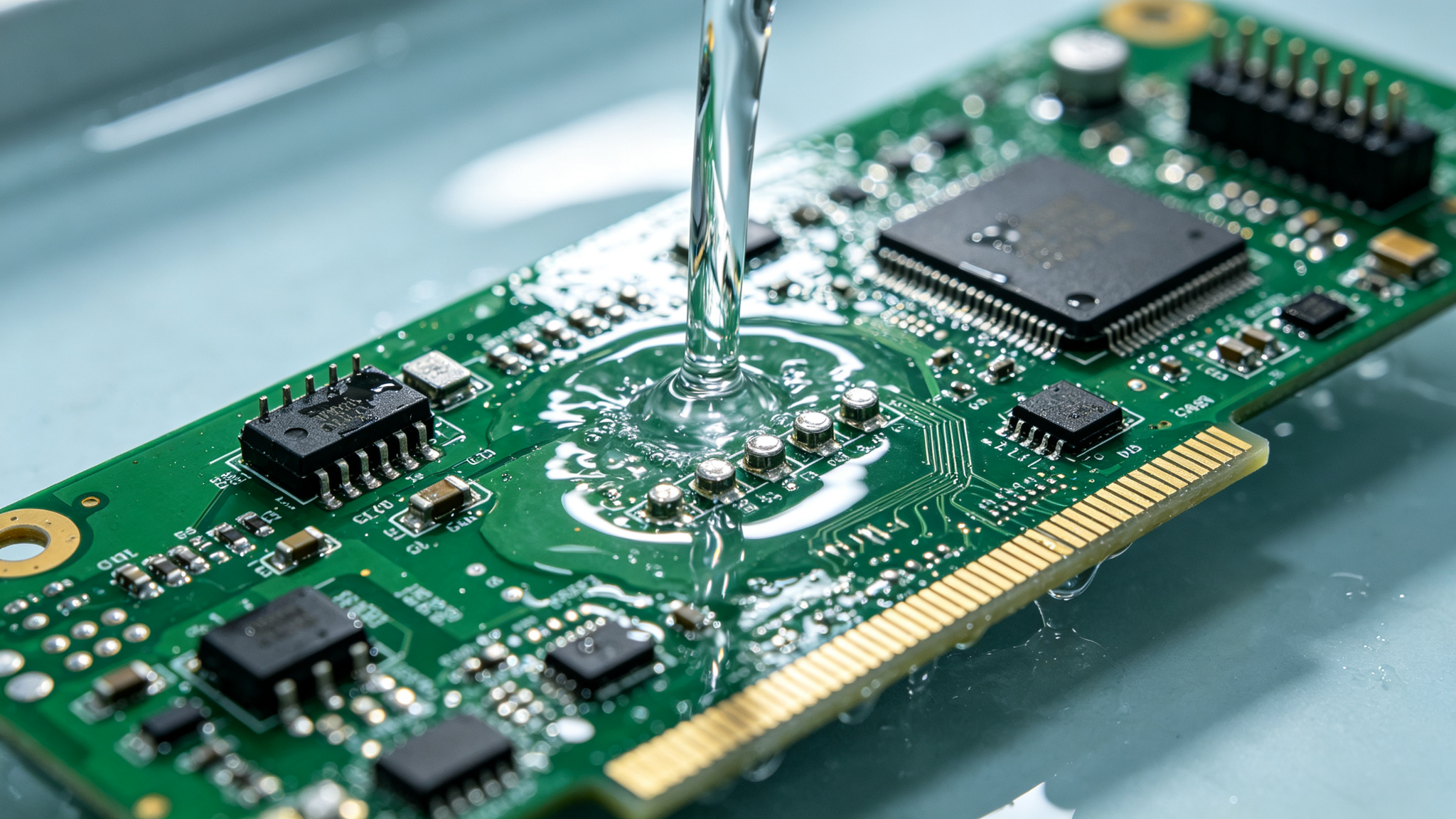
With low surface tension of 10–18 mN/m, hydrofluoroether (HFE) can penetrate microscale gaps. It removes grease, wax, particles, ionic contaminants and flux residues via immersion cleaning, vapor degreasing, spray cleaning and wipe cleaning, and leaves almost no residue after volatilization.
| Cleaning Objects | Typical Contaminants | Cleaning Methods | HFE Advantages |
|---|---|---|---|
| Semiconductor equipment chamber components | Grease, particles, organic residues | Immersion, vapor degreasing | Good penetration for complex structures, low residue |
| Valves, spray nozzles and pipeline parts | Metallic micro-contamination, particles, oil stains | Spray, precision cleaning | Material compatible, reduces corrosion risks |
| Optical components & precision electronics | Fingerprints, particles, ionic contaminants | Wiping, spraying | No damage to parts, fast drying |
| PCB, connectors & packaging components | Flux residues, organic contamination | Vapor degreasing, immersion | Low surface tension, eco-friendly alternative |
III. TUW Series: Complete Domestic Alternative Solutions Covering Temperature Control and Cleaning
TUW series electronic fluorinated fluids developed by Shenzhen Huayi Brothers cover both semiconductor equipment temperature control and precision cleaning scenarios, providing downstream customers domestic alternatives matching original international models.
Temperature Control Product Line
| Model | Benchmark | Key Characteristics | Typical Applications |
|---|---|---|---|
| TUW-40 | Novec 40 | Temperature range: -55°C to 155°C, single-component high boiling point | High-temperature working conditions for etching, ion implantation and inspection equipment |
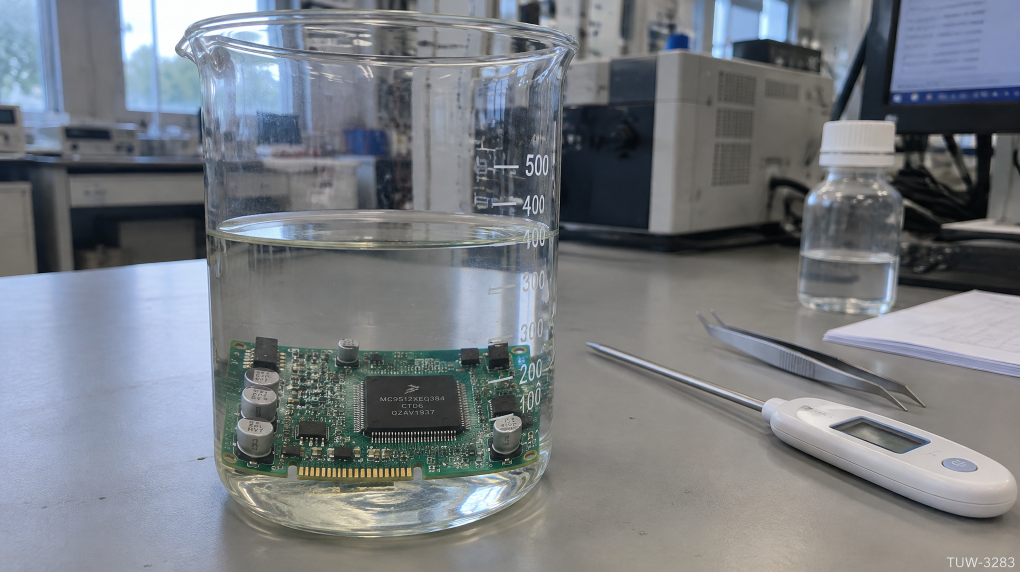
| TUW-3283 | FC-3283 | Boiling point: 128°C, high-purity perfluorocarbon liquid via electrolysis | Temperature control for etchers, ion implanters and CVD equipment |
| TUW-7500 | Novec 7500 | GWP=1, melting point: -93°C, hydrofluoroether | Immersion cooling for AI data centers |
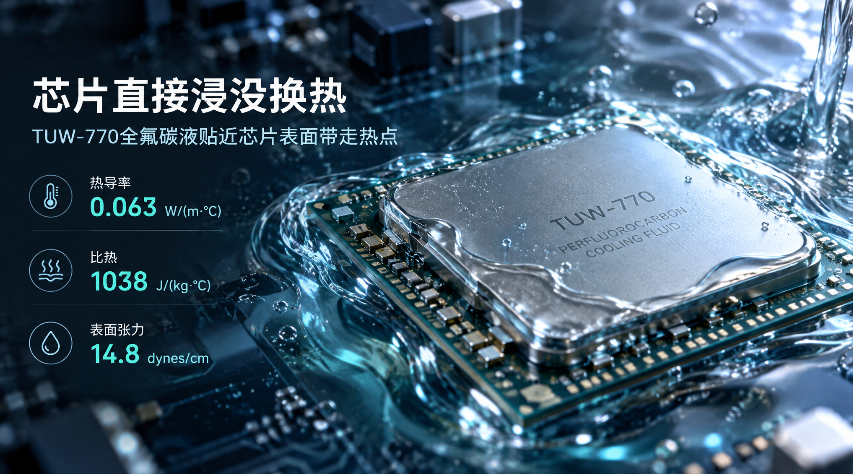
| TUW-770 | FC-770 | Pour point: -127°C, perfluorocarbon liquid | Cooling for supercomputers, military electronics and high-voltage components |
| TUW-7300 | Novec 7300 | Dual-purpose hydrofluoroether for temperature control and cleaning | Semiconductor cooling and precision electronic cleaning |
| TUW-7200 | Novec 7200 | Multi-purpose for cleaning, leak testing and constant temperature bath | Electronic cleaning, air tightness test, constant temperature bath |
Precision Cleaning Product Line
| Model | Key Characteristics | Typical Applications |
|---|---|---|
| TUW-71IPA | Boiling point ~57°C, surface tension 16 mN/m | Rapid cleaning and degreasing of precision electronic parts |
| TUW-71DA | Azeotrope, no flash point | Immersion flux removal and degreasing cleaning |
| TUW-72DA | Azeotrope, medium to heavy-duty degreasing | PCBA flux cleaning, vapor degreasing |
| TUW-72DE | Azeotrope, solvent for coating/lubricant deposition | Dual use for degreasing and coating deposition |
| TUW-73DE | Heavy-duty vapor degreasing | Cleaning of components with complex geometries |
| TUW-7100 | Nonafluorobutyl methyl ether, multi-functional | Chamber cleaning, FOUP cleaning, immersion cooling |
| TUW-347 | HFE eco-friendly solvent | Drying, dust removal, non-condensable gas elimination |
| TUW-458 | HFE eco-friendly solvent | Drying, dust removal, electrolyte additive |
In addition, TUW-2704 electronic coating agent provides ultra-thin moisture-proof and anti-corrosion coating for PCBs and electronic components, completing the full chain of "temperature control – cleaning – protection". All products in TUW series feature zero ODP, low GWP, non-flammable with no flash point and excellent electrical insulation. They comply with environmental regulations such as RoHS and serve as stable long-term alternatives to ODS substances.
IV. Conclusion
As critical auxiliary materials on the equipment side of semiconductor manufacturing, electronic fluorinated fluids face growing application demands with the advancement of advanced process nodes. Amid the adjustment of PFAS product lines by international fluorinated fluid manufacturers and rising supply uncertainty, domestic electronic fluorinated fluids are presented with historic opportunities. Shenzhen Huayi Brothers specializes in supplying electronic fluorinated fluids and fluorine-containing functional liquids. TUW series covers full-scenario requirements ranging from low-temperature drying and high-temperature temperature control to precision cleaning and coating protection. We provide product datasheets, sample testing and application solution communication for customers. Please contact us on the right for sample testing.
From Thermal Shock to Package Leak Testing: A Detailed Look at TUW-3283 in Electronic Reliability Verification
Related Article