Fluorinated Liquids in the Electronics Industry
In the context of rapid technological advancement, electronic devices have become deeply integrated into cutting-edge fields such as semiconductor manufacturing, data centers, and new energy vehicles. As a core material that ensures efficient and stable equipment operation, electronic fluorinated liquids have emerged as a key driving force in the upgrading of the electronics industry. With their unique physical and chemical properties, these liquids are redefining the technological boundaries of electronics — from microscopic wafer cleaning to large-scale data center cooling, and from insulating protection of precision components to suppression of thermal runaway in extreme environments.
Applications of Fluorinated Liquids
1. Semiconductor Manufacturing: The “Clean Guardian” of Chip Yield
In the “nanometer battlefield” of semiconductor fabrication, fluorinated liquids play multiple critical roles:
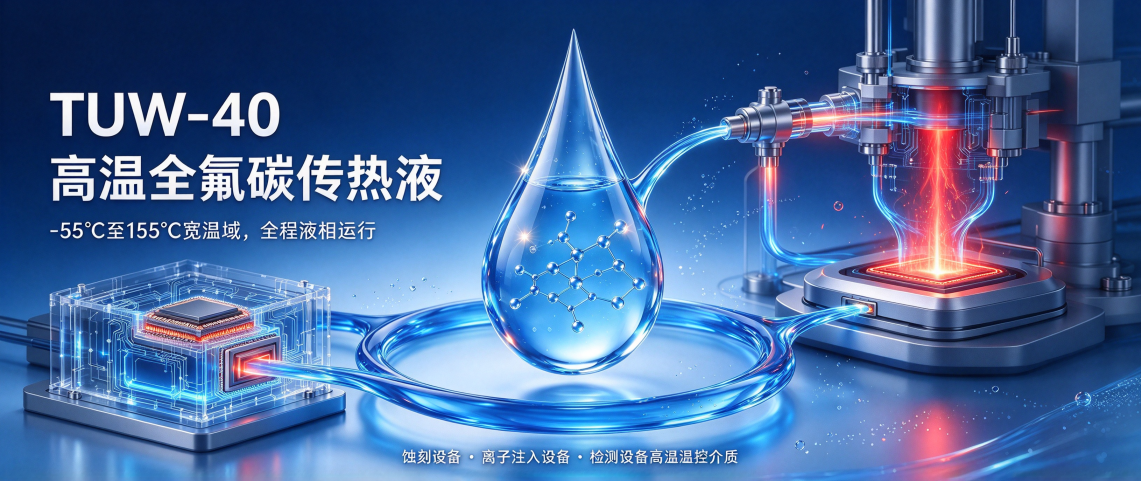
Dry Etching Temperature Control:
In the 3nm etching process, fluorinated liquids act as temperature control media, keeping wafer temperature fluctuations within ±0.1°C to ensure the precision of photoresist patterns. According to one chip manufacturer, the use of fluorinated liquids increased etching yield from 88% to 94% and shortened R&D cycles by 20%.
Wet Cleaning and Dehydration Drying:
Owing to their low surface tension, fluorinated liquids can quickly remove moisture from wafer surfaces through the Marangoni effect, preventing oxidation layer defects caused by IPA residue. At a 12-inch wafer fab, this cleaning process reduced particle contamination to 0.01 particles/cm², reaching world-class standards.
Packaging Testing and Leak Detection:
During chip packaging, fluorinated liquids serve as leak detection agents capable of identifying micro-level gaps. A power semiconductor manufacturer reported that after adopting this method, product failure rates decreased from 0.5% to 0.02%.
2. Data Centers: The “Liquid Engine” of the Computing Revolution
With the explosive growth of AI-driven computing power, data center power density has exceeded 50 kW per cabinet, pushing traditional air-cooling technology to its physical limits. Immersion liquid cooling using fluorinated liquids has become the breakthrough solution, offering three major advantages:
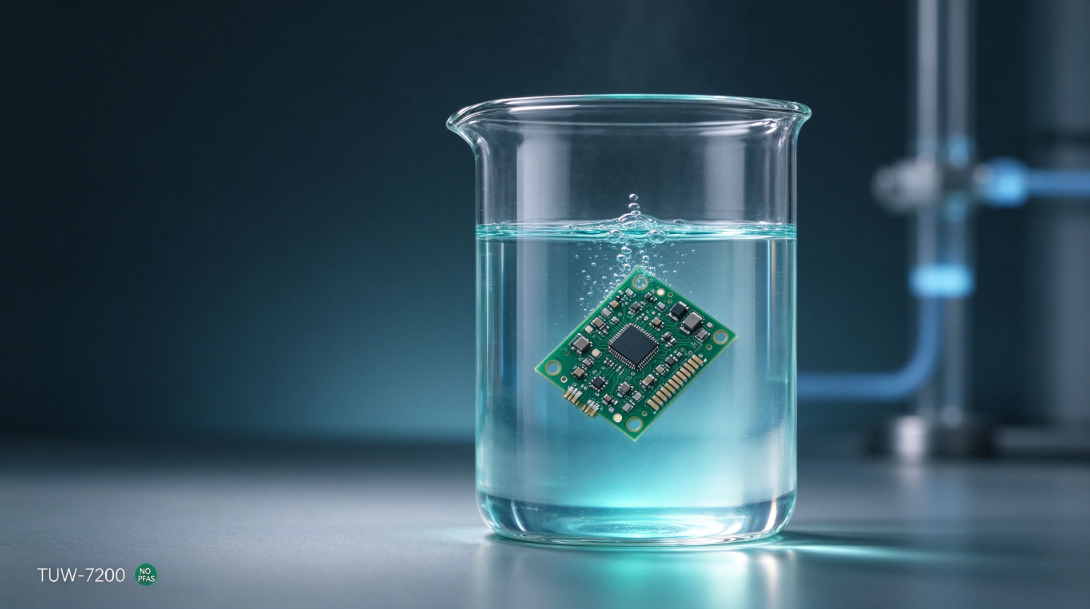
Exceptional Heat Dissipation Efficiency:
By directly contacting heat sources, this cooling method maintains server temperatures between 40°C–65°C, 20–30°C lower than air cooling. A supercomputing center reported that fluorinated liquid cooling improved GPU performance stability by 40% and tripled the mean time between failures.
Space and Energy Optimization:
Immersion cooling eliminates the need for air conditioners and fans, increasing space utilization by over 50%. In a 10MW data center, fluorinated liquid cooling can save 120 million kWh annually, equivalent to a reduction of 96,000 tons of CO₂ emissions.
Noise Reduction and Reliability Enhancement:
By eliminating fan noise, data center sound levels drop from 70dB to below 35dB, while avoiding dust accumulation problems. A major cloud service provider reported that the annual server failure rate fell from 2.3% to 0.5% after adopting fluorinated liquid cooling.
3. New Energy and Aerospace: Dual Assurance of Safety and Performance
Battery Thermal Runaway Suppression:
In new energy vehicles, fluorinated liquids act as a “liquid fire extinguisher,” reducing temperatures from 600°C to 200°C within 3 seconds during thermal runaway events. A power battery manufacturer found that using fluorinated liquid cooling extended the thermal propagation time to 15 minutes, buying critical time for evacuation and safety control.
Aviation Electronics Spray Cooling:
In aircraft avionics systems, fluorinated liquid spray cooling keeps equipment within –55°C to 125°C, meeting MIL-STD-810G military standards. After adopting this technology, one avionics manufacturer saw equipment lifespan increase from 5 years to 10 years.
Space Propellant Medium:
In deep-space exploration missions, fluorinated liquids serve as supercritical propellants, enabling efficient storage and release. In NASA’s Artemis lunar mission, the fluorinated liquid propulsion system improved fuel utilization by 30%.
Future Outlook
From the cleanrooms of semiconductor fabs to the blue cooling pools of data centers, and from the battery packs of electric vehicles to the propulsion systems of satellites, electronic fluorinated liquids are acting as “invisible guardians” that support the electronics industry’s evolution toward higher precision, greater efficiency, and sustainable development.
As technology continues to advance, this “liquid black technology” will unlock limitless possibilities across even more domains in the future.
Domestic Fluorinated Liquids: Ushering in a New Era of High-End Applications
Vacuum Pump Oil JVF4-15 — Reliable Power for Precision Vacuum Systems
Related Article