
Pre-Coating Mandatory Operations: PCB Cleaning, Drying, Temperature & Humidity Control — 7 Critical Preparation Steps Prior to Nano-Conformal Coating Application
2026-08-07

1. PCB Surface Cleaning: Eliminate All Residues
After soldering, PCBs are commonly contaminated with flux, rosin, grease and particulate pollutants. These residues severely weaken the adhesion of nano-conformal coatings, and may even trigger blistering or delamination of coatings. Thorough cleaning of PCBs is required prior to coating.
Isopropyl Alcohol (IPA) or dedicated cleaning agents are recommended, with ultrasonic cleaning or immersion scrubbing as applicable treatment methods. For PCBs manufactured via lead-free soldering processes, cleaning procedures shall follow IPC-CH-65B standards. Post-cleaning rinsing with deionized water is required to remove residual cleaning agents. Cleaning effectiveness can be evaluated through cleanliness testing specified in IPC-TM-650, whereby surface cleanliness is verified via ionic contamination testing.
2. Adequate Drying: Bake at 60–80°C for 15–30 Minutes
Moisture may remain on PCB surfaces and within microvoids after cleaning. Direct coating application will trap moisture underneath the coating, resulting in bubbles or coating whitening. Therefore, baked drying is compulsory after cleaning.
Bake PCBs at 60–80°C for 15–30 minutes to ensure complete evaporation of moisture on PCB surfaces and within gaps between electronic components. Baking duration can be extended appropriately for multi-layer PCBs or PCBs with intricate structures. Upon completion of baking, allow the boards to cool naturally to ambient temperature in a dry environment before coating, so as to avoid condensation caused by temperature difference.
3. Temperature & Humidity Control: Ambient Temperature 15–35°C, Relative Humidity ≤70%
Ambient temperature and humidity directly affect the leveling property, curing rate and final film-forming quality of nano-conformal coatings. The working environment is recommended to maintain a temperature range of 15–35°C and relative humidity below 70%. For certain humidity-sensitive coating systems, relative humidity should be controlled within 60%.
Low temperature increases coating viscosity and impairs leveling; excessive temperature accelerates solvent volatilization and undermines coating uniformity. Excessively high humidity easily causes coating whitening, turbidity and other defects. Temperature and humidity monitoring instruments shall be deployed in the coating area, and a record-keeping system established to ensure environmental parameters stay within controlled ranges during each coating operation.
4. Masking Protection: Mask All Non-Coatable Zones
Regions on PCBs such as connectors, pins, gold fingers, sensors and debugging interfaces must not be covered by coatings. These areas shall be effectively masked with dedicated masking tapes or masking tooling before coating.
Low-residue masking materials are preferred to prevent adhesive residue after peeling. Custom masking fixtures are recommended for mass production to improve efficiency and consistency. After masking, full inspection is required to confirm complete coverage and avoid insufficient or excessive masking.
5. Compatibility Verification: Compatibility Assessment Between Coatings, Substrates and Electronic Components
Potential incompatibility exists between different nano-conformal coating systems and PCB solder masks, silkscreen inks, potting adhesives and component packaging materials. Prior to formal mass coating, small-scale compatibility testing shall be conducted to confirm that the coating will not cause solder mask discoloration, ink peeling or adhesive softening.
Molecular‑Level Penetration + Nano‑Scale Film‑Forming: How Nano‑Coatings Achieve Full Coverage of 0.1 μm Gaps?
Nano Conformal Coating: 1μm Thickness Equals 10 Layers of Traditional Coating, Comprehensive Analysis of 8 Core Advantages
Related Article
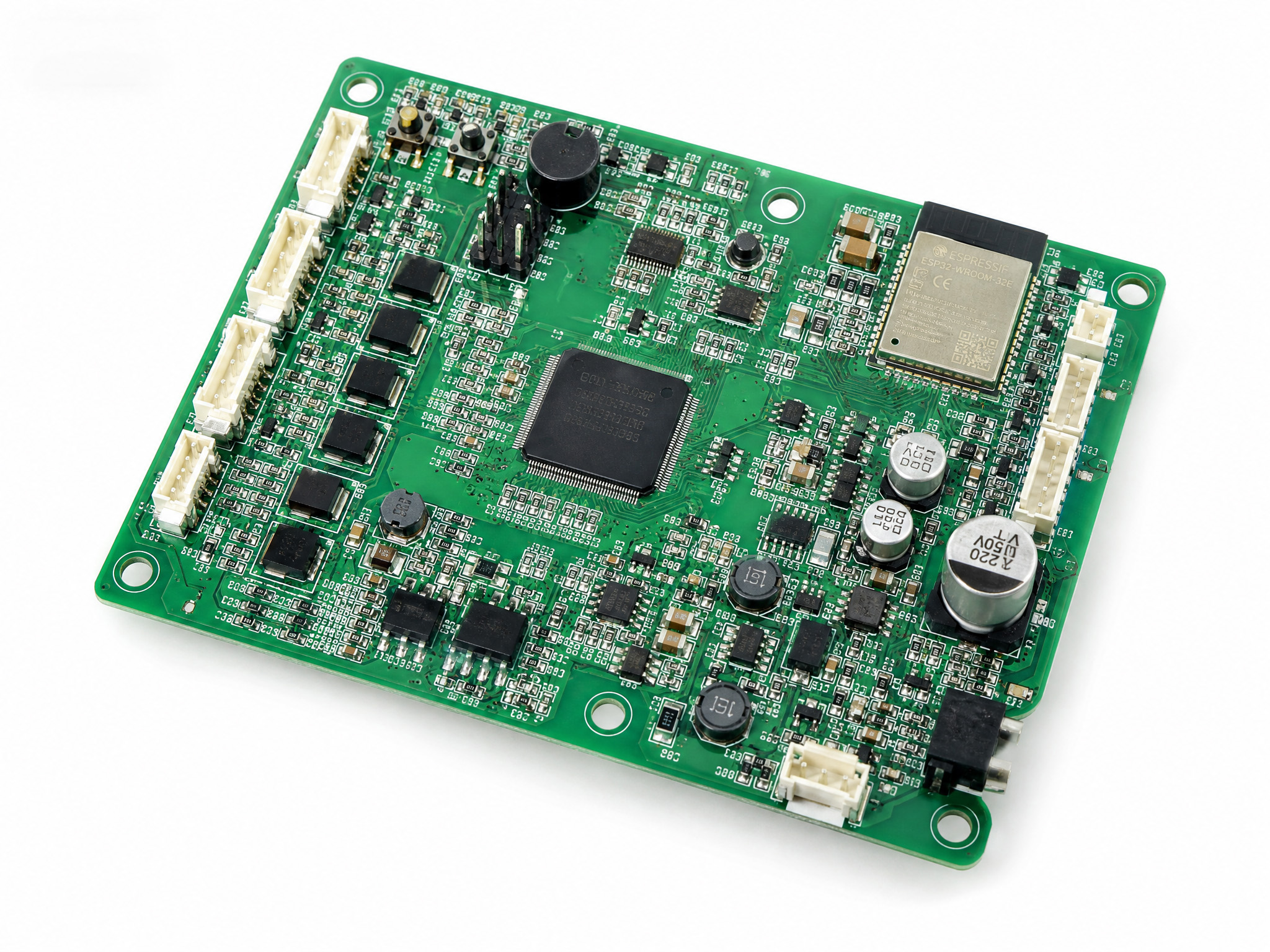
The global market for intelligent robot vacuums is booming, with all-in-one sweeping and mopping products becoming mainstream. However, mopping and hot-air drying induce internal condensation, causing PCBA corrosion and failures. This paper analyzes the exclusive failure modes and explores board-level protection solutions for robot vacuums.
The "Internal Rainy Season" of Robot Vacuum PCBAs: How to Protect Circuit Boards from Condensation in the Mopping Era
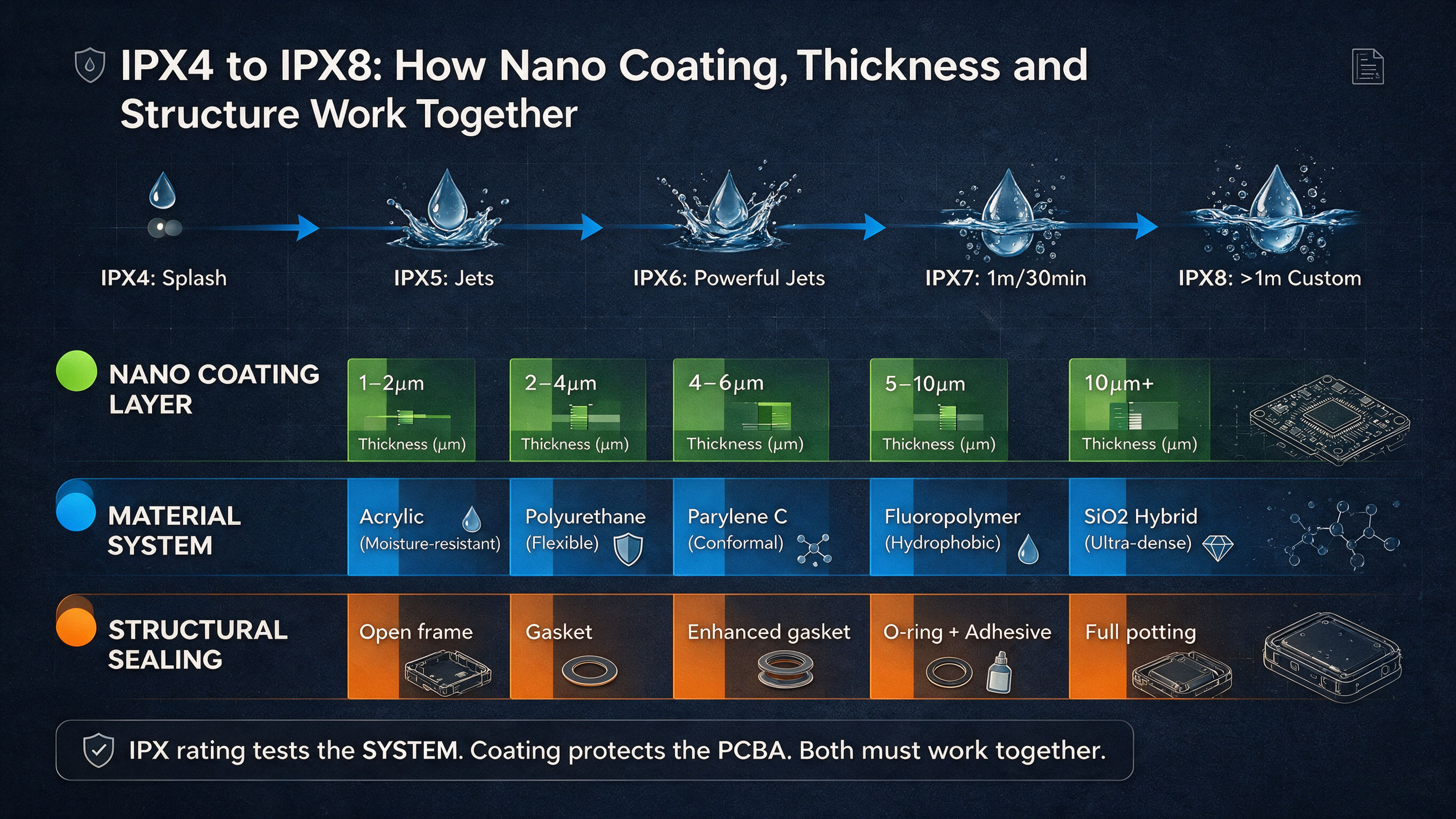
From IPX4 to IPX8, simply applying a thicker coating is not enough — it requires coordinated upgrading of coating film thickness, material system, and structural sealing. This article breaks down the true meaning of each IPX level, explains how the three lines of defense work together, and provides an actionable upgrade roadmap from IPX4 to IPX8.
From IPX4 to IPX8: How Nano Coating Thickness, Material Systems, and Structural Waterproofing Work Together
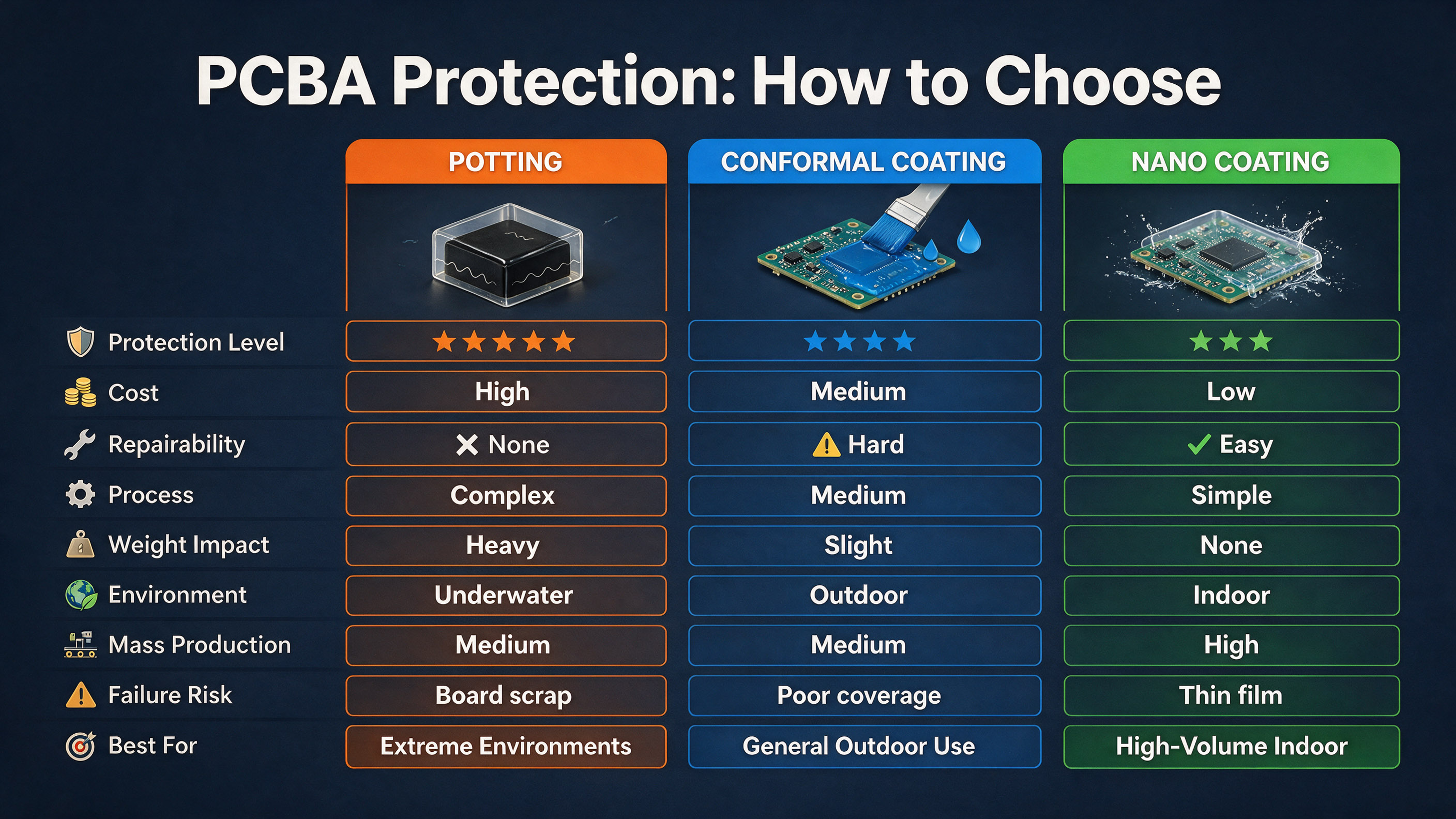
This article systematically compares three mainstream PCBA protection schemes — conformal coating, potting, and nano coating — across four dimensions: the fundamental nature of film thickness, an eight-dimensional comparison, a selection decision framework, and composite solutions. The core message is simple: there is no "best" scheme, only the "best-matched" one.
Potting, Conformal Coating, or Nano Coating? A Clear Comparison of Cost, Repairability, and Reliability
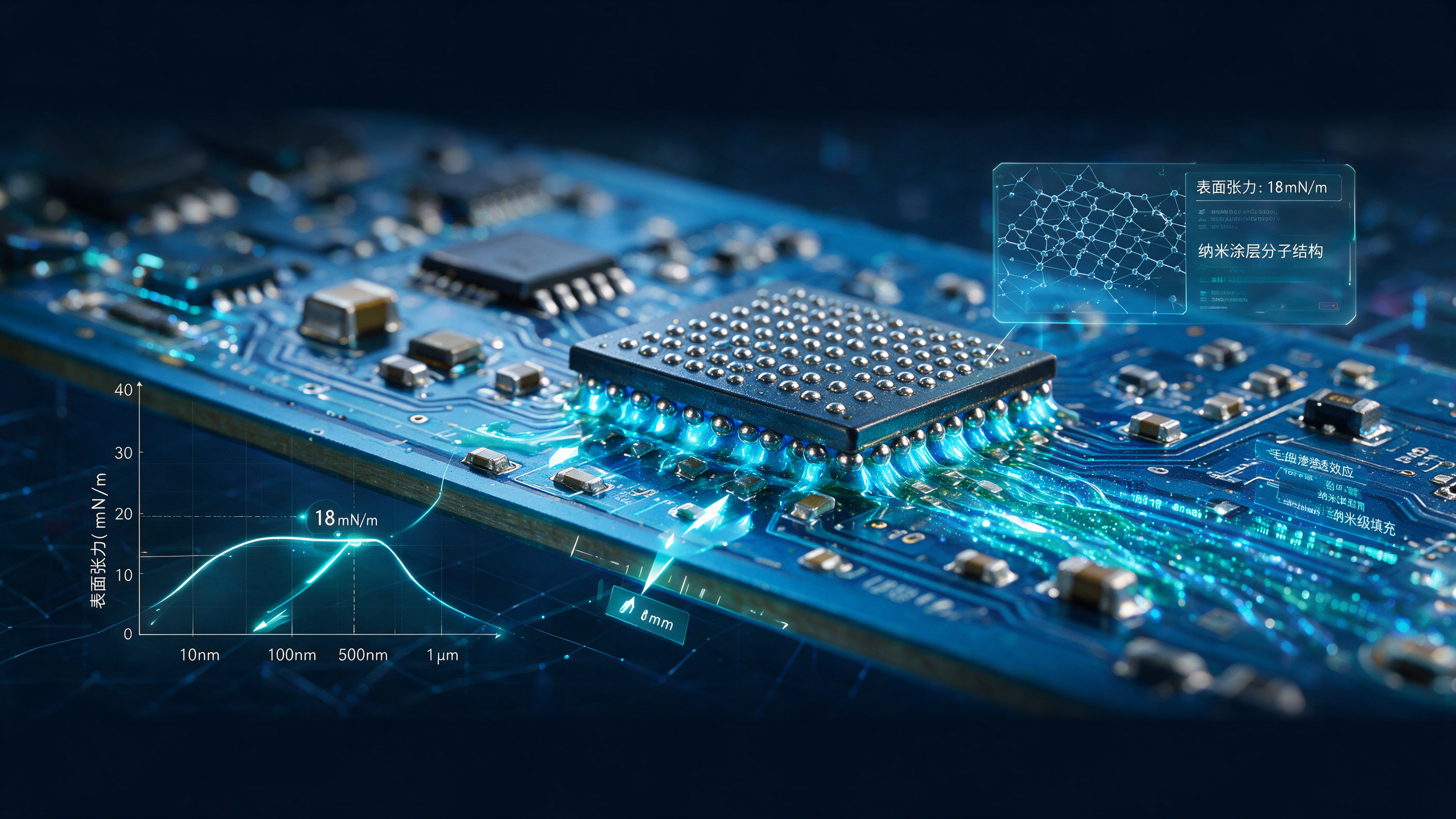
Thanks to its low surface tension for capillary penetration, the nano‑coating can reach traditional coating blind spots such as underneath BGAs and pin gaps of 0201 components, eliminating protection dead zones for PCBs.
Surface Tension as Low as 18 mN/m — Full Analysis of Nano‑Coating "Capillary Penetration" Technology